
Aphids on bonsai new growth
Clusters of small, soft-bodied insects on tender new shoots are usually aphids on bonsai, most often drawn to the softest, most nutrient-rich growth on the tree, though pear-shaped bodies, honeydew and a lack of webbing are the surest way to confirm it.
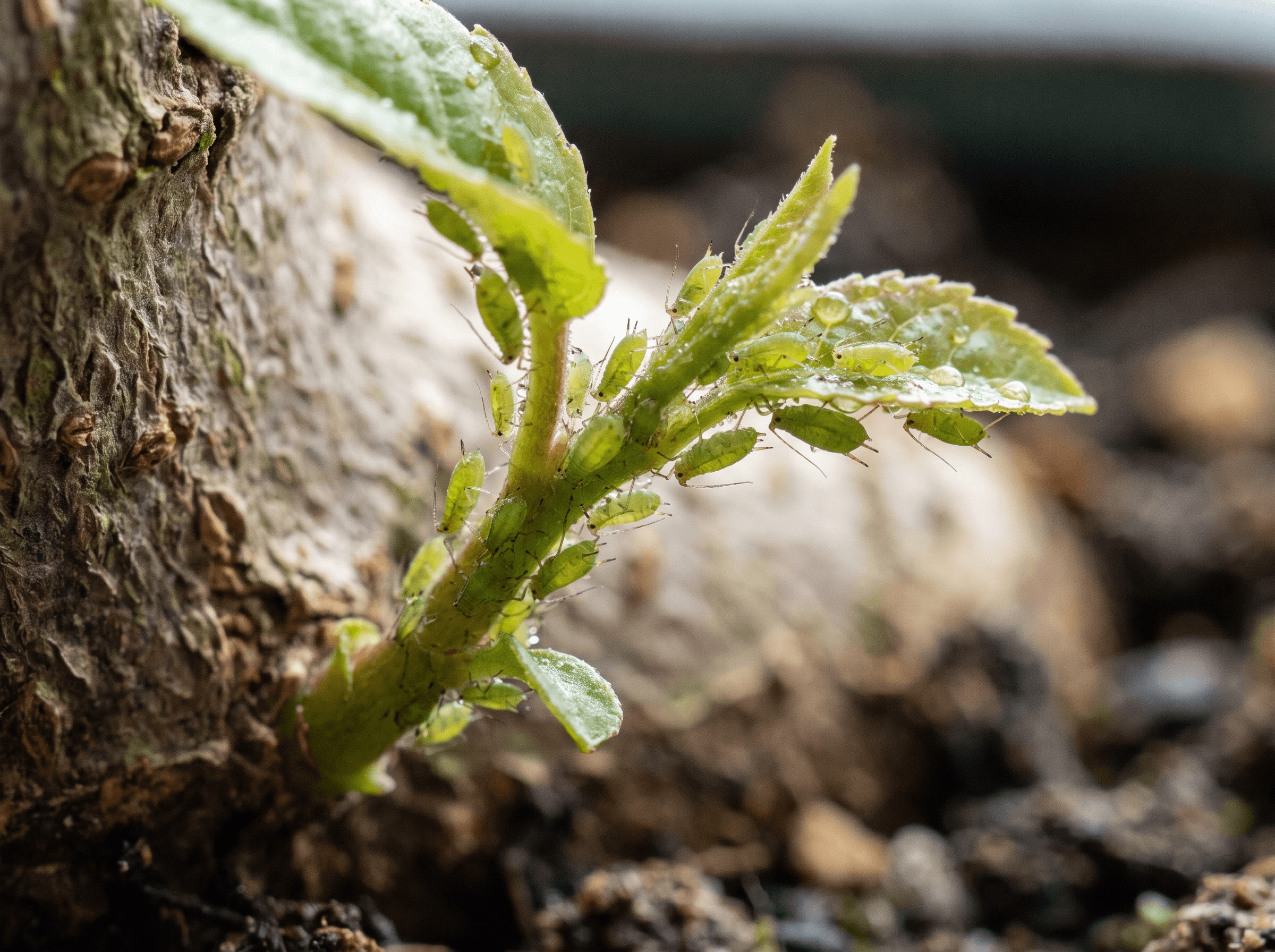
Aphids go straight for what's easiest to feed on, and on a bonsai that most often means the new flush: the soft tip of a shoot, the underside of a leaf that hasn't hardened off yet, the stretch of stem just below a bud that's still expanding. Their mouthparts are built to pierce and suck, and mature, toughened foliage takes more effort to feed through, though aphids will still settle on older stems, buds and even roots when the conditions suit them. Fresh growth, with its thin cell walls and sap running close to the surface, is simply the easiest option when it's available.
The damage isn't usually dramatic at first, which is part of the problem. A few aphids on a shoot tip won't stop the tree, but they will distort that growth: leaves that come in curled, cupped, or slightly twisted, because the tissue was still forming while it was being fed on. That distortion doesn't correct itself once the leaf hardens. Left to build up, the colony also leaves behind honeydew, a sticky residue that coats the leaves below and eventually grows a sooty mould on top of it, which is more of a nuisance than a direct threat but makes the tree look neglected even after the aphids themselves are gone.
I see this most in spring, on the first flush, and again after a hard prune when the tree pushes a second round of soft growth to compensate. Trees that were kept warm indoors over winter and start growing early, ahead of their outdoor neighbours, are often the first ones I find aphids on, simply because they're offering soft tissue before anything else nearby is. Anywhere you've got new growth outpacing the rest of the tree, check it first.
Likely causes
Aphid colony
How to tell: Green, black or brown insects clustered tightly on new shoots and along the underside of young leaves, often dense enough to cover the stem itself. You'll usually find a sticky residue nearby too, honeydew the colony excretes as it feeds, and the new growth they've settled on may already show some curling or puckering where the feeding has been heaviest.
The fix: Start with a strong jet of water aimed directly at the clusters; it's crude but it knocks a surprising number off and buys you time before you spray anything. Follow up with insecticidal soap or neem oil, working it specifically into the new growth where they concentrate rather than treating the whole tree evenly. Test any spray on a small area first and check back the next day for leaf damage, and avoid spraying in full sun, high heat, or on a tree that's already stressed, since soap and oil can scorch foliage under those conditions. Aphids reproduce fast in warm weather, effectively giving birth to live young without needing to mate, so one treatment rarely finishes the job. Plan on repeating every five to seven days and keep an eye out for winged individuals, which show up once a colony is crowded and means it's about to spread to other shoots or other trees.
Heavy nitrogen feeding
How to tell: The infestation tends to show up on the shoots that grew unusually soft and fast, often within a week or two of a strong feed. The stem between leaves is longer than normal, the tissue feels floppy rather than firm, and that's the exact growth aphids find easiest to colonise.
The fix: Ease off high-nitrogen fertiliser, at least until the current flush has hardened off. Lush, rapid growth is convenient for the tree but it's also thin-walled and sap-rich, which is precisely what makes it attractive to sap feeders. I'd rather push growth more gradually with a balanced feed and accept a slightly slower flush than deal with an aphid colony every time I try to force fast growth.
Ants tending the aphids
How to tell: Ants moving steadily between the aphid clusters and the soil, sometimes forming a visible trail up the trunk. Like with mealybugs, the ants aren't feeding on the tree; they're farming the aphids for the honeydew and will actively defend the colony from ladybirds and other predators that would otherwise thin it out.
The fix: Deal with the ants alongside the aphids themselves, because as long as they're protecting the colony, your treatments have to work harder and any natural predators in the area get chased off before they can help. A sticky barrier band around the trunk base or the rim of the pot, kept clear of any foliage, usually breaks the connection without needing to treat the ant nest directly. Don't apply the sticky material straight onto bonsai bark, especially on a young or thin-barked trunk; wrap a strip of tape or plastic film around the trunk first and put the sticky barrier on that layer instead, so it's easy to remove cleanly later.
How to prevent it
The best habit here is simply checking new shoots while they're still soft, since that's where aphids are most commonly found and the easiest window to catch them before the colony is established. During the growing season I go over the newest growth on every tree at least once a week, tip and underside, particularly right after a flush or a hard prune when the tree is putting out the kind of soft tissue aphids prefer. It's also worth being a bit more careful with nitrogen during those pushes; growth that comes in fast and soft is more vulnerable, so a steadier feeding schedule does double duty for shape and for pest resistance. If you bring trees indoors over winter and they start an early flush ahead of everything else outside, treat that growth as higher risk and check it more often, since it tends to be the first target in the whole collection.
Common questions
Do aphids spread to other plants?
Yes, and quite readily. Once a colony gets crowded it produces winged aphids specifically to disperse, and they'll happily move to a neighbouring tree or to other plants nearby. If you find an infestation, treat it promptly and check anything sitting close by before assuming it's contained to one tree.
Are ladybirds a good way to control aphids?
They're a useful part of the picture, especially outdoors where they can find the colony on their own, but I wouldn't rely on them alone once an infestation is already established. They work best as an ongoing check on light aphid numbers rather than a cure for a heavy outbreak, and they'll do a better job if you're not also spraying anything harsh enough to kill them off.
Will curled leaves from aphid feeding straighten out once the aphids are gone?
No, unfortunately. Once a leaf has developed with aphids feeding on it, the distortion is permanent on that leaf. The good news is it's cosmetic rather than a sign of ongoing damage, and as long as you get the colony under control the next flush of growth should come in normally.
Can aphids actually kill a bonsai?
On their own, rarely. It usually takes a sustained, heavy infestation across multiple flushes to weaken a tree seriously, and that's more likely on a young tree or one already stressed from repotting or a recent move. On an otherwise healthy, established bonsai, aphids are an annoyance to manage rather than a real threat to the tree's survival.
How fast can an aphid colony grow?
Faster than most people expect. In warm growing conditions, aphids give birth to live young without needing to mate first, so a handful of insects on a shoot tip can turn into a dense colony within a couple of weeks. That's the main reason I'd rather catch this at the first check than wait and see.
How do I tell aphids apart from other pests on new growth, like spider mites?
Aphids are visible to the naked eye, clustered together and usually a consistent green, black or brown, whereas spider mites are tiny and show up more as fine stippling on the leaf surface or faint webbing between shoots rather than as a cluster of insects you can point to. If you're looking at actual bugs sitting on the stem, it's more likely aphids than spider mites; if you're looking at speckled, dull leaves with barely visible webbing, it's more likely mites.
You might also like
General guidance based on 20+ years of practice. Every tree is different — when in doubt, ask us.