
Spring Flowering Bonsai Care
Flowering bonsai like azalea, prunus, and wisteria run on a different spring clock than your junipers and maples, and getting the order wrong can cost you an entire season of blooms.
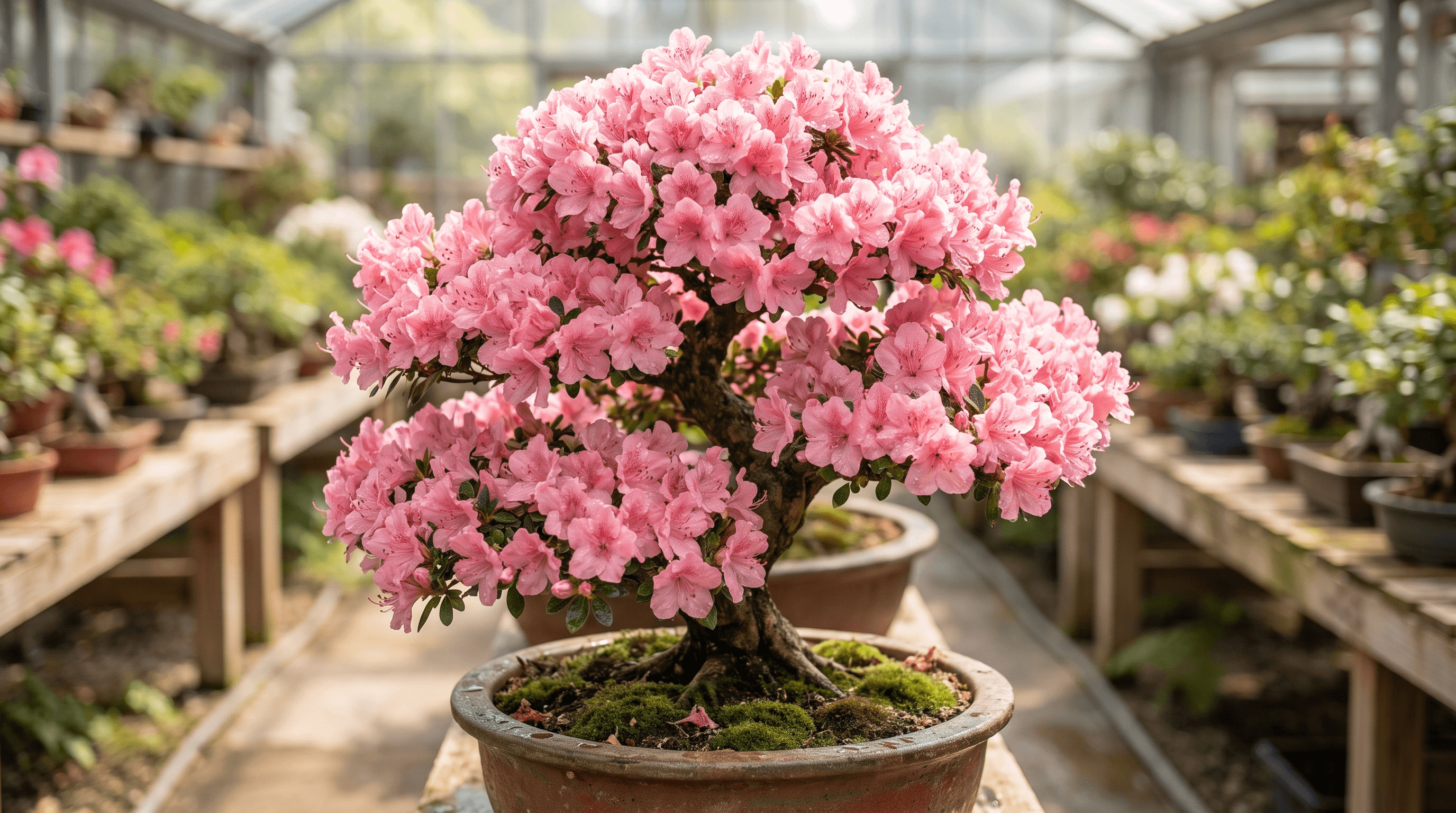
Most spring bonsai advice is written for foliage trees, and it mostly works fine for junipers, maples, and pines. Flowering species are a different animal. An azalea or a wisteria has already decided, back in late summer, roughly where its flower buds will sit this spring. Everything you do in the weeks before bloom either protects that decision or undoes it.
I keep a separate mental checklist for my satsuki azaleas, my flowering prunus, and the wisteria that climbs the fence behind my potting bench. The core spring tasks, feeding, pruning, watering, all still apply, but the timing shifts around the flower rather than around the calendar. Prune at the wrong moment on one of these trees and you're not looking at a slightly uneven canopy, you're looking at no flowers next year.
This isn't a full flowering-bonsai technique guide, I've covered azalea and wisteria basics elsewhere. What follows is specifically about the spring sequence: when to feed relative to bloom, when deadheading actually matters, and why the pruning window on these trees opens later than it does on everything else in your collection.
Feed around the bloom, not before it
Flower buds on azalea, prunus, and wisteria were mostly set the previous summer, so a heavy dose of nitrogen right around bud swell is more likely to push foliage that competes with the flowers for the tree's energy than to produce more blooms itself. A light feed at that point is a different matter, some growers use it deliberately on certain species like flowering apricot, so this is a caution about heavy feeding rather than a blanket rule against any feeding at all. On my own satsuki I hold off on real feeding until the flowers are fading, then start light and build up over a few weeks. Wisteria is the exception worth knowing, in the other direction: I hold off on feeding it until after the blooms finish and the post-bloom pruning is done, since wisteria in a shallow pot is already drawing down its reserves fast during a heavy bloom, and adding fertilizer into that doesn't help it recover.
Deadhead before the tree wastes energy on seed
Once petals start dropping, I go through and pinch off the spent flowers before they set seed pods. Azaleas left alone will happily put real energy into forming seed capsules, and that's energy taken straight from next year's bud development. Prunus in bonsai form, whether it's a flowering apricot or a cherry, does something similar with its small fruit in my experience, though this is more a grower habit of mine than a settled rule, it looks charming for about a week and then just sits there, plausibly drawing resources that could go toward next year's buds. Wisteria seed pods are the worst offender in my experience, heavy and slow to drop, so I'm out there with scissors within days of the flowers fading rather than letting it run its course.
Wait to prune until after flowering, not before
This is the one spring rule that trips people up most with these three species. Structural pruning on a maple or juniper often happens early, before or right at bud break. On azalea, prunus, and wisteria, cutting back in late winter or early spring removes flower buds that are already formed and waiting, and you won't know it until nothing blooms. I prune azaleas and prunus within a few weeks after the flowers finish, while the tree is pushing new growth but hasn't hardened it off yet, though the exact window shifts a bit by species and by how the season is running. That timing gives the tree the rest of spring and summer to set next year's buds on the new growth.
Wisteria needs a second pruning pass after the first flush
Wisteria is more work than the other two because it doesn't stop at one post-bloom trim. After flowering I cut the long whippy shoots back hard, leaving just a couple of nodes, which is what actually encourages the short flowering spurs rather than more rampant vine growth. Then through late spring I keep shortening any new runners that try to take over again. Skip this second round and a wisteria bonsai reverts to looking like a vine that happens to be in a pot, with flowering pushed further and further out toward the tips where you can't see it.
Watering climbs faster during and right after bloom
A tree in full flower, then pushing a flush of new leaves right behind it, is using more water than the same tree sitting quietly in late winter. I check my flowering trees daily once buds start opening, more often than I check the rest of the collection at that point in the season. Wisteria in particular will droop fast if it dries out mid-bloom, and a wilted flower truss doesn't really recover even after you water it again.
Common questions
Why didn't my azalea bloom this spring even though it looked healthy all winter?
The most common cause I see is pruning at the wrong time the previous year, usually late summer or fall instead of right after the spring bloom. That late pruning cuts into the same growth where next year's flower buds form over the following months, so the buds never get the chance to develop in the first place. Overfeeding with nitrogen through summer can also push leafy growth at the expense of flower bud formation.
Can I repot a flowering bonsai in spring like I would a maple?
Azaleas I typically repot right after flowering, since that's the safer default for satsuki-type azaleas specifically. Prunus is more mixed: some, like flowering cherry, are often repotted in early spring before bloom similar to a foliage tree, while others are repotted post-bloom, so it's worth checking your specific variety rather than assuming one rule covers all of them.
How soon after the flowers fade should I prune?
Within a few weeks is what I aim for, once the flush of new growth right behind the flowers is visible but before it hardens. Waiting too long into summer starts to cut into the window the tree needs to set next year's buds.
Is it okay to feed wisteria while it's in bloom?
I hold off on feeding wisteria while it's actively blooming and wait until after the flowers finish and the post-bloom pruning is done. Wisteria draws down its reserves fast during a heavy bloom, but adding fertilizer into that period doesn't help it recover, low-nitrogen feeding through the rest of the growing season is where I focus instead.
My prunus set fruit after flowering, should I remove it?
I generally do, as a grower habit rather than a strict necessity. The fruit isn't harmful to the tree, but it plausibly draws resources that could otherwise go toward next year's bud development. I pinch it off along with the spent flowers rather than letting it develop further.
Do all flowering bonsai species follow the same prune-after-bloom rule?
Most spring-flowering species that bud on the previous year's wood do, which covers azalea, prunus, and wisteria. Species that flower on new growth later in the season follow a different logic entirely, so it's worth knowing which category your particular tree falls into before assuming the rule applies.
Should I deadhead every single flower or just the obvious spent ones?
I don't chase every last petal, but I do go through thoroughly enough to catch anything starting to form seed. On a densely flowered satsuki that can take a while, so I usually do it over two sessions a few days apart as more flowers finish.
You might also like
General guidance based on 20+ years of practice. Every tree, climate, and year is different — when in doubt, ask us.