
Brown, crispy leaf tips
Brown crispy bonsai leaves, especially starting at the tip or edge, mean the tree is drying out somewhere, at the roots, in the air, or from the sun.
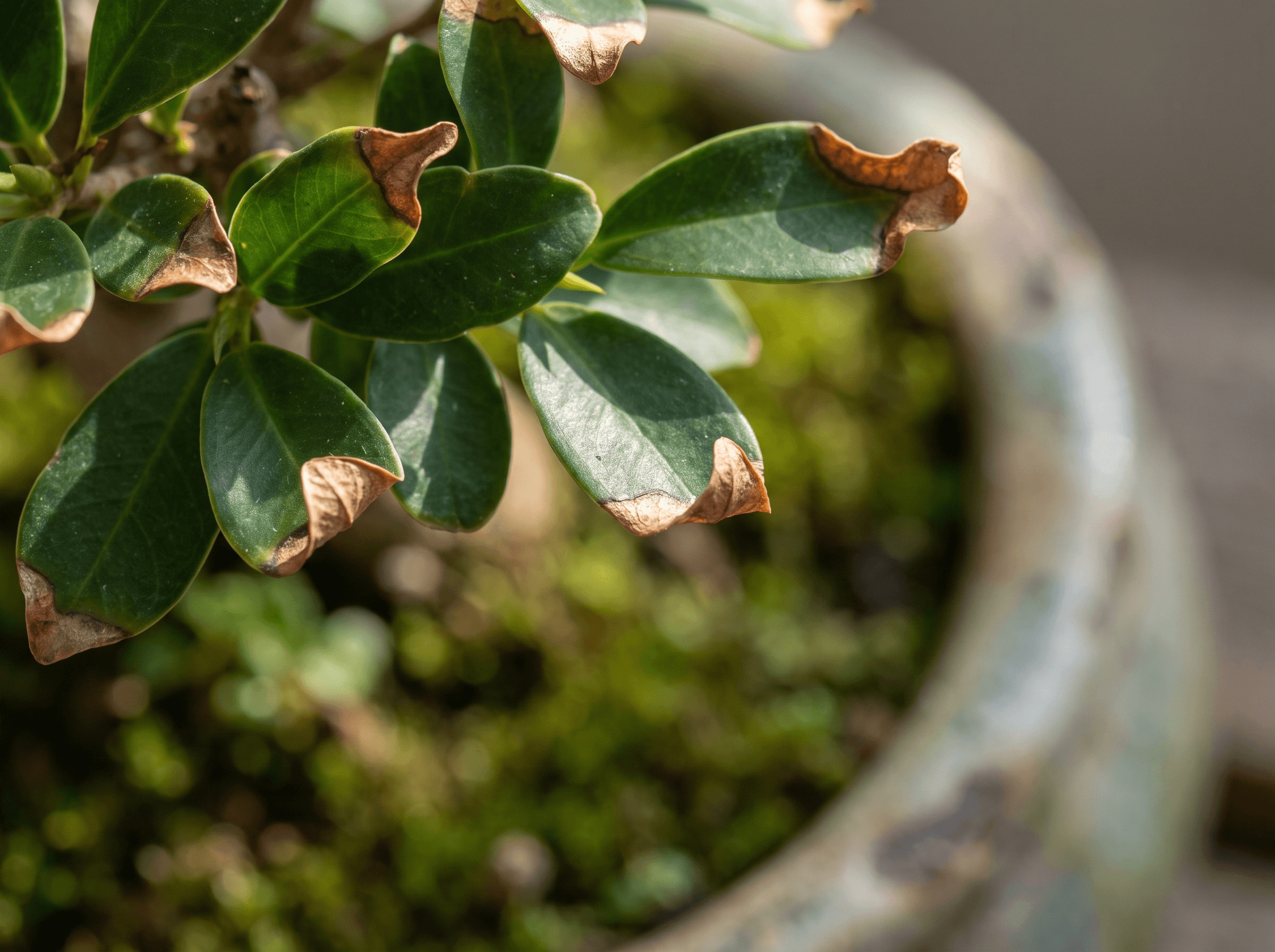
This page is specifically about the leaf tips and edges going brown and crisp, not the trunk. If what you're actually looking at is a patch of dead or peeling bark on the sun-facing side of the trunk, that's a different problem with its own page, sunscald, and it needs a different fix. Here we're dealing with the leaf tissue itself drying out from the point furthest from the water supply inward.
The tip of a leaf is the last place water arrives and the first place a tree sacrifices when it's under stress. Leaves move water up from the roots and out through their pores, and the tip is furthest along that path, so it's the most exposed edge with the thinnest margin for error. When something interrupts that supply, even briefly, the tip is where you see it first, usually as a thin brown line that then spreads inward if the stress continues.
In my experience this is rarely a single dramatic event. It's more often a pattern, a pot that dries out faster than you expect, a spell of dry heating-season air, a hot afternoon with the tree in full sun, or a feed that was a bit stronger than the tree could handle. Minor, early tip browning from any of the three causes below is usually not fatal on its own, but it's worth sorting out properly because a tree that's chronically drying out at the tips is also losing vigour everywhere else, just less visibly. If the browning is spreading fast, covering whole leaves rather than just the tips, or turning up alongside wilting despite wet soil, that points toward something more serious, root rot or a pest problem, rather than one of the three causes here, and it's worth checking the roots and the undersides of the leaves before assuming it's simple drought stress.
Likely causes
Underwatering or dry air
How to tell: Tips and edges turn brown and brittle, and when you check the soil it's dried out much faster than you expected, sometimes within a day in summer or in a heated room in winter. You'll often see the leaf curl slightly before it browns, especially on thinner-leaved species, and the damage tends to be spread fairly evenly across the whole canopy rather than concentrated on one side.
The fix: Water more consistently, and check by feel rather than by a fixed schedule, push a finger into the top centimetre of soil and water when it's starting to dry rather than waiting for it to look thirsty. For indoor trees, group plants together to raise the local humidity, or stand the pot on a humidity tray of pebbles and water, keeping the pot above the waterline rather than sitting in it. If a small pot is drying out within hours in hot weather, that's also worth noting as a sign the tree may be due a slightly larger pot at its next repot.
Sun scorch
How to tell: Brown, sometimes slightly bleached patches appear on the leaf blade itself, concentrated on the side of the tree facing strong sun, and it usually shows up during or just after a heatwave rather than gradually. This is leaf tissue damage from heat and light intensity, distinct from sunscald, which affects the bark and trunk and is covered on its own page if that's what you're actually seeing.
The fix: Shade the tree during the hottest hours of the day, a simple shade cloth or moving the pot under other foliage is enough. Check the soil as soon as you notice heat stress and water straight away if it's dry, rather than waiting for evening, though watering in the early morning or evening on top of that helps the tree go into the next hot day already hydrated. If a heatwave is forecast, it's worth moving vulnerable trees into filtered light a day or two ahead rather than reacting after the damage is already visible.
Fertiliser burn
How to tell: Tips turn brown soon after a heavier than usual feed, sometimes within days, and you may also notice a white or crusty mineral buildup on the soil surface, though that crust on its own isn't proof of fertiliser burn since hard tap water leaves the same kind of deposit over time. This is root and leaf tissue reacting to a concentration of salts that was too strong for the tree to handle at that moment.
The fix: Flush the soil thoroughly with plenty of plain water to carry the excess salts out through the drainage holes, then feed less often and at half strength going forward. If fertiliser burn is clearly what happened, the dedicated fertiliser burn page on this site goes into a lot more depth on flushing technique and getting your feeding schedule right, so it's worth a look if this keeps recurring.
How to prevent it
Most tip browning comes down to a gap between how fast the pot dries and how often you're actually checking it, so the single best habit is a regular finger-check of the soil rather than watering on autopilot. Adjust your expectations with the seasons, a pot that needs water every three days in spring might need it daily in a summer heatwave or barely at all in a cool, humid week. Keep feeding conservative and diluted rather than strong and occasional, and give any tree moved into strong sun a few days to adjust rather than moving it straight from shade into a full afternoon of direct light. None of this is complicated, it's just consistency, and trees that get consistent attention rarely show tip damage at all.
Common questions
Will the brown tips turn green again?
No, the dead tissue at the tip stays brown, it won't regreen. What matters is stopping the cause so new growth comes in healthy; the damaged leaves will eventually be replaced or can be trimmed for appearance.
Should I trim off the brown tips?
You can trim just the dead brown portion with clean, sharp scissors for appearance, cutting close to where the brown meets the green without cutting into healthy tissue. It's cosmetic only, trimming won't speed up recovery, so don't rush it if the tree is still stressed.
Is this the same problem as sunscald?
No. Brown tips is leaf tissue drying out from the edges inward, while sunscald is damage to the bark and trunk itself, usually a discoloured or sunken patch on the sun-facing side. If you're seeing damaged bark rather than damaged leaves, check the sunscald page instead.
How urgent is this if I catch it early?
A few brown tips on a handful of leaves is not an emergency, it's a signal to adjust care. If it's spreading across most of the canopy or getting worse week to week, treat it as urgent and check watering, sun exposure, and recent feeding straight away.
Can more than one of these causes be happening at once?
Yes, and it's actually common, a tree that's slightly underwatered is also more vulnerable to sun scorch on the same day, since a well-hydrated tree copes with heat far better than a dry one. If you can't isolate a single clear cause, address watering consistency first since it underlies the other two.
Are some species more prone to tip browning than others?
Yes, thinner-leaved and shallow-rooted species dry out faster and show tip damage sooner than thicker-leaved or more drought-tolerant ones. If you know your species runs sensitive to dry conditions, check its soil more often than you would for a hardier tree in the same collection.
You might also like
General guidance based on 20+ years of practice. Every tree is different — when in doubt, ask us.