
Bonsai buds killed by frost: black or mushy growth after a cold snap
Bonsai buds killed by frost turn black, brown or mushy shortly after a cold night, a sign that growth had already opened before it was hit, which is a different problem from buds that simply haven't opened yet.
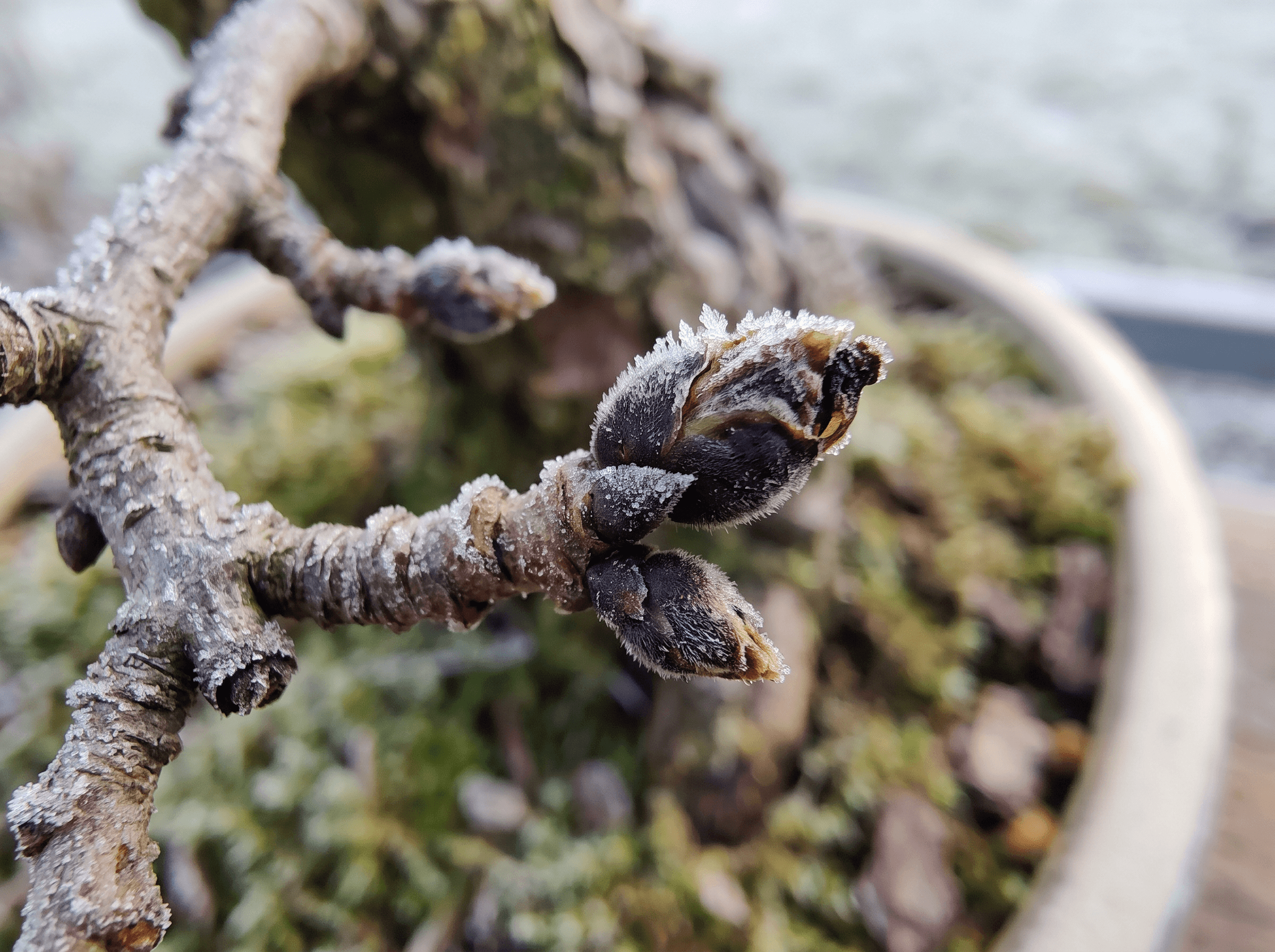
This page is about buds that got moving and then got hit, not buds that are just slow to start. If your tree still has tight, dormant buds that haven't swollen or opened at all this spring, that's a separate issue covered on the no buds in spring page, usually about timing or overall vigour rather than cold damage. Here we're talking about growth that had already broken dormancy, swelling, opening, sometimes with a few millimetres of fresh green showing, before a cold night came through and killed it.
Buds that have broken dormancy are tender in a way a closed winter bud simply isn't. A dormant bud is built to survive freezing temperatures, that's its whole purpose through the winter months, but once it starts actively growing it can lose cold tolerance quickly, sometimes after only a few warm days. A late frost that would have done nothing to a still-closed bud can blacken or turn mushy a bud that opened the week before, and it often does exactly that, catching growers out because the danger isn't obvious until the damage has already happened overnight. It's worth knowing this isn't strictly all-or-nothing either, a bud that's swollen and close to opening but not fully broken yet has already lost some of its winter hardiness and can still be damaged in a genuinely hard freeze, even though it's more resilient than one with green tissue already showing.
It's a frustrating problem because there's a real gap between when a tree looks like it's safely into spring growth and when it's actually clear of frost risk in your area. I've lost fresh growth to a cold night in a season that otherwise felt mild and early, and it's rarely the whole tree, usually the growth on the side most exposed to open sky takes the worst of it while more sheltered growth escapes. The good news is that a healthy deciduous tree, especially a species that backs budding readily, often has more dormant buds in reserve and pushes a second flush, so this is usually a setback rather than a disaster. It's less predictable on conifers, on a tree that's already weak, or on one that was recently collected or heavily root-pruned, where interior buds may be scarcer and recovery slower or only partial, so keep a closer eye on those and don't assume the same easy bounce-back applies to every tree.
Likely causes
A late frost after buds had already broken dormancy
How to tell: Buds or very fresh new growth turn black, brown, or take on a mushy, water-soaked look within a day or two of a cold night, and the damage is often worse on the side of the tree most exposed to open sky, since that's where the most radiant heat loss happens overnight. Growth that was still fully dormant and tightly closed at the time of the frost usually comes through unaffected, though a bud that was already swollen and close to opening can still be damaged in a genuinely hard freeze even without visible green showing, it's mainly the tissue that had already started actively growing that takes the worst of it.
The fix: There's nothing to do for buds that are already black or mushy, that tissue is dead and won't recover, so leave it alone rather than pulling at it. The tree typically has dormant buds further back along the branch that weren't triggered yet, and these usually push a second flush of growth within a few weeks once conditions settle, though this is less certain on conifers or on a tree that was already weak going into the frost. If more cold is forecast while other buds are still opening, protect the tree with frost cloth overnight or move it under shelter, an eave, a cold frame, or even up against a wall, until the risk has passed.
Tree brought out of winter protection too early
How to tell: The damage follows soon after moving the tree from a sheltered spot, a cold frame, unheated garage, or greenhouse, into full outdoor exposure, often because a run of mild days made it feel safe to do so. The tree had started growing in the relative warmth of protection and wasn't hardened off to outdoor night temperatures when the move happened.
The fix: Before ending winter protection for good, check the extended forecast for your area rather than going by how the last few days have felt, since a mild stretch in early spring is very often followed by at least one more cold snap. If you do move a tree out early, keep a means of covering or moving it back under shelter on short notice for the following few weeks, and consider hardening it off gradually with a few hours outdoors at a time before leaving it out overnight.
Exposed position with no thermal buffer
How to tell: Only the trees on a high, open bench or stand show frost damage while trees positioned closer to a wall, fence, or under nearby tree canopy come through the same night unscathed. This pattern points to radiative frost, which is worst on clear, still nights when heat radiates away from exposed surfaces fast, and far less of a problem on cloudy nights when cloud cover holds warmth near the ground.
The fix: Move the most vulnerable trees, the ones with buds already opening, to a more sheltered stand for the remainder of the frost season, closer to a wall or under an eave where they benefit from some retained warmth. Keep an eye on the forecast specifically for clear, calm nights during bud break, since those are the nights radiative frost is most likely, and cover exposed trees with frost cloth on those nights even if the daytime temperature felt mild.
How to prevent it
The core of preventing this is watching the calendar and the forecast together rather than reacting to how the weather feels on any single day. Know the average last frost date for your area and treat any bud break that happens before it as a period of real risk, checking the overnight forecast daily rather than assuming spring has fully arrived just because the days have warmed. Bring protected trees out of shelter gradually and only once the extended forecast looks genuinely settled, and keep frost cloth or a fallback sheltered spot ready to use on short notice through that whole transition window. Position matters too, trees on exposed stands are more vulnerable to a clear, still-night frost than trees with some overhead cover or a nearby wall for thermal buffering, so consider where your most cold-sensitive or earliest-budding trees sit relative to that kind of shelter. Give a little extra caution to conifers and to any tree that's recently been collected, heavily root-pruned, or otherwise weakened, since those are the ones least able to shrug off a lost flush of growth.
Common questions
Will my tree fully recover from frost-killed buds?
Often, yes, particularly on a healthy deciduous tree and a species that backs budding readily, dormant buds further back on the branches push a second flush once the frost risk has passed, so the season's growth is usually delayed rather than lost. Recovery is less certain on conifers, on a tree that's already stressed, or on one that was recently collected or heavily root-pruned, since those trees may simply have fewer reserve buds to call on.
How long should I wait before assuming a branch is actually dead?
Give it several weeks at minimum before writing off a branch, since a second flush from dormant buds can take time to show, especially on species that are naturally slower to push new growth. If you want a clearer sign, a single gentle scratch on a small patch of bark with a fingernail will show green tissue underneath if the branch is still alive, but there's no need to keep testing repeatedly, one small scratch in an inconspicuous spot tells you what you need to know.
Which species or styles are most vulnerable to late frost?
Species that naturally break dormancy early are at the most risk simply because they have more tender growth exposed during the window when late frosts are still possible. Trees on exposed stands, and especially those styled with fine, delicate ramification near the tips, tend to show more visible damage than trees with coarser, hardier growth.
Is it worth covering my whole collection every cold night in spring?
Not necessarily every night, that's more than most collections need, but it is worth covering the trees whose buds have already broken dormancy on any night a frost is forecast. Trees still fully dormant with closed buds don't need the same level of protection.
Can I tell frost damage apart from a pest or disease problem?
Frost damage typically follows a specific cold night closely in time, affects the most exposed growth first, and turns black or mushy rather than showing the speckling, webbing, or slow yellowing typical of pests and fungal problems. If the timing lines up with a cold snap, frost is the far more likely explanation.
Should I prune off the frost-killed growth?
You can trim off the dead, blackened tips for tidiness once you're confident the damage has stopped spreading, but there's no urgency, the tree will push new growth around it regardless. Wait until you can see clearly where the live tissue starts before cutting, so you don't remove more than necessary.
You might also like
General guidance based on 20+ years of practice. Every tree is different — when in doubt, ask us.