
Conifer bonsai needles browning and dropping
Some needle drop is completely normal on pines and junipers. Telling that apart from a real problem comes down to which needles are going and how fast.
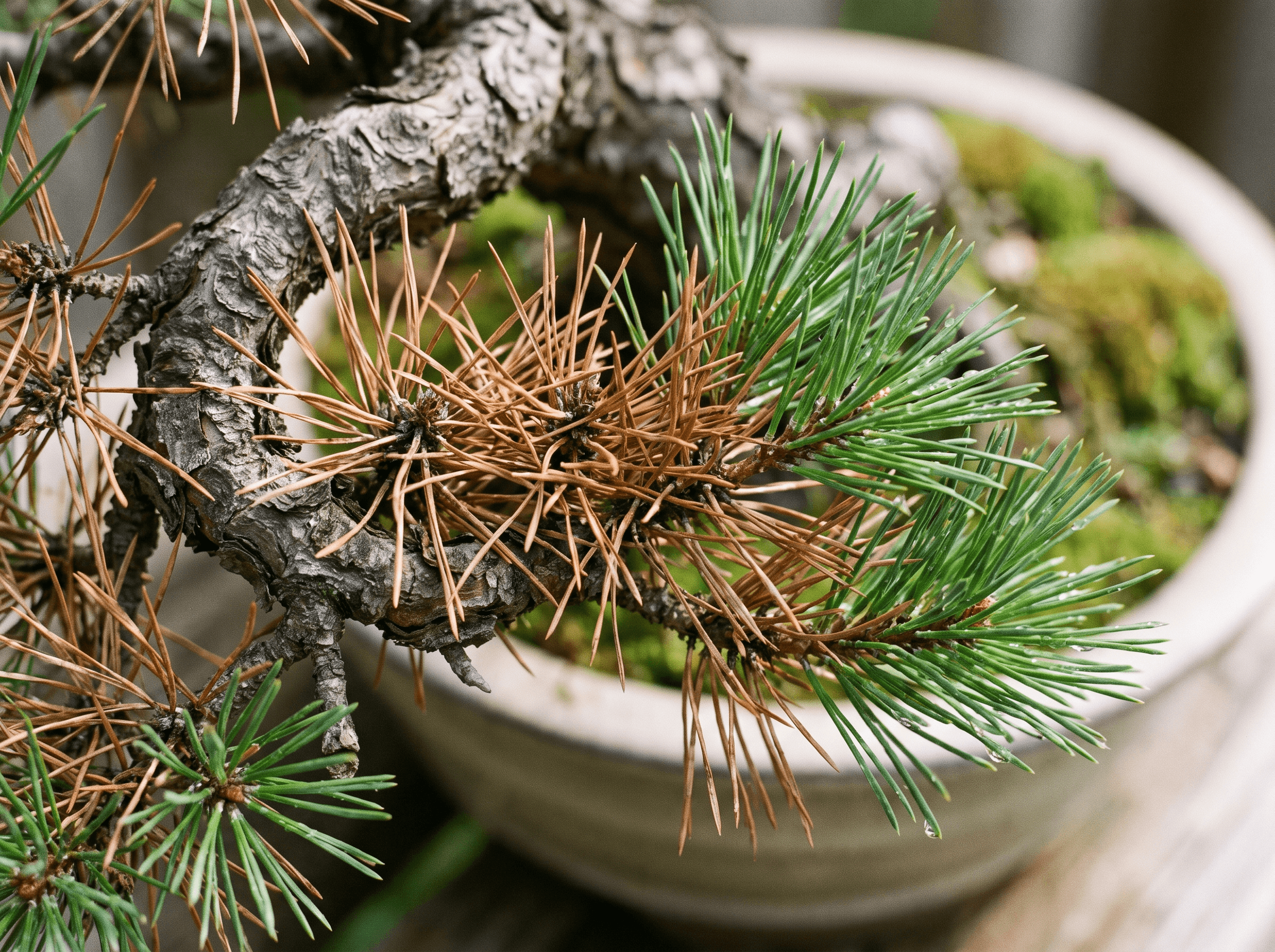
Pines and junipers don't wear stress the way a maple or an elm does. A broadleaf tree can go from healthy to crisping within days under drought or root trouble, which at least gives you a fast, obvious signal to act on. Conifers are slower and quieter about it. They can lag weeks to months before showing stress, so a browning branch today might trace back to a recent repot, a spell of heat or drought, a hard frost, or simply a run of watering that wasn't quite right, rather than anything that happened this week.
That lag is exactly what makes conifer owners anxious. The tree looks fine, looks fine, looks fine, and then one week you notice a branch has gone a dull rust color and you have no memory of anything changing recently. The two questions that actually narrow things down are which needles are browning and how fast it happened. Old growth near the trunk going brown gradually over a few weeks, especially heading into autumn, is a completely different story from new growth at the branch tips turning brown within days. Location and speed tell you more than color ever will, because by the time a needle is fully brown it's already dead regardless of the cause behind it.
I get more worried messages about this symptom than almost any other, because people picture bonsai as delicate in the way a tropical species is, and expect a conifer to show trouble the moment something's wrong. In my experience it's usually the opposite: by the time a pine or juniper shows visible stress, whatever caused it happened weeks or months earlier. That's not a reason to ignore what you're seeing. It's a reason to think back over the tree's recent repotting, its exposure to heat and drought, any recent frost, and its watering history rather than fixate only on today's watering can.
Likely causes
Normal seasonal needle shedding
How to tell: It's the older, inner needles closest to the trunk that are turning yellow, then brown, then dropping, while the newer growth out at the branch tips stays green and unaffected. This happens gradually over a few weeks rather than all at once, and on pines it's especially common in autumn, though junipers can shed older scale foliage at other points in the year as well. Look at the pattern across the whole tree rather than one branch: if it's consistently the interior and lower needles going first, that's your answer.
The fix: There's nothing to fix here. Many common evergreen bonsai conifers shed their oldest needles on a cycle, with pines often holding a given needle for two to five years and junipers releasing older scale foliage more continuously, before letting the interior go. You can gently rake the dropped needles off the soil surface and out from between lower branches if you want the tree looking tidy. During diagnosis, avoid yanking at needles that haven't released on their own, since tugging half-attached dead foliage can damage the branch underneath, so let them come away by themselves. That's different from deliberate needle plucking, which is a separate styling technique some growers use on pines to balance vigor and isn't something to attempt while you're still trying to work out what's wrong.
Overwatering or root rot
How to tell: Whole branches are browning, or the newer growth at the tips is affected and not just the old interior needles, and you know the soil has been staying wet longer than usual, maybe from a run of rainy weeks or a pot that no longer drains the way it used to. Sometimes there's a sour smell coming from the soil, or the substrate looks dark and stays heavy well after a watering. In a bad case foliage goes a dull grey green before it browns, a sign the roots underneath have already been struggling for some time.
The fix: Don't jump straight to unpotting the tree. Only ease it out of the pot to inspect the roots if the symptoms and consistently wet soil actually justify it. First correct what's driving the wet soil: improve drainage, get the tree out of driving rain if it's been exposed, and water based on how dry the top layer actually feels rather than on a fixed schedule. If you do check and find roots that are actively rotten, remove only the parts that are clearly mushy or dead and leave the healthy rootball intact, since the fine mycorrhizal network conifers rely on, pines especially, takes time to rebuild and doesn't need disturbing along with the damaged roots. Avoid fully washing or bare-rooting a conifer, since that strips away far more of the living root system than the rot itself did. If the rot looks severe, or you're dealing with it outside the normal repotting season, it's worth getting help from someone experienced rather than working it out alone. Conifers generally tolerate a dry spell better than they tolerate constantly wet roots, which is the reverse of how a lot of people end up treating them.
Underwatering or winter desiccation
How to tell: The browning shows up after a stretch of dry weather, or after a cold, windy winter, and it often affects one side of the tree more than the other, usually whichever side faced the prevailing wind or the harshest sun. Needles can look scorched at the tips first before the whole needle goes, which reads differently from the more uniform browning you get with root problems. This is especially common on trees left exposed on a balcony or terrace through winter with no wind break at all.
The fix: Water more consistently rather than letting the pot swing between soaked and bone dry, and in winter move the tree somewhere it's shielded from direct wind even if it's still cold there. Conifers keep losing moisture through their needles during dormancy since they never drop their foliage, so a frozen root ball combined with drying wind is a genuine risk, not just a cosmetic one. A simple burlap screen, or just moving the pot against a wall, can make a real difference.
Low light or indoor placement
How to tell: Needles gradually thin out and dull in color over months rather than browning sharply, growth slows or stops, and the decline tends to affect the whole tree evenly rather than one branch or the interior specifically. This shows up most often on trees kept indoors, or on a shaded balcony or windowsill for long stretches.
The fix: Pines and junipers are outdoor trees. They need to live outside year round in a spot that gets real, direct sun for most of the day, and bringing one indoors for more than a short display period is one of the more common reasons commercial bonsai decline after purchase. Move the tree back outside to full sun as the fix, and expect recovery to take a full growing season rather than a few weeks, since the tree needs to rebuild the growth it lost while starved of light.
How to prevent it
The best thing you can do is learn what normal looks like for your specific species before you actually need to diagnose a problem, because a black pine and a juniper don't shed on the same timetable, and neither behaves like the broadleaf trees most people mentally compare them to. Spend a season watching your tree's ordinary interior needle drop so you have a baseline to measure against later, and get in the habit of checking watering by feel rather than by calendar, since conifers punish both extremes, sitting wet and going bone dry, more than most owners expect. Through summer heat keep the watering steady rather than reactive, and heading into winter treat wind exposure as seriously as you treat frost, because a sheltered but cold tree usually comes through fine while an exposed one can desiccate even without a hard freeze. Keep the tree outdoors in real sun year round rather than treating it as an indoor plant, since that alone prevents one of the most common causes of slow decline.
Common questions
Is it bad if my pine drops needles every autumn?
No, that's completely normal. Pines hold their older needles for a set number of years depending on the species, then release them in a wave, usually in autumn, while the newer growth at the tips stays green throughout. As long as it's the interior, older needles going and not the fresh growth, there's nothing to do.
How can I tell normal shedding from a real problem?
Look at which needles are affected and how quickly. Normal shedding hits the oldest, innermost needles closest to the trunk gradually over a few weeks, while the tips stay green. A real problem tends to show up on newer growth, on whole branches at once, or faster than the gradual pattern you'd expect from routine ageing.
Do pines and junipers shed needles the same way?
Not quite. Pines tend to have a more visible, seasonal shed, often concentrated in autumn, where a whole cohort of older needles turns yellow and drops together. Junipers, especially the scale-foliage varieties, shed more continuously through the year, and the browning is easy to miss because it happens a few scales at a time rather than in one obvious wave.
Will brown needles turn green again?
No. Once a needle has gone fully brown it's dead tissue and won't recover its color no matter what you change about care afterward. At that point you're managing the tree as a whole rather than that one needle, so what matters is whether you've dealt with the underlying cause, so the next flush of growth comes in healthy.
Can spider mites cause conifer needles to brown?
Yes, and it's worth ruling out, especially on junipers in hot, dry conditions. Spider mite damage tends to start as a fine stippling or a dusty, faded look to the foliage before it browns, and you'll often find fine webbing between needles if you look closely, or tiny moving specks if you tap a branch over a sheet of white paper. It's a different mechanism from a watering problem, so fixing the soil won't help if mites are the actual cause.
Why does my conifer take so long to show stress compared to my other bonsai?
Conifers hold their foliage year round and their needles are built to survive harsh conditions, which makes them slower to display damage than a broadleaf tree that reacts within days. Root damage from repotting, a rough winter, or a stretch of overwatering can take weeks or even months to show up as browning, which is exactly why it's worth thinking back over the tree's recent history rather than just what happened yesterday.
Are there other causes besides watering, wind, or light?
Yes, a couple worth keeping in mind. If the browning includes spotting, banding, or a widespread pattern that doesn't match the usual interior shedding, a fungal needle cast or blight is worth considering, especially after a wet spring. If it's just one branch that's browned while the rest of the tree looks fine, check that branch for physical damage or small boring insects rather than assuming it's a watering issue affecting the whole root system.
You might also like
General guidance based on 20+ years of practice. Every tree is different — when in doubt, ask us.