
Protecting Bonsai from Summer Heatwaves
A heatwave doesn't treat every bonsai the same, and knowing which of your trees is actually at risk matters more than a blanket response.
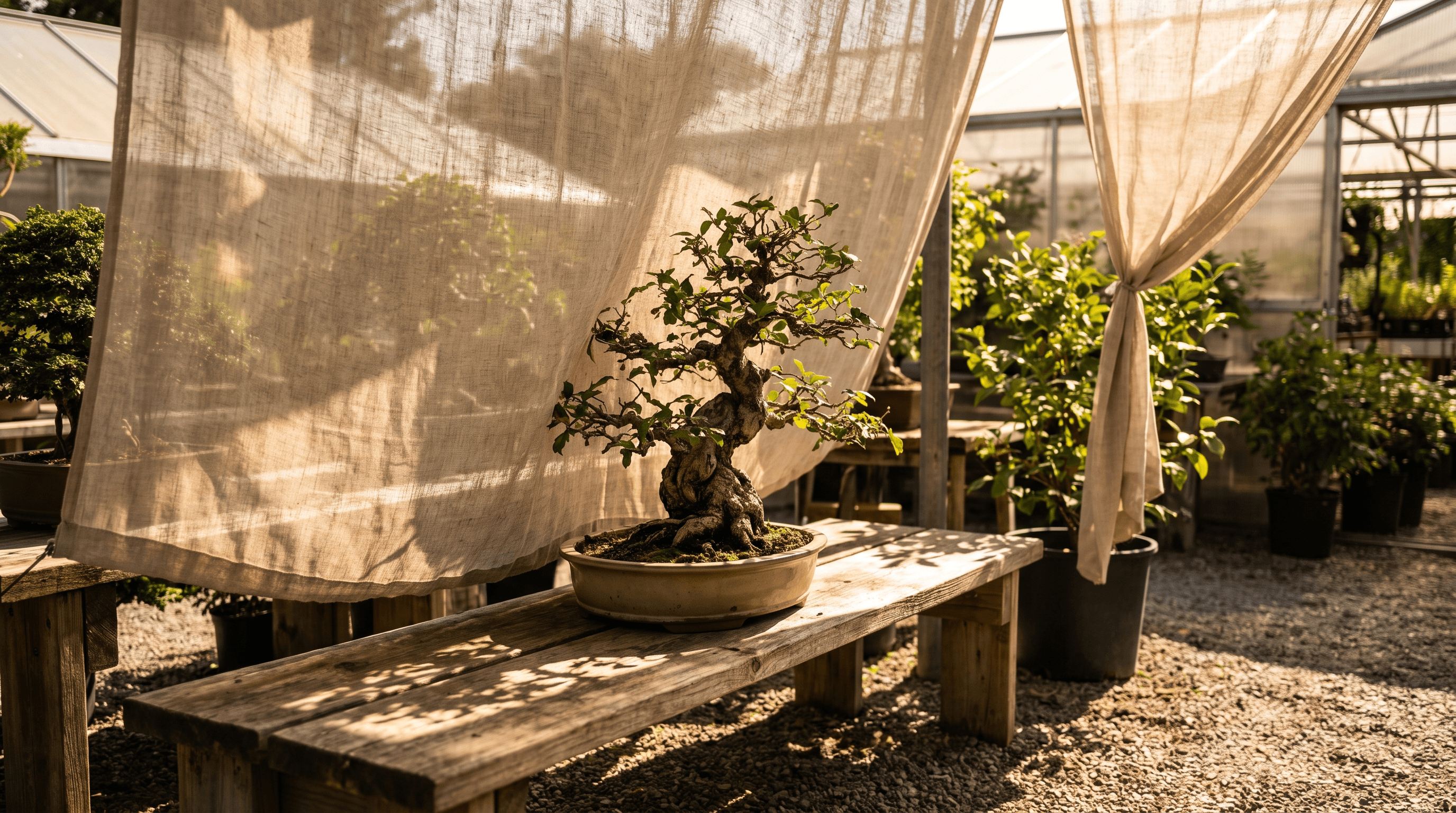
We get a run of proper heatwaves most summers here, days where the thermometer sits above forty and doesn't cool off much overnight either. I've learned the hard way, losing a few trees over the years to heat I underestimated, that a heatwave isn't just a hotter version of normal summer weather. It changes the math on watering, on shade, and on where a pot is physically sitting, in ways that a routine warm week doesn't.
The good news is that heatwaves are usually forecast a few days out, which gives you time to actually prepare rather than react. The trees that get hurt in a heatwave are almost always the ones nobody adjusted anything for, sitting in the same spot they sat in during a mild June.
This isn't the general summer checklist, I've written that separately. This is specifically about the acute stretch when temperatures spike well above what your trees are used to, and what changes during those days.
Shade the hottest hours before the heatwave arrives
I don't wait until the first brutal afternoon to start shading trees. Once a heatwave is in the forecast, I move vulnerable pots into shade cloth or dappled cover during the hottest part of the day, before the heat actually peaks. Trees that normally sit in full sun without issue can still scorch during an extreme spike, because a containerized bonsai in a shallow pot runs a hotter root zone and faces more water stress than the same species growing in open ground.
Check watering more than once, and check it properly
During a normal summer week I might check the smallest pots once a day. During a heatwave I check twice, sometimes a third time on the worst afternoons, because the gap between dry soil and real root damage shrinks fast when temperatures stay high overnight too. I actually put a finger into the soil rather than judging by the surface, since the top layer can look dry while there's still moisture lower down, or the reverse, a deceptively damp surface over a dry root ball.
Get pots off surfaces that radiate heat back up
Concrete, dark tile, and dark paving all absorb heat through the day and release it slowly, which means a pot sitting directly on one of those surfaces is getting cooked from below on top of the ambient heat from above. I move pots onto pot feet, a raised bench, or even just a layer of light-colored gravel during a heatwave if I can't relocate them entirely. It's a simple change that should help root zone temperature, especially for shallow pots where the roots are close to that hot surface to begin with, even if I can't put an exact number on how much it helps.
Know which of your species are actually heat-sensitive
Not every tree in a collection responds to extreme heat the same way. Maples, especially thinner-leaved varieties, tend to scorch and stress faster than tougher, thicker-leaved or needle species built for drier, hotter conditions. I prioritize my most heat-sensitive trees first when a heatwave is coming rather than spreading my attention evenly across the whole bench, since those are the ones that will show damage first and recover slowest.
Watch for stress signs during and right after the heat breaks
Wilting, leaf scorch at the edges, or a generally dull, tired look are the signals I watch for during a heatwave. What surprises people is that damage sometimes shows up a day or two after temperatures drop back down, once the tree's own stress response catches up with what happened. I hold off on any pruning or feeding until the tree is clearly recovered after a bad heatwave, giving the tree time to show how much it was actually affected before making decisions.
Common questions
How hot does it need to get before I should start taking special precautions?
I start adjusting once forecasts run noticeably above what the trees have been dealing with recently, rather than waiting for a specific number. A jump of even five or six degrees above the recent normal, held for multiple days, is enough to justify extra shade and watering checks.
Should I water more or water differently during a heatwave?
Mostly more frequent checking rather than a completely different method. I still water thoroughly until it drains through, just more often, since the goal is catching dryness before it becomes a problem rather than compensating after the fact.
Can misting the foliage help during extreme heat?
A light misting of the foliage and the surrounding air can offer some temporary relief for certain species, but it doesn't replace proper root watering, and misting under strong direct sun in the middle of the day is better skipped in favor of shade. I use it as a small extra step alongside a proper watering check, not the main defense.
My tree looks fine during the heatwave but wilted two days after it ended, why?
Heat stress doesn't always show up immediately. Some damage to fine roots or foliage takes a day or two to become visible, especially once the tree stops actively fighting the heat and starts showing the toll it took. This is why I wait a few days after a heatwave before assuming a tree came through unaffected.
Which bonsai species are most at risk during a heatwave?
In my experience, thin-leaved maples and other delicate deciduous species tend to scorch and stress fastest. Tougher conifers and species naturally suited to hot, dry climates generally handle a spike better, though even they can suffer if watering falls behind during the worst days.
Is it better to move trees indoors during a severe heatwave?
I'd only do that as a last resort for the most vulnerable trees, and only briefly. Indoor conditions usually mean poor light and often no airflow, which creates its own problems. Shade cloth and careful watering outdoors is almost always the better option for most species.
How long after a heatwave should I wait before pruning or feeding again?
I wait until the tree is clearly recovered and the weather has moderated rather than counting off a fixed number of days, since how long that takes depends on how bad the heatwave was and how the tree responded. That gives the tree a chance to show how much the heat actually took out of it before I resume normal pruning or a full feeding schedule.
You might also like
General guidance based on 20+ years of practice. Every tree, climate, and year is different — when in doubt, ask us.