
Soft, dark or foul-smelling roots, the classic sign of bonsai root rot
A soft trunk base, blackened roots, or a sour smell from the soil are serious signs of bonsai root rot, almost always caused by soil that's stayed wet for too long.
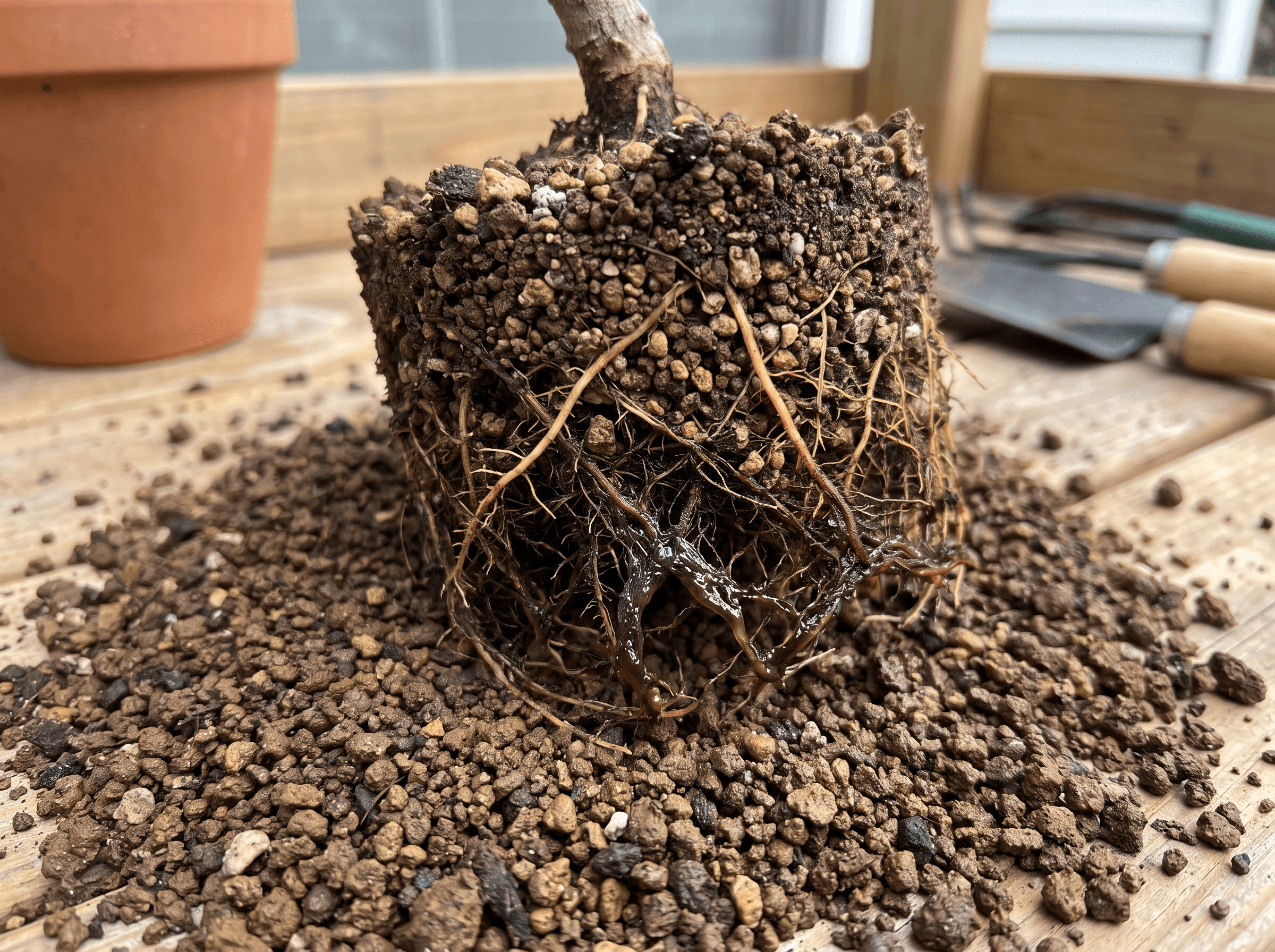
Bonsai root rot is the one diagnosis on this list where I tell people to stop reading and go check their tree before finishing the article. Everything else here, you can usually let sit a day while you figure out what's going on. Root rot can't wait, because by the time you see wilting leaves, a soft feel at the base of the trunk, or a sour smell coming off the soil, the damage below the surface has usually been building for weeks. The roots are the one part of the tree you can't watch, which is exactly why this problem gets ahead of people.
I see it most in late autumn and winter, when growth has slowed and a tree just doesn't need much water, but the habit of watering on a schedule hasn't slowed down with it. Add a pot that drains poorly, a substrate that's gone dense with age, or a run of humid, mild weather like we get here in the south during the cooler months, and the soil simply never gets the chance to dry between waterings. Trees that have just been repotted into soil that's too fine, or left sitting in the plastic nursery container they arrived in, are also common candidates. Conifers seem to suffer worse and faster than many deciduous species, in my experience, though nothing with roots sitting in wet soil is safe from it.
What makes root rot different from a nutrient problem or a pest is the timeline. A tree can lose a fungus gnat infestation or a round of tip burn and barely show it a season later. A tree that's lost half its root mass to rot is fighting for its life, and a mature specimen that's survived twenty years of training can be gone in a matter of weeks if the rot reaches the collar or the main structural roots. I don't say that to alarm you, I say it because it's the reason to act the same day you notice something is wrong rather than waiting to see if it gets better on its own.
The good news, and there is real good news here, is that root rot caught while some healthy root mass remains is very often fixable. I've pulled trees back from looking half dead with nothing more than a hard prune of the rotten roots and a proper repot into soil that actually drains. What decides the outcome is almost always how much of the root system you saved, not any special trick in the treatment.
Likely causes
Waterlogged, poorly draining soil
How to tell: Soil stays wet for days after you water, rather than drying at the surface within a day or two. Pull the tree and the roots look dark grey or black, feel mushy under light pressure, and the outer layer slides off in your fingers leaving a thin wiry core behind, instead of feeling firm, springy and pale the way healthy root tissue should. Often there's a sour, swampy smell coming straight off the rootball, closer to pond mud than soil.
The fix: Get the tree out of the pot and rinse the rootball gently so you can actually see what you're working with. Cut away every soft, dark root back to clean, firm, pale tissue, using sterilised scissors or shears so you're not introducing more rot with the cut itself. On junipers and pines, remove the rotten zones thoroughly but work to preserve as much healthy root as you can, and skip a full bare-root wash unless the rot genuinely calls for it, since these conifers tend to recover more slowly from that kind of root disturbance than deciduous species do. Repot straight into fresh, coarse, fast-draining bonsai soil, never back into the old wet mix. Water in thoroughly right after repotting and let it drain fully, then keep the tree in protected shade or bright indirect light and water again only when the mix begins to dry, rather than waiting for new growth as the trigger to resume watering.
Oversized pot for the tree
How to tell: The pot looks generous next to the tree, with a lot of soil volume around a comparatively small root mass. That extra soil holds moisture the roots aren't there to use, so it stays damp long after the working part of the rootball has already dried out, and the excess wet soil becomes a spot for rot to start unnoticed at the edges before it works its way inward toward the trunk.
The fix: Match the pot to the tree rather than leaving room for it to grow into, which is a habit better suited to nursery stock than to bonsai. As a rough starting point, a pot depth close to the trunk's diameter above the nebari is a reasonable target to work toward. If you've inherited an oversized pot on a tree that's otherwise healthy, it's worth stepping down to a better-fitted one at the next proper repotting window rather than waiting for a problem to force the issue.
Old, broken-down substrate
How to tell: The mix in the pot looks and feels more like dense, packed dirt than the open, gritty substrate you started with, especially a few centimetres down where you can't see it from the surface. Organic components in bonsai soil break down over time into finer particles that clog the air pockets between them, and once that happens water stops passing through and starts sitting, even in a well-shaped pot with good drainage holes.
The fix: Repot at the right season for the species before the substrate gets to that point. Fast-growing or young trees are often closer to needing it every one to two years, while mature, refined or naturally slow-growing trees can often go three to five years or more between repots. Root density and how freely the mix still drains are the real deciding factor, not the tree's age or a fixed calendar. Work the old, broken-down soil fully out of the rootball rather than just topping up around it, and replace it with a properly sifted, coarse mix. A substrate that's overdue for replacement is one of the quieter causes of root rot, because nothing about the pot or your watering routine has to change for it to start happening.
How to prevent it
Most root rot I'm called in to look at traces back to one of three habits: soil that doesn't drain, a pot sized for looks rather than for the roots, or a mix that's been left in the pot years past its useful life. Build your prevention around a free-draining, coarse bonsai substrate from the start, size the pot to the actual root mass rather than to how the tree might look in a bigger container, and check the soil surface before every watering rather than watering on a fixed schedule. Let the top layer approach dryness between waterings. A tree that's slightly thirsty recovers in a day; a tree sitting in wet soil for weeks may not recover at all.
Common questions
Can a bonsai recover from root rot?
Yes, provided you catch it while a meaningful portion of the root system is still healthy and you act quickly. Trees may recover if enough healthy fine root mass remains after a hard prune of the rotten tissue, especially species that root vigorously like ficus, elm or willow. What kills a tree isn't the rot itself so much as delay, since every week left untreated is more root mass lost and less left to work with.
How do I know if the roots are rotten versus just wet?
Wet, healthy roots are still firm to the touch and hold their shape when you squeeze gently, and the outer bark layer stays attached rather than sliding off. Rotten roots feel soft or mushy, often collapse under light pressure, and the outer tissue slips away from a thin wiry core when you run your fingers along it, sometimes leaving a slimy residue behind. Colour is a clue too: pale tan to white is normal for most species, while grey, brown or black usually means trouble.
How do I check the roots without fully unpotting the tree?
Scrape back a small amount of soil from the surface near the trunk with a chopstick or your fingers and check for a sour, swampy smell, which is often the earliest sign before anything looks visibly wrong. You can also gently tip the tree partway out of the pot to glance at the roots along the outer edge of the rootball without disturbing the whole thing. If the base of the trunk feels soft when you press it, that alone is reason enough to do a full inspection.
Are some species more prone to root rot than others?
Conifers, particularly junipers and pines, generally dislike constantly wet soil and tend to be more vulnerable to root problems than many broadleaf species once their roots sit in wet soil for long stretches. Deciduous trees like maples, elms and ficus are often more forgiving and can push new roots more readily after a hard prune. That said, no species is genuinely immune, wet feet for long enough will rot the roots of almost anything.
How urgent is root rot, really?
More urgent than most problems you'll deal with on a bonsai. Rot can spread through a root system in a matter of weeks, and once it reaches the root collar or the main structural roots near the trunk, the outlook gets considerably worse. If you suspect root rot, don't wait for a scheduled repotting window, treat it as soon as you notice a soft trunk base, a bad smell, or roots that stay wet far longer than they should.
Can root rot spread to other trees in my collection?
The fungi and bacteria behind root rot don't jump through the air to a neighbouring tree, but they travel easily on tools, hands, or reused soil, so clean your cutting tools between trees and don't reuse old substrate from an infected pot. Standing water shared across a bench, like a tray that several pots sit in, can also move pathogens between trees, so it's worth keeping an infected tree's drainage separate while you treat it.
What do healthy roots actually look like?
Healthy roots are firm enough to resist light pressure without collapsing, and they should look pale, usually white, cream or light tan depending on species, rather than dark. Fine feeder roots should be visible near the tips of the root mass, not just a handful of thick main roots with nothing branching off them. Junipers and pines often show a slightly more fibrous, wiry root texture than the softer, fleshier roots you'll find on a healthy ficus or elm, so it helps to know what's normal for your particular species before you go looking for a problem.
You might also like
General guidance based on 20+ years of practice. Every tree is different — when in doubt, ask us.