
Mealybugs on your bonsai
Cottony white clusters tucked into branch forks and leaf joints are almost always mealybugs, sap-sucking insects that hide in the tree's tightest corners.
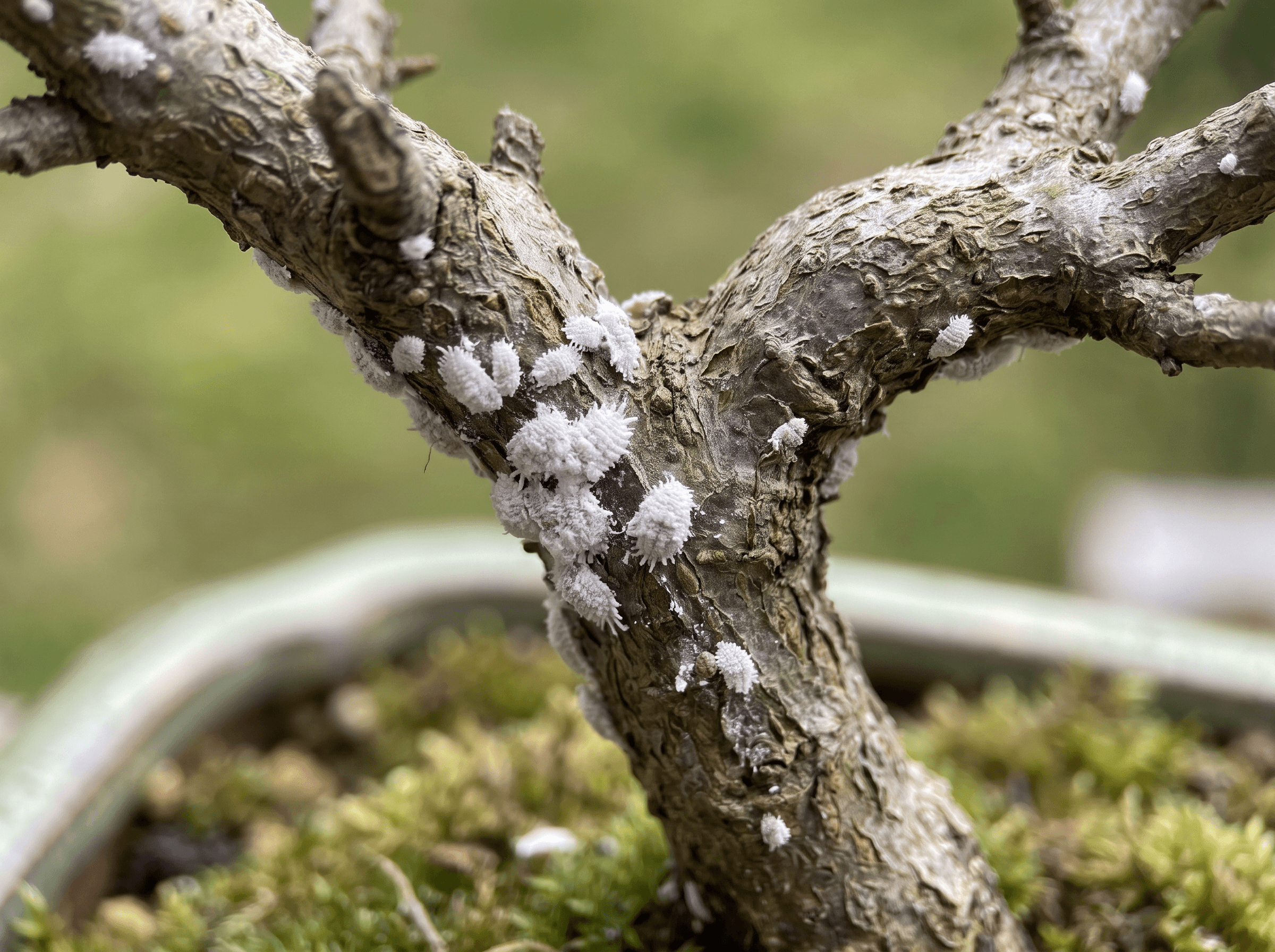
Mealybugs are one of the pests I see most often on bonsai brought indoors for winter, or on trees that just came from a nursery. They're small, soft-bodied insects that cover themselves in a waxy, cotton-like coating, which is usually the first thing you notice rather than the insect itself.
They favour the places on a tree that are hardest to inspect: leaf axils, branch forks, the underside of a low branch, right where it meets the trunk. A light infestation can sit there for weeks before it's obvious, which is why I make checking those spots a habit rather than something I only do when a tree already looks unwell.
Mealybugs feed by piercing plant tissue and drawing out sap, and a heavy, sustained infestation weakens the tree measurably: slower growth, weaker resistance to other stress, and in bad cases dieback on the branches they've colonised. Caught early, though, they're one of the more manageable pests on this list.
Likely causes
Mealybug infestation
How to tell: White, cotton-like fluff sitting in leaf axils, branch forks and along stems, sometimes with a fine webby texture. Look closely at the fluff itself and you'll usually find the soft-bodied insects tucked underneath it, roughly oval and a few millimetres long once you know what you're looking at.
The fix: For a light infestation, dab each visible cluster directly with a cotton swab dipped in 70% or weaker isopropyl alcohol, which kills them on contact and dissolves the waxy coating. Test it on a small, hidden area first and wait a day before treating more widely, since alcohol can damage foliage on sensitive species if overused; avoid spraying or drenching the whole tree, and dilute the alcohol or rinse the foliage afterward on species you know react poorly. Follow up by treating the whole tree with neem oil or insecticidal soap, giving the undersides of leaves and every branch fork direct, thorough coverage, since these products work on contact and have limited residual effect once they've dried. Repeat according to the product label, commonly every 7 to 14 days, for 2 to 4 rounds, since a single treatment rarely catches eggs that haven't hatched yet.
Ants farming the mealybugs
How to tell: A trail of ants moving steadily up and down the trunk, often converging right at the mealybug clusters. Ants don't cause the infestation, but they protect it deliberately, in exchange for the sugary honeydew the mealybugs excrete.
The fix: Treat the ants alongside the mealybugs, or they'll keep defending the colony from natural predators and can even carry mealybugs to new parts of the tree. A sticky barrier is still one of the more effective tools, but don't apply the sticky compound directly to bonsai bark, since it can damage it; wrap a band of tape or fabric around the trunk or the pot rim first and put the sticky compound on that, or place it on the pot itself or the bench underneath instead of the tree. Prune away any foliage bridges, low branches or leaves touching a neighbouring pot or the bench, that would let ants bypass the barrier entirely.
Sticky honeydew and sooty mould
How to tell: A faintly sticky film on leaves, branches, or the surface below the tree, which over time can develop a dark, sooty-looking mould growing directly on the residue.
The fix: Once the mealybugs are actually under control, wipe the honeydew off with a damp cloth or a very dilute soap solution. The sooty mould itself isn't parasitic on the tree; it can't establish without the sugary film feeding it, so removing the mealybugs and the residue together clears both problems at once.
How to prevent it
Mealybugs are most often introduced on new material, so give any newly acquired tree a close inspection of every leaf axil and branch fork before it goes anywhere near the rest of your collection, and consider a short quarantine period if you can manage it. On established trees, a weekly glance at these same hiding spots during the growing season catches an infestation while it's still a handful of insects rather than an established colony.
Common questions
Are mealybugs dangerous to my bonsai?
Left untreated, a heavy, sustained infestation weakens the tree by draining sap and can eventually cause dieback on the branches they've colonised. Caught early, they're very manageable and rarely fatal on their own.
Will one treatment get rid of them?
Rarely. Mealybug eggs are protected inside the waxy coating and survive a single spray, so plan on repeat treatments according to the product label, commonly every 7 to 14 days for 2 to 4 rounds, until you stop seeing new clusters forming.
Can mealybugs spread to my other bonsai?
Yes, easily, especially if trees are placed close together or share the same watering routine. Isolate an infested tree while you're treating it, and check neighbouring trees for early signs before assuming they're clear.
Is rubbing alcohol safe to use directly on the tree?
Used sparingly, as a dab on individual clusters with a cotton swab, 70% or weaker isopropyl alcohol is a standard treatment and generally safe. Test it on a small, hidden area first, avoid drenching the whole tree in it, and don't use it on young, tender growth, which can be more sensitive.
Do mealybugs live in the soil as well as on the tree?
Some related species do target roots, and root mealybugs are possible in a bonsai pot even though they're less often what owners notice first. Most infestations you'll actually spot are on the foliage and stems, but if you've treated the visible pest thoroughly and the tree is still struggling, or you see a waxy residue in the soil, it's worth checking the roots separately rather than assuming it's the same problem.
Can I use a systemic insecticide instead of spot treatments?
A systemic product, watered into the soil so the tree takes it up through the roots, can work well against a stubborn or widespread infestation, and it reaches insects hiding in spots you can't easily see. Use only a product labelled for the plant and the site, follow the label directions exactly, and avoid using it anywhere pollinators could contact flowers or where runoff could reach water. I still prefer spot treatments and neem for a light infestation on a tree I'm actively enjoying, since a systemic asks you to be more careful about handling the tree and any cuttings for a while afterward.
How do I know when the mealybugs are actually gone?
Keep checking the same hiding spots weekly even after you stop seeing obvious clusters, since a few stragglers or a late hatch of eggs are easy to miss. I usually consider a tree clear once I've gone three or four checks in a row without finding anything new, not just after one clean inspection.
You might also like
General guidance based on 20+ years of practice. Every tree is different — when in doubt, ask us.