
How to Choose Your First Bonsai Tree
The most important decision with your first bonsai happens before you pick a species at all: being honest about where the tree will actually live.
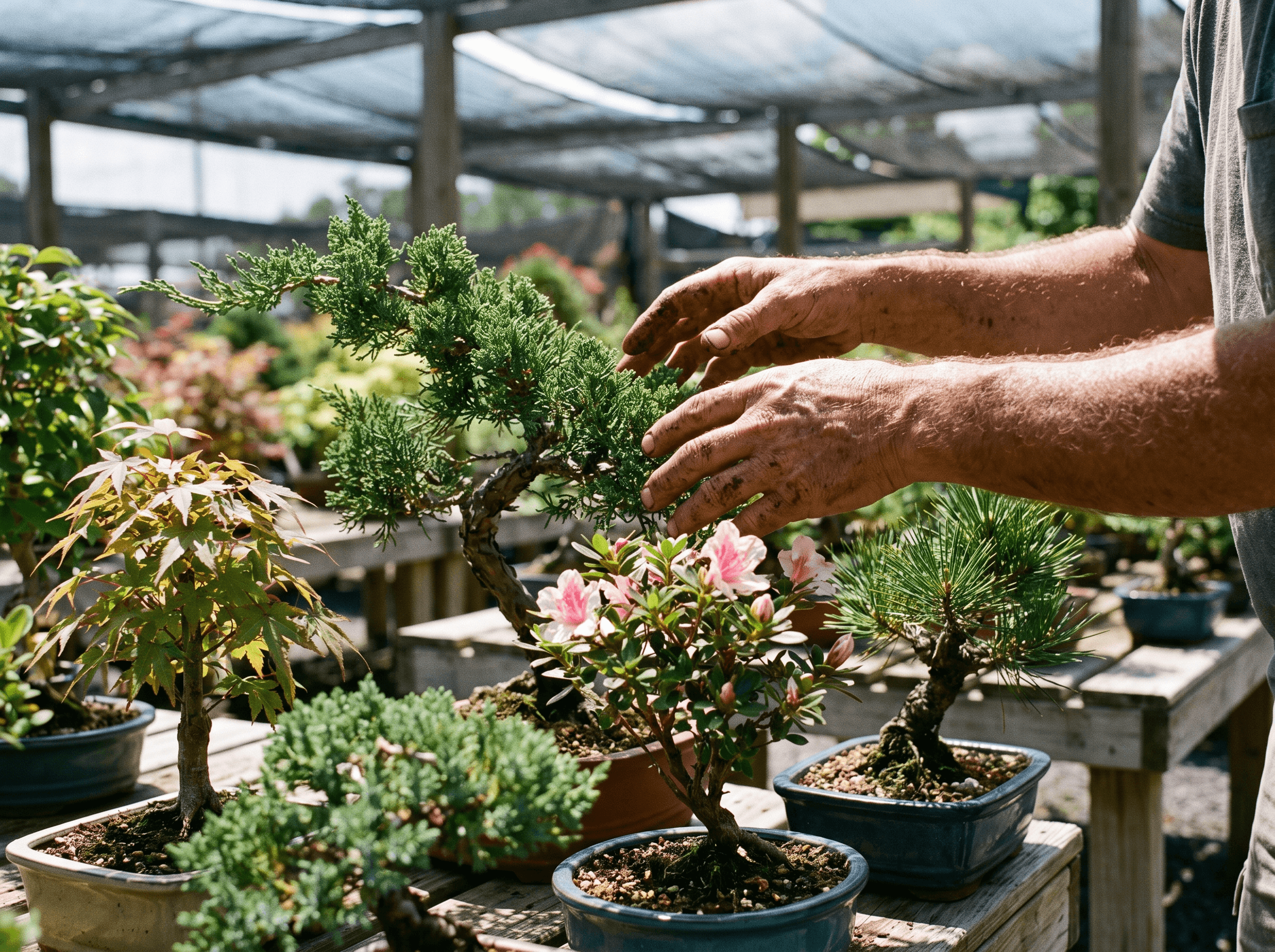
People come into the nursery asking which bonsai is the best one, as if there's a single correct answer sitting on a shelf somewhere. There isn't. The question I ask back is always the same: do you have a heated apartment with no real outdoor space, or a balcony, terrace, or garden where the tree will feel actual seasons? That one answer rules out most of the wrong choices before we've even talked about shape or trunk thickness.
I understand the instinct to fall for whatever tree looks most striking in the shop. I did the same thing with my first one, decades ago, and it struggled for a year before I understood why. It wasn't a bad tree. It was the wrong tree for the spot I had for it. In my experience, species mismatch is one of the most common reasons a first bonsai dies within the first twelve months, right up there with watering mistakes and pests.
So before we get into specific trees, get clear on your actual living situation. That single fact will do more to keep your first bonsai alive than any amount of enthusiasm.
Match the species to your real conditions, not your ideal ones
If your only space is an indoor apartment with central heating and no outdoor balcony, you need a subtropical species built to tolerate that: warm, relatively dry, and without a real winter. If you have a balcony, terrace, or garden that genuinely experiences the seasons where you live, including cold in winter, you have access to the classic temperate bonsai species that most people picture when they hear the word bonsai. These two situations call for almost entirely different trees, and conflating them is where most beginners go wrong. Be honest about which one you actually have, not which one sounds nicer.
Reliable choices for indoor beginners
For a warm apartment with decent light near a window, ficus is about as forgiving as bonsai gets. It tolerates inconsistent watering better than most species, bounces back from neglect, and handles the lower humidity of a heated home reasonably well. Chinese elm is the other common recommendation for indoor growers. It can adapt to a bright indoor spot better than most elms, though it's generally stronger with regular time outdoors in warmer months and isn't quite as foolproof indoors as ficus, so treat it as the second choice rather than an equal alternative. Both are a much safer bet than a juniper or pine kept permanently inside, which will decline slowly and predictably no matter how well you otherwise care for it.
Reliable choices for outdoor beginners
If you've got real outdoor space, juniper is the classic starting point and for good reason. It's tough, tolerates a range of climates, forgives some inconsistency in care, and gives you a tree that actually wants the seasonal cycle you can offer it. It also happens to be widely available as inexpensive nursery stock, which matters for your first attempt. Pines and maples are wonderful trees too, but they tend to be less forgiving of beginner mistakes than juniper, so I usually steer first-timers toward juniper and suggest the others once you've got a season or two of outdoor bonsai experience under your belt.
Don't buy on looks alone, check the tree's actual health
A dramatic curved trunk or an interesting pot means nothing if the tree underneath is struggling. Before buying, look at the base of the trunk for a visible root flare, where the trunk widens naturally into the roots rather than plunging straight into the soil like a stick in a pot. Check the foliage for even, consistent color rather than patchy yellowing or browning. Look under leaves and along stems for anything that looks like webbing, sticky residue, or small clustered insects, which usually signal a pest problem you don't want to inherit. A slightly less photogenic tree that's genuinely healthy will usually outperform a dramatic one that's already stressed.
Nursery stock versus pre-styled bonsai
Raw nursery stock, meaning a young, untrained tree with no real bonsai styling yet, is cheap and forgiving to learn on, but it won't look like a finished bonsai for a while and you'll be doing a lot of the shaping work yourself. A pre-styled bonsai, already wired and trained into a recognizable form, costs considerably more but gives you an immediate sense of what you're aiming for and something presentable from day one. Neither is the wrong choice. If your budget is tight and you want to learn technique, start with nursery stock. If you want a tree that already looks like a bonsai while you learn the maintenance side, pay for the pre-styled one.
Common questions
What's the easiest bonsai for a complete beginner?
It depends entirely on where it will live. Indoors, ficus is the most forgiving option. Outdoors with real seasons, juniper is the classic and most forgiving starting point. Trying to force either species into the wrong environment makes an otherwise easy tree much harder than it needs to be.
Can I keep an outdoor bonsai species indoors if I just give it a grow light?
Not successfully as a permanent solution. Temperate species like juniper, pine, and maple need a real winter dormancy period with actual cold to stay healthy long term, something a heated indoor environment can't replicate no matter how good the lighting is. A grow light helps with light intensity, but it doesn't solve the dormancy problem.
Is it better to buy bonsai online or in person?
In person, if you have the option, purely so you can inspect the actual tree for root flare, foliage color, and pests before committing. Buying online works fine from a reputable, established nursery, but you're trusting photos and someone else's judgment of health rather than checking it yourself.
How much should I expect to spend on my first bonsai?
Decent nursery stock or beginner pre-bonsai material is genuinely affordable, often not much more than a nice houseplant. Avoid the very cheapest mall-kiosk mini bonsai, which are usually poor-quality material with a low survival rate. A reasonable mid-range starting tree from a proper nursery is the better investment for a first attempt.
Should my first bonsai already be in a decorative bonsai pot?
It doesn't need to be, and honestly it's common for early training material to sit in a plain grow pot or training container while the roots and structure develop. A beautiful pot on an undeveloped tree is mostly cosmetic. Focus on the health and structure of the tree first.
What size should a first bonsai be?
Something in the small to medium range, easy to move, easy to inspect closely, and not so large that repotting or wiring feels intimidating. Very small mame-sized bonsai tend to dry out extremely fast in my experience, and I'd consider them harder to keep alive than a moderately sized tree, especially before you've learned to read soil moisture, so I wouldn't recommend starting there despite how appealing the tiny size looks.
How do I know if a bonsai for sale has root problems?
You often can't tell for certain without checking the roots directly, but warning signs from the outside include soil that looks unusually compacted or waterlogged, or a tree that wobbles loosely when gently touched at the base, suggesting the root system hasn't established properly in that pot. A trunk with no visible root flare is worth a second look too, though on its own it's just as likely to mean undeveloped nebari on young material as an actual root problem.
You might also like
General guidance based on 20+ years of practice. Every tree and every climate is different — when in doubt, ask us.