
Soft or blackening trunk base
A soft, dark or foul-smelling base is the most serious sign a bonsai can show. Act quickly, and know what to check right now.
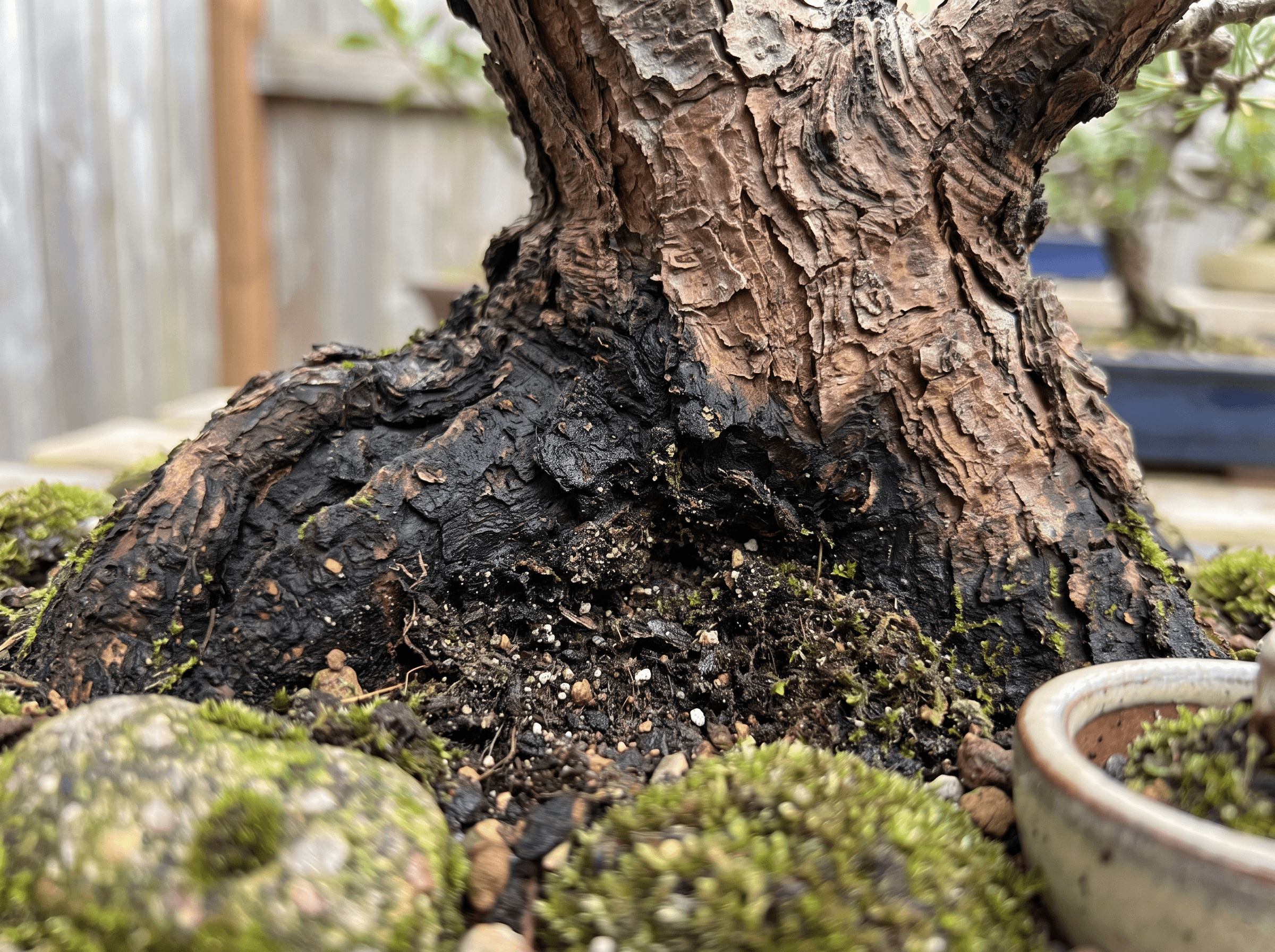
This is the one symptom on the whole site I'd call a genuine emergency, and I want to treat it that way rather than easing into it. If you've just run your fingers over the base of your bonsai's trunk, right where it meets the soil, and found it turning black and soft instead of staying firm, stop reading generic advice and go confirm what you're dealing with. Healthy bark and healthy wood underneath it feel firm no matter the species, and a spot that yields like a bruised piece of fruit is telling you the tissue underneath is already breaking down.
The trunk base often shows the damage later than the roots themselves, since root rot, or crown and collar rot at the base, typically starts below the soil line, in roots you can't see without unpotting the tree, and by the time the bark at the base has softened, the underlying problem has often been developing for some time already. That's why this particular sign carries more urgency than, say, a few yellow leaves: it's frequently a late-stage indicator arriving as one of the first things most growers actually notice. If you find softness at the base, treat it as a sign the roots below are already significantly affected, so speed matters more here than with almost any other symptom on this site.
Knowing what 'soft' actually means matters too, because plenty of growers panic over bark that's just naturally a little give under fingertip pressure on younger trees or certain species, or mistake a patch of rough, flaking bark for rot. True rot-related softness is different: press gently and the tissue depresses like wet cardboard, sometimes with a faint sour or swampy smell, and often the bark colour has darkened or blackened in that same spot rather than staying its normal shade. If you're getting that combination, this page is about what to do in the next hour, not the next week.
Likely causes
Root or crown rot reaching the trunk base
How to tell: The soil has been staying constantly wet, the base of the trunk feels soft or spongy rather than firm, and if you press gently the bark may darken further or even break, sometimes releasing a foul, swampy smell. This usually points to root rot, or crown and collar rot right at the base, that has progressed far enough to affect the lower trunk, not just the roots below soil level; which of the two you're dealing with is something you can only confirm by inspecting the roots and the lower crown directly.
The fix: This is an emergency, not a wait-and-see situation. Unpot the tree today if at all possible and look at the roots and the lower trunk directly, since what you find there determines everything else; slip the rootball out gently rather than tearing into it, and disturb healthy-looking roots as little as possible while you assess the damage. Do not water the tree again until you've inspected it, and do not assume the tree will recover on its own. If you confirm active rot, treating it promptly is worth doing even outside the normal repotting season for that species. For the full step by step of cutting back affected roots, repotting into the right mix, and the aftercare that follows, go straight to the dedicated root-rot page on this site, which covers that complete treatment in detail. This page is here to help you recognise the emergency fast; that one is here to walk you through fixing it.
Poor drainage setting up the conditions for rot
How to tell: A pot with no drainage holes, drainage holes that are blocked or too small, or a dense, compacted soil mix that holds water long after a normal mix would have dried. Often the trunk softness you're seeing now is the downstream result of a drainage problem that's been present for a while without anyone addressing it.
The fix: Once you've dealt with the immediate rot (again, see the root-rot page for that), fix the underlying drainage or the same thing happens again. Always use a pot with adequate, unobstructed drainage holes, and repot into an open, free-draining bonsai substrate rather than generic potting soil, which holds far more water than a bonsai's confined root system can handle.
How to prevent it
Because this symptom is a late warning rather than an early one, the real prevention happens well before the trunk ever feels soft: check your watering habits against the season and the pot rather than watering on a fixed schedule, make sure every pot you use drains freely and quickly after a thorough watering, and get in the habit of gently pressing the trunk base every few weeks as part of a routine check, the same way you'd check leaves for pests. Catching a slightly-too-soft spot before it's obviously black and mushy is the difference between a tree that recovers fully and one that doesn't. If you ever find yourself unsure whether a tree has been sitting too wet for too long, err on the side of checking the roots rather than waiting for more visible signs.
Common questions
Is a soft trunk base always fatal?
No, but it is always urgent. Trees caught at this stage can and do recover, particularly if the rot hasn't circled the entire base and some healthy root mass remains. The outcome depends heavily on how quickly you unpot and address it, which is why I'd rather you act today than read further opinions first.
What should I do right this minute, before I've read anything else?
Stop watering, and unpot the tree to look at the roots as soon as you reasonably can, ideally the same day. As a default, hold off on fertiliser and canopy pruning until you know what you're dealing with, and don't wait to see if it improves on its own. Once you've confirmed root or crown rot, move to the root-rot page for the actual treatment steps.
How is this different from the dedicated root rot page on this site?
This page exists to help you recognise the emergency fast when you've just felt something alarming at the trunk base and don't yet know what you're looking at. The root-rot page is the full treatment guide once you've confirmed that's what's happening, covering root by root assessment, cutting back, repotting mix, and aftercare in much greater depth than makes sense to duplicate here.
What does a bonsai trunk turning black and soft actually feel like compared to normal bark?
Normal bark, even on a young or thin-barked species, resists gentle finger pressure and springs back. Rot-affected tissue depresses under the same light pressure the way overripe fruit does, and often stays indented rather than springing back. If you're not sure which you're feeling, compare the suspect spot to bark higher up the same trunk, which gives you an immediate reference point.
Can a blackened trunk base be something other than rot?
Occasionally, yes. Sun scald, old pruning wound damage, or a scar from previous injury can leave a dark patch without it being active rot, but those spots are typically firm and dry to the touch, not soft or damp. Softness combined with darkening is the combination that points specifically to rot.
Should I cut away the black bark myself right away?
Don't start cutting into the trunk itself before you've unpotted the tree and assessed the roots, since trunk-level surgery on an actively rotting tree without addressing the root cause first rarely helps and can open the tree to further infection. Deal with the roots first, following the steps on the root-rot page, and only address visible trunk tissue afterward if it's still clearly compromised.
You might also like
General guidance based on 20+ years of practice. Every tree is different — when in doubt, ask us.