
How to Protect Bonsai from Spring Frost
A frost that wouldn't have touched your tree back in January can blacken a week's worth of fresh spring growth overnight.
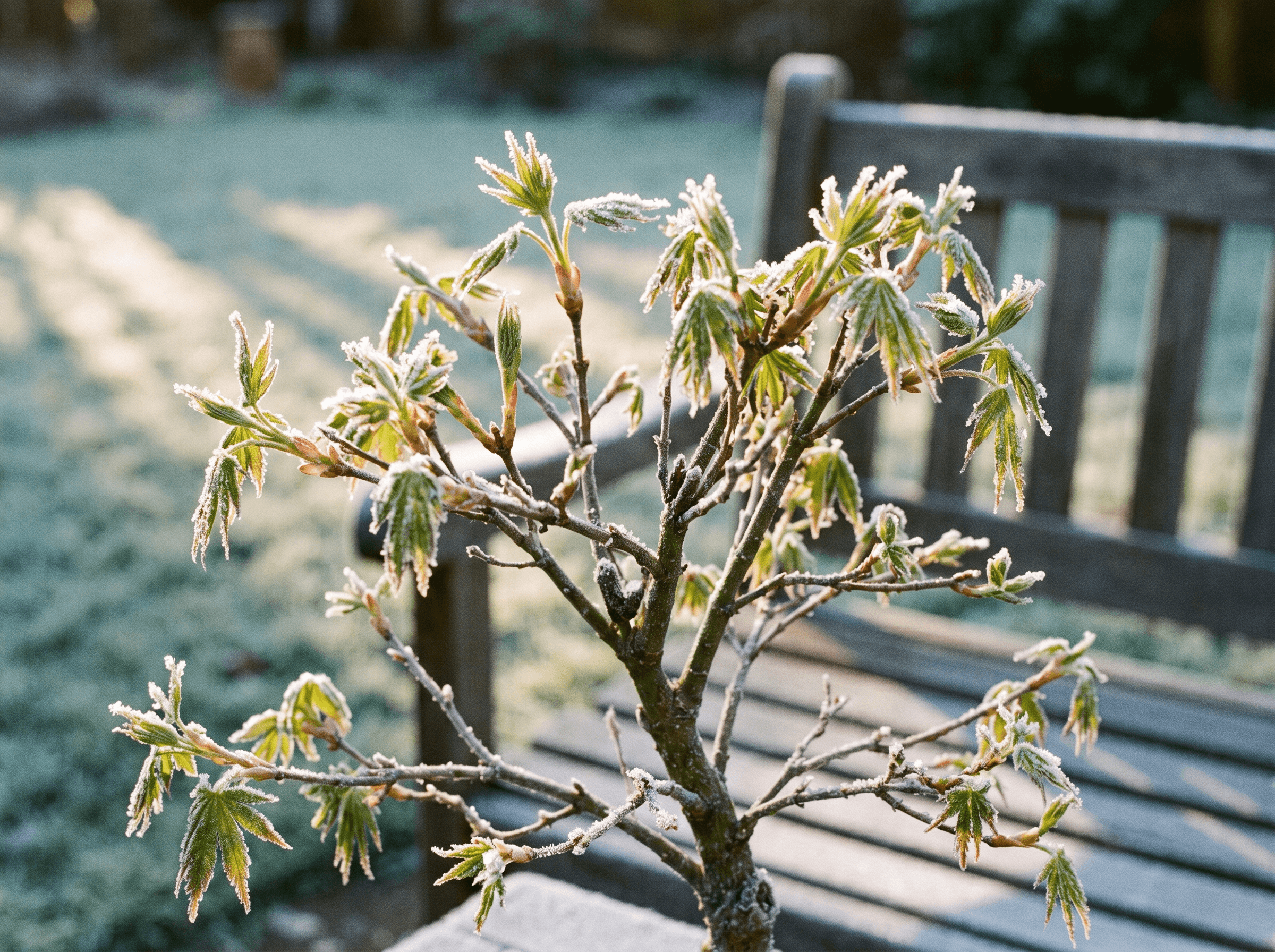
This is the spring danger people underestimate most, because it feels backwards. The tree survived a real winter, so a cold night in April seems like nothing by comparison. But the tissue at risk isn't the same tissue anymore.
Dormant wood and hardened winter growth are tough, built to handle real cold. Fresh spring shoots are soft, high in water content, and have none of that hardening yet. The same drop in temperature that a dormant branch shrugs off can turn new growth black and mushy within a single night.
I've lost growth to a late frost more than once over the years, usually in a spring that felt like it had arrived early and then took a step back, which happens most years somewhere in the season. Watching the forecast doesn't stop once the weather turns pleasant, if anything it matters more right then.
Why new growth is so much more vulnerable
Fresh shoots and newly opened leaves are soft, high in water content, and haven't developed the protective structures that mature tissue has. When that water freezes inside soft cells, it ruptures them, and the damage shows up as blackened, wilted, or mushy tissue once things warm back up. Hardened old wood simply doesn't have this problem the same way, which is exactly why a tree that sailed through February can still take real damage in April.
Don't stop checking forecasts once spring feels like it's arrived
The trap is assuming that because the weather has turned mild, warm days and new growth pushing, the risk is over. It isn't. A warm stretch followed by a clear, cold night is one of the most common patterns for late frost damage, precisely because people relax their guard right when the tender growth is most exposed. I keep checking overnight lows through the whole of spring, not just early on, until I'm confident the local last-frost date has genuinely passed.
Practical ways to buffer a forecast frost
When a cold night is forecast, moving trees under cover, even a simple overhang or into a garage overnight, is the most reliable option if you can manage it. For trees that have to stay put, covering with frost cloth or even an old sheet traps a bit of ground heat and can make the difference of a couple of degrees, which is often all that's needed. I stick to breathable fabric, frost cloth or an old sheet, rather than plastic directly against the foliage, and let the cover reach all the way to the ground so it actually traps that heat rather than leaving gaps for it to escape. Making sure the soil is adequately moist, not bone dry, before a cold night also helps slightly, since moist soil holds and releases heat better than dry soil does, though there's no need to soak it heavily beyond its normal watering.
Which trees and which growth to worry about most
New growth on any species is more vulnerable than hardened growth, and growth in more exposed positions, elevated, open to the sky, or away from any wall or windbreak, tends to take the worst of it on a clear, cold night compared to growth that's more sheltered or closer to the ground. Species that push growth particularly early, and trees that were brought out of winter shelter recently and haven't fully hardened off yet, are the ones I watch closest through any forecast cold snap.
If damage happens anyway
Blackened new growth after a frost isn't necessarily the end of that branch. Many trees push secondary buds if the first flush is lost, so I resist the urge to cut everything back immediately. I wait a couple of weeks to see what the tree actually does before deciding how much, if anything, needs pruning away.
Common questions
How can new spring growth be more frost-sensitive than the tree was in winter?
Fresh shoots are soft and high in water content, and haven't developed the protective structures that mature, hardened tissue has. When that water freezes inside soft cells it ruptures them, which is why tender growth can blacken from a frost that dormant wood would shrug off entirely.
How do I know when the frost risk is finally over for the season?
Check your local average last-frost date and build in a buffer of at least a week or two past it, since averages hide plenty of variation year to year. I keep watching overnight forecasts through that buffer period rather than assuming the risk has passed as soon as the date is reached.
What's the best way to protect a bonsai from a forecast late frost?
Moving the tree under real cover, even a simple overhang or garage, is the most reliable protection if you can do it. If not, breathable frost cloth over the tree and adequately moist soil beforehand both help buffer the temperature drop, though neither is as protective as full shelter.
Is a light frost actually dangerous, or only a hard freeze?
Even a light frost can damage the softest new growth, since it's the freezing of water inside tender cells that causes the harm, not the severity of the cold alone. I don't wait for a hard freeze warning to take precautions, any forecast frost on a night with tender growth exposed gets my attention.
My tree's new growth turned black after a cold night. Is the tree dead?
Almost certainly not, just that flush of growth. Most trees push secondary buds if the first ones are damaged. I wait a couple of weeks after frost damage before pruning anything away, to see what the tree does on its own first.
Are some species more vulnerable to late frost than others?
Species that push growth particularly early in spring are more exposed simply because their tender tissue is out and vulnerable for a longer stretch of the frost-risk window. Trees recently moved from winter shelter that haven't hardened off yet are also more at risk regardless of species.
Does the position of a tree on my bench affect its frost risk?
Yes, in a general sense. Trees in more exposed positions, elevated, open to the sky, or away from any wall or windbreak, tend to fare worse on a clear, cold night than trees tucked closer to a wall, under some cover, or nearer the ground, so position is worth considering alongside species when a frost is forecast.
You might also like
General guidance based on 20+ years of practice. Every tree, climate, and year is different — when in doubt, ask us.