
Small brown bumps on branches
Hard, waxy bumps stuck along branches and stems that don't brush off easily are usually scale insects on bonsai, one of the more stubborn pests these trees pick up.
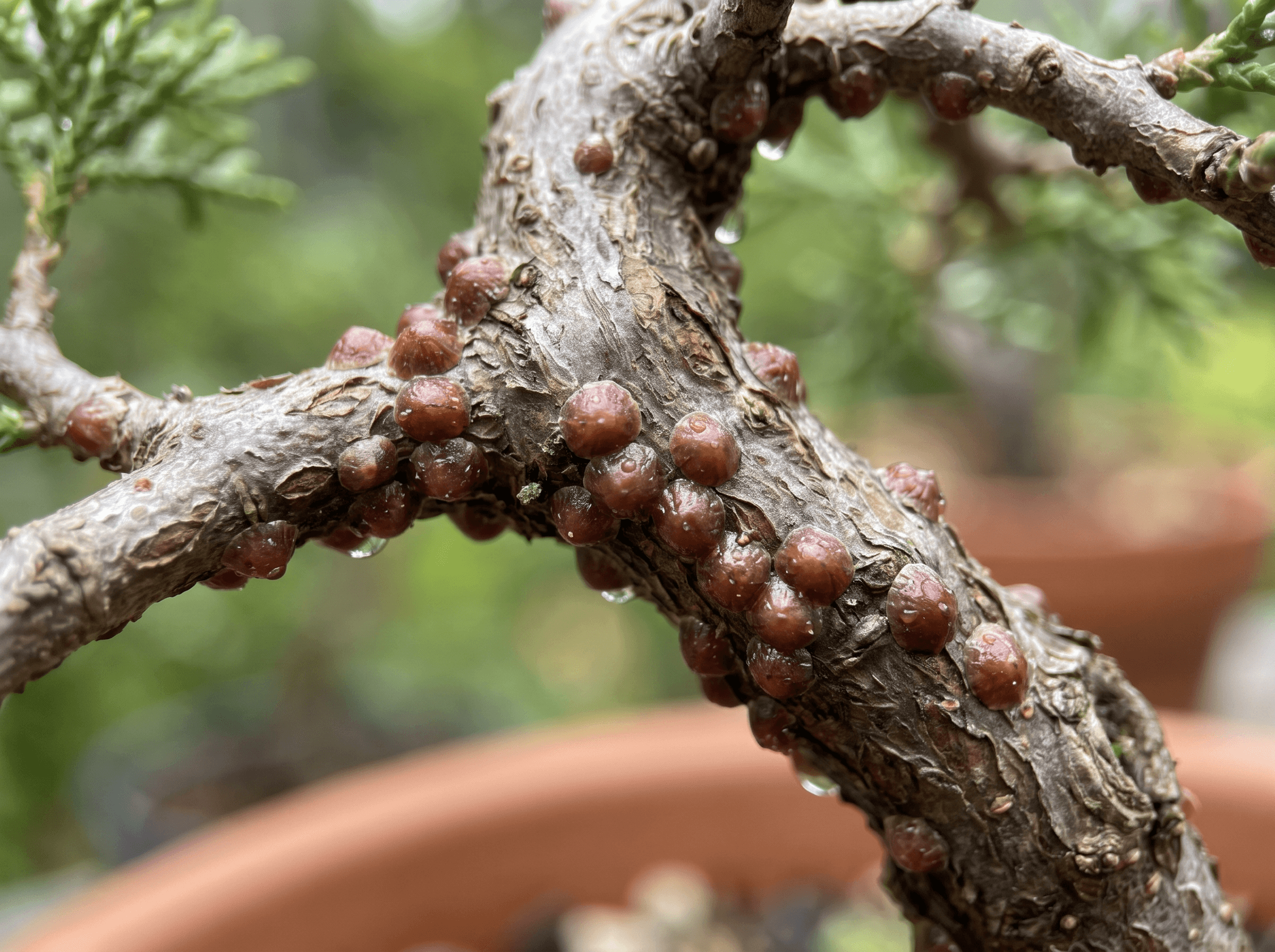
Scale insects are some of the easiest pests to walk right past. Unlike aphids or spider mites, they don't move once they've settled, and the waxy shell they build over themselves can look enough like a bark irregularity or a bit of dried sap that most people don't give it a second look until there are dozens of them lined up along a branch. I've had clients bring me a tree convinced it had some kind of bark disease, when it was scale the whole time, just sitting there feeding quietly for who knows how long.
You tend to find scale on trees that have spent time somewhere sheltered and still, an indoor spot over winter, a greenhouse corner, a nursery bench where air doesn't move much. Junipers, pines and maples get hit often in my experience, though I've pulled scale off pomegranate and olive material too. New stock is a common source; a tree that changes hands a few times before it reaches you has had that many more chances to pick something up along the way.
On its own a light dusting of scale won't do much damage, and I wouldn't panic over three or four bumps on an otherwise healthy branch. The trouble comes with time. Left alone, the colony spreads down the branch and onto neighbouring ones, each insect drawing sap the whole time, and a heavy infestation shows up as thinning foliage, dieback on the branches they've colonised, and, if it's soft scale, often a sticky honeydew residue that draws sooty mould on top of the damage already being done. It's slow, which is exactly why it gets away from people.
Likely causes
Scale infestation
How to tell: Small, immobile brown or grey bumps sitting flush against branches and twigs, often in rows along the bark ridges where the insect first settled. Run a fingernail across one and it should scrape off with some resistance, revealing a soft, pale body underneath rather than tree tissue; that's the giveaway that separates scale from a bark bump or lenticel. You'll sometimes find a faint sticky sheen on the branch below a heavy cluster; that's honeydew, and it points specifically to soft scale, or another sap-sucking pest like aphids or mealybugs, since armored scale doesn't typically produce honeydew at all.
The fix: Scrape off what you can reach by hand first, working a soft brush or an old toothbrush along the branch to knock loose as many shells as possible before you spray anything. Follow with horticultural oil, applied thoroughly enough to coat the branch and smother the waxy layer that shields them from contact insecticides. Repeat according to the product label, usually targeting crawler periods, and monitor weekly, since a single pass rarely gets everything and the shell protects eggs as much as adults. Always follow the label's rate and timing, and avoid applying oil during heat, freezing weather, or drought stress, since a stressed tree is more likely to be damaged by it. Junipers, red and Japanese maples, and blue-foliage conifers can be oil-sensitive, blue conifers especially, since the oil can strip the waxy bloom that gives the foliage its color, so test on a small area first before treating the whole tree. On a heavily encrusted branch, apply thoroughly enough to coat the bark ridges and branch crooks without letting the oil run off; that's a coverage technique for reaching the whole colony, not a reason to add extra doses beyond the label.
Weak or stressed tree
How to tell: The scale turned up on a tree that was already struggling before the pest arrived, whether that's from low light, irregular watering, a recent repot, or root stress that hasn't fully resolved. It's rarely a coincidence; healthy, vigorously growing trees put up more resistance and simply aren't as hospitable a host.
The fix: Treat the scale and address whatever's weakening the tree at the same time, because clearing the pest without fixing the underlying stress just leaves the tree open to the next thing that comes along. Get the watering and light right first before pushing fertiliser, since feeding a stressed tree heavily can do more harm than good. Once the tree is putting out steady new growth again it's noticeably less prone to a repeat infestation.
The crawler stage and how scale spreads
How to tell: If you catch scale early enough you may notice tiny, pale, slow-moving specks near an existing colony rather than the hardened bumps themselves. That's the crawler stage, the brief period right after the eggs hatch when the young insects can actually walk, before they pick a spot on the bark, settle in, and start building the waxy shell that makes them so hard to kill afterward. This is also how scale gets around, crawlers moving to a new branch, hitching a ride on a tool, or being carried by ants that farm them for the honeydew the way they do mealybugs.
The fix: The crawler stage is your best window for treatment, since a systemic or contact insecticide actually reaches them before the shell forms; horticultural oil timed to this stage works far better than the same oil applied to an already-armoured colony. Systemic insecticides aren't a blanket fix though, since how well they work varies by scale species; armored scale is generally harder to control systemically than soft scale, because of how each type feeds on the plant. If you do reach for a systemic, use one labeled for both the host plant and the scale type you're dealing with, and follow the label's rate, timing, and any pollinator-safety guidance, especially on flowering trees. If you're moving trees around or sharing tools between a scale-affected tree and the rest of your collection, clean the tools and keep the infested tree a little apart until you've got it under control, since crawlers travel more easily than people expect.
How to prevent it
Scale is easy to miss until a colony has already established, so build a habit of running your fingers and eyes along the bark of every branch a few times through the growing season, not just when a tree already looks off. Pay particular attention to the underside of horizontal branches and the crooks where a branch meets the trunk, since scale tends to settle where it's shielded from rain and direct light. New material deserves a closer look than trees already in your collection; check it thoroughly before it goes anywhere near your other bonsai, and if you can manage a short quarantine, even a couple of weeks on its own gives you a chance to catch an infestation before it spreads. A tree kept vigorous through the growing season, with consistent watering and enough light, is also just a harder target, so good basic care does double duty as prevention.
Common questions
Why won't normal insecticide spray work on scale?
Adult scale insects protect themselves under a hard or waxy shell that most contact sprays can't penetrate, so a standard insecticide often kills nothing more than whatever crawlers happen to be exposed at the time. Horticultural oil works differently, smothering the insect rather than poisoning it through contact, which is why it's the more reliable choice, especially when applied during the crawler stage before the shell hardens.
Can scale kill a bonsai?
A light infestation on an otherwise healthy tree usually won't, but a heavy, sustained infestation can, particularly on a tree that's already stressed from poor light or watering. The sap loss weakens the tree steadily, branch by branch, and I've seen neglected cases where entire limbs died back before the owner realised what was going on.
What's the difference between soft scale and armored scale?
Soft scale has a thin, waxy coating fused to its body and produces the sticky honeydew that draws sooty mould, while armored scale builds a harder, separate shell over itself and doesn't excrete honeydew at all. It matters for diagnosis mainly because a sticky residue points you toward soft scale, while a dry, crusty bump with no stickiness nearby is more likely armored.
How do I know if scale is actually dead after treatment?
Scrape a few of the old shells off with a fingernail; a dead scale is usually dry, brittle, and empty underneath, while a live one still has that soft, pale body inside. Old dead shells can stay stuck to the bark for weeks after treatment, so don't judge success by whether the bumps are still visible, judge it by whether new ones keep appearing.
Does scale spread to other trees nearby?
Yes, mainly through the crawler stage, when the young insects can move on their own, get carried by wind, or hitch a ride on a tool, your hands, or an ant tending the colony for its honeydew. Keep an infested tree a bit apart from the rest of your collection while you're treating it, and check neighbouring trees closely rather than assuming they're clear.
What's the best time of year to treat scale on bonsai?
Dormant oil applied in late winter, before new growth starts, can be a strong option for species that overwinter as nymphs or adults on the bark, since it smothers them while the tree has no tender foliage to damage. It's not a universal fix, though; species that overwinter as eggs largely shrug off a dormant application, so it helps to know, or find out, which stage your particular scale spends winter in before treating that as your main line of defense. During the growing season, timing a treatment to the crawler stage, shortly after you notice the first new pale specks near an existing colony, gives you the best chance of actually killing them before the protective shell forms.
You might also like
General guidance based on 20+ years of practice. Every tree is different — when in doubt, ask us.