
Yellow leaves on your bonsai
Yellowing is the most common distress signal, and almost always about water or light. Here's how to tell which one it is.
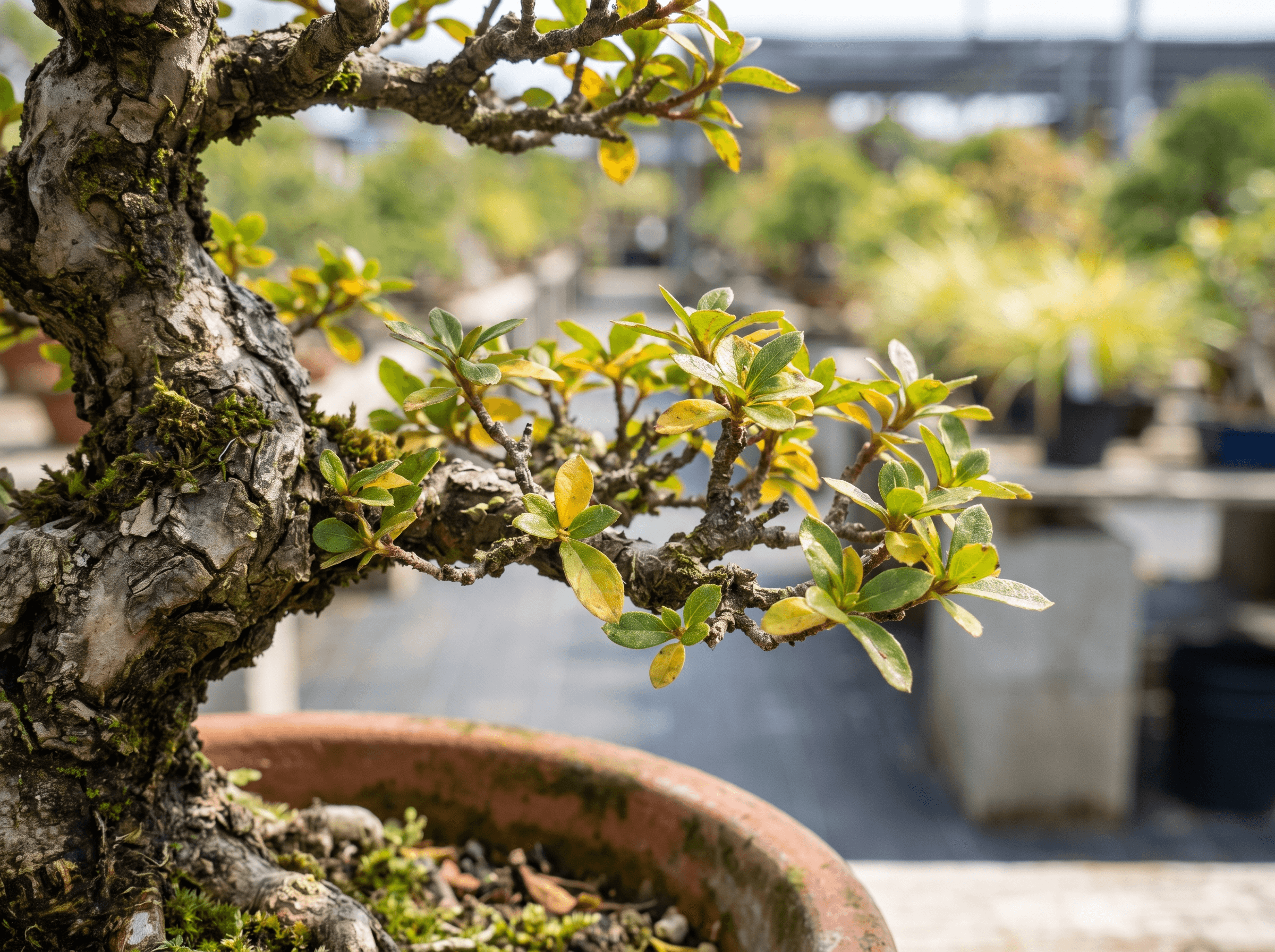
Yellow leaves are the single most common message I get from bonsai owners, and after twenty years of growing I can tell you it's rarely a mystery. Nine times out of ten the answer comes down to water or light, and the tree usually gives you enough clues in how the yellowing spreads and where it starts to tell you which one you're dealing with.
One thing worth sorting out before you go further: this page covers general yellowing, older leaves fading, whole branches turning, colour shifting broadly across the canopy. If what you're actually seeing is different, only the newest leaves coming in pale or washed out while the rest of the tree stays green, that's usually an iron or nutrient access problem rather than a watering issue, and I've written a separate page on pale new growth that goes into that case specifically. Stay here if the yellowing is spread across the tree; head there if it's confined to the newest growth only.
Once you know you're in the right place, the diagnosis is mostly detective work. Check the soil first, since watering problems in either direction cause the large majority of yellowing I see, then look honestly at where the tree is sitting and how much light it actually gets through the day, not just where you assume it does.
Likely causes
Overwatering (most common)
How to tell: The soil stays wet for days at a time and feels heavy or waterlogged when you lift the pot. Yellowing tends to start at the bottom of the tree and work upward, and leaves may feel soft rather than dry and papery. In bad cases you'll notice a sour smell coming from the soil, a sign the roots underneath are sitting in water they can't use and are beginning to suffocate and rot.
The fix: Let the surface, just the top centimetre or so, become slightly dry before watering again rather than keeping the soil constantly wet, but don't swing to the other extreme and let the whole rootball dry out chasing this, go by feel rather than a calendar. Check that the pot has real drainage holes that aren't blocked, and if the soil has broken down into something closer to mud, repot into fresh, gritty bonsai soil at the next opportunity. In a bad case, pull the tree from the pot and check the roots; if they're dark, mushy or smell off, trim away the rot and repot into fresh soil. Treat this as an emergency step reserved for confirmed, severe rot rather than a routine one, root work is stressful on its own, and if the tree can hold on that long the best timing still depends on the species and the season.
Underwatering
How to tell: Soil is bone dry, pulling away from the sides of the pot, and noticeably light when you lift it. Leaves yellow first, then go crisp and brown at the tips, and the whole tree takes on a limp, tired look that's quite different from the softness of overwatering. Catch a leaf between your fingers and if it crumbles rather than bends, you've gone too long between waterings.
The fix: Soak the pot in a basin of water for ten to fifteen minutes until it stops bubbling and water runs freely from the drainage holes, don't just splash the surface. Going forward, check the soil surface with your finger and water whenever it feels just dry, never on a fixed schedule, since the right interval shifts with the season, the pot size and the weather. In hot or windy weather a small bonsai pot can dry out in a single day, so check more often than feels natural until you know that particular tree's rhythm.
Too little light, or normal autumn colour
How to tell: An indoor tree sitting several feet back from the nearest window, or in a room that looks bright to your eyes but is dim by plant standards, will often yellow gradually and evenly across the older leaves as the tree sheds what it can no longer afford to keep fed. On a deciduous species outdoors, gradual yellowing that starts in early autumn and moves through the whole canopy is simply the tree doing exactly what it's supposed to do.
The fix: Move an underlit tree to the brightest spot the species will tolerate, ideally a south or west facing window, and consider a grow light if your indoor space genuinely doesn't offer enough natural light for that species. If it's autumn and the tree is deciduous, let the colour change run its course; this isn't a problem to fix, it's the tree preparing for dormancy, and pulling leaves off early only adds stress.
How to prevent it
The best prevention is building a habit of checking the soil by feel before you water, rather than watering on autopilot, and keeping an honest mental note of how bright each spot in your home or garden actually is compared to what you assume. Get to know how a given tree's soil feels and how much the pot weighs when properly watered versus dry, since that difference becomes obvious with practice and saves you from swinging between both extremes. If you're moving a tree indoors for winter, do it before the deep drop in autumn light rather than after, and give it the sunniest window available, since indoor light is almost always weaker than growers expect it to be.
Common questions
Should I remove the yellow leaves?
You can remove leaves that are fully yellow or crisp, since they won't turn green again and the tree isn't drawing anything useful from them anymore. Leave partially yellow leaves in place a little longer; the tree may still be pulling nutrients back out of them before it drops them on its own.
Is a few yellow leaves normal?
Yes. Every bonsai sheds some older interior leaves over the course of a growing season as part of normal renewal, and one or two yellow leaves at a time isn't cause for concern. Pay attention when yellowing accelerates, spreads across multiple branches at once, or shows up alongside soft soil or a limp canopy.
How long does it take for a bonsai to recover after fixing the watering?
With mild overwatering caught early, expect a couple of weeks before the tree stabilises and new growth starts pushing through green. If root rot had set in and needed trimming, recovery takes considerably longer, often a full growing season or more, since the tree has to rebuild root mass before it can support much top growth again. Underwatering recovery is often faster, sometimes within days of a good soak, though any leaves that already went crisp won't come back and will need to be replaced by new growth.
Can yellow leaves mean a nutrient deficiency instead of a watering problem?
It's possible, particularly if the tree has been in the same soil for a couple of years without feeding, but on established bonsai water and light explain the large majority of yellowing cases I see. Iron deficiency specifically tends to show up on the youngest leaves first, as yellow tissue between the veins while the veins themselves stay green, and it's often more about soil pH or root conditions blocking uptake than simply a lack of feeding. If watering and light both check out and the pattern looks patchy or is concentrated in new growth, that points toward a nutrient or iron issue rather than watering, and the pale new growth page covers that pattern specifically.
Will yellow leaves turn green again if I fix the problem?
No, a leaf that has fully yellowed has already broken down its chlorophyll and won't regreen. What you're aiming for is stopping further yellowing and getting healthy green growth going forward; the yellow leaves themselves will eventually drop and get replaced.
Why is only one side of my bonsai yellowing?
Uneven light is a common cause, since it's often uneven across a tree while watering tends to affect the whole root system more evenly, but it's not the only possibility. Also check for a dead patch of bark or cambium feeding that side, pests concentrated on part of the canopy, a partly blocked drainage hole leaving one side of the rootball wetter or drier than the rest, or compacted soil stopping water reaching some roots evenly. If light turns out to be the cause, check whether that side of the tree is shaded by a wall, another plant or furniture, and rotate the pot regularly so all sides get even light.
You might also like
General guidance based on 20+ years of practice. Every tree is different — when in doubt, ask us.