
Bonsai Not Budding in Spring
When neighbouring trees are leafing out and your bonsai still shows nothing, it's worth checking for a real problem rather than just waiting it out.
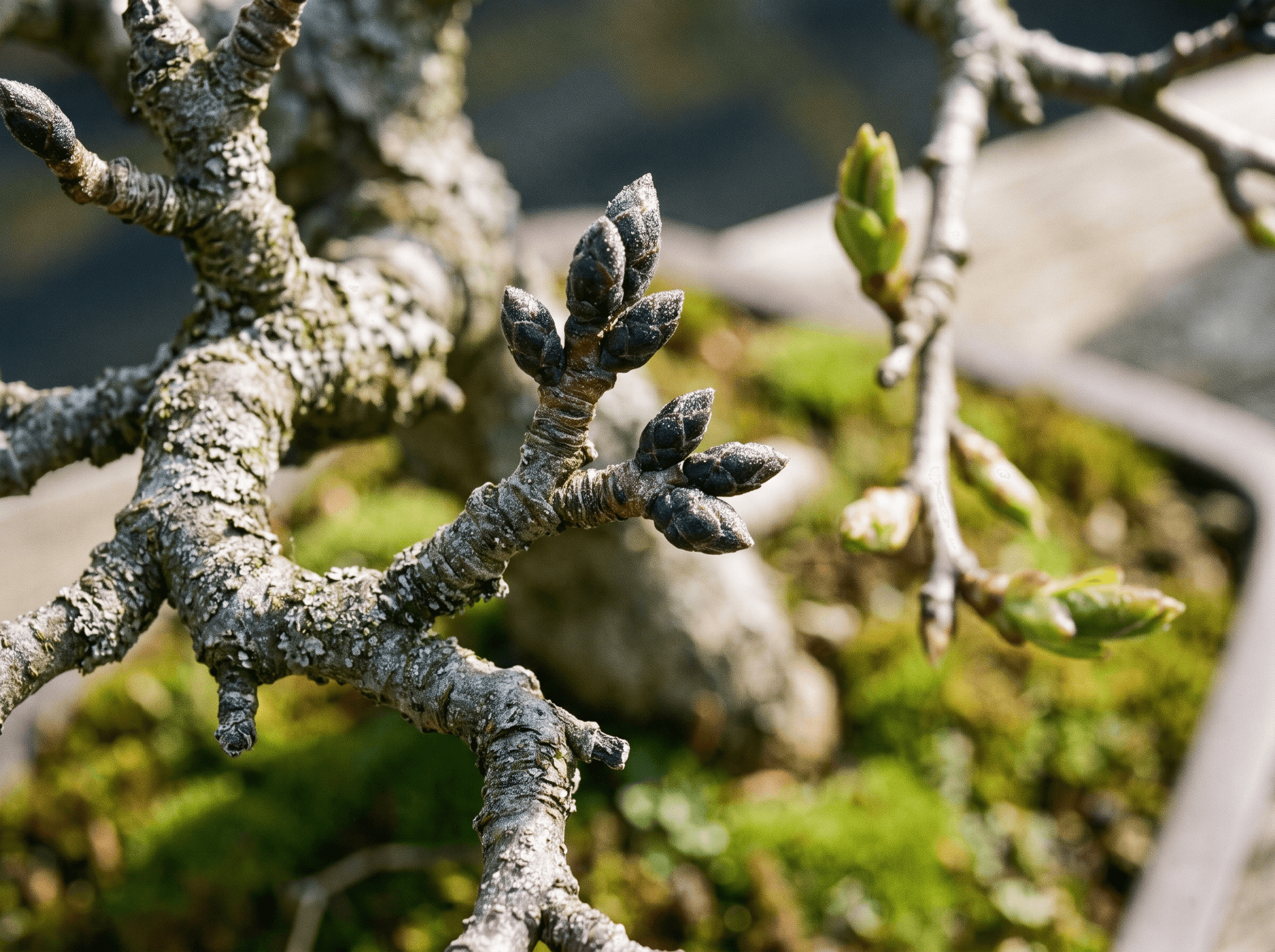
There's a particular kind of dread that sets in around late March or April, when everything else in the garden is pushing new growth and your bonsai just sits there, bare and silent. I get calls about this every spring, usually from someone who's watched a neighbour's tree, or another one in their own collection, wake up on schedule while theirs stays stubbornly dormant. The first instinct is to assume the worst, and sometimes that instinct is right, but more often than not the tree is fine and simply running on its own clock.
Not every species reads the calendar the same way. Some varieties are naturally early risers and others are late, and even two trees of the same species can differ by a couple of weeks depending on their exposure, pot size, and how cold their particular corner of the garden got over winter. A tree in a smaller pot with less insulated roots often lags behind one in a larger container, and a spot that stays shaded longer into spring will hold its buds closed a bit longer too. None of that is a problem on its own. It's also worth saying upfront that this guide is about outdoor, temperate bonsai going through a proper winter dormancy; indoor tropical and subtropical trees like ficus, jade or Portulacaria don't have a true dormant season, so a stalled-looking one of those needs a different kind of check, usually starting with light and watering rather than the calendar.
What turns ordinary lateness into something worth investigating is the combination of time and evidence. As a rough rule of thumb, and this varies a lot by species and climate, two or three weeks behind schedule with everything else looking normal, bark still green under a scratch, branches still supple, is usually still patience territory. A month or more past when this species should reasonably be moving, or any sign of brown tissue under the bark, shrivelled buds, or a root ball that smells off, is when it stops being a waiting game. Treat both figures as general guidance rather than a fixed deadline, since a cold spring or a naturally late species can push either boundary out considerably. That's the point where I stop telling people to relax and start telling them to check the tree properly.
Likely causes
The tree is simply running late
How to tell: Scratch the bark with a fingernail on a few different branches and you'll find green tissue just underneath, which is the clearest sign the tree is alive and functioning. The branches themselves still have some give to them rather than snapping dry, and the buds, even if they haven't opened, look plump rather than shrivelled or flaking off. This is especially common with species that are known to break dormancy on the later side, or with a tree that spent winter somewhere colder than its neighbours.
The fix: Keep doing what you've been doing. Water on the same schedule you'd use for any tree that's still dormant, don't force growth with heavy feeding, and give it the light it would normally get as the days lengthen. In my experience the trees that are just slow almost always break within a week or two of when you start to worry, and pulling at bark or poking buds to check on them more than does nothing, it can actually damage the tissue you're trying to protect.
Winter damage or a compromised root system
How to tell: Scratch the bark and instead of green you get brown or a dry, papery layer underneath, which tells you that section of tissue has died. This can happen on just the tips of branches, which is relatively minor, or run further down toward the trunk, which is more serious. Pull the tree gently from its pot if you suspect a problem and check the roots directly: healthy roots are firm and pale, while rotten ones are dark, soft, and often have a distinct sour smell.
The fix: Don't assume the whole tree is dead from one bad scratch test. Work your way down the branch or trunk from the tip until you find live green tissue, and prune back to just above that point, since dead wood won't produce buds and will only invite disease if left in place. If you find root rot, trim away the affected roots with clean, sterile tools and get the tree back into soil promptly rather than leaving the cut ends sitting exposed, since roots dry out and suffer faster than they recover once cut. Keep the remaining roots from drying out while you work, repot into fresh, free-draining substrate, anchor the tree firmly in the pot so new roots aren't disturbed while they establish, and water it in properly afterward.
Insufficient light or a stalled root system going into spring
How to tell: How much this matters depends on what kind of tree you have. A temperate deciduous bonsai with no leaves is genuinely dormant and doesn't need bright light while it's bare, so time spent in a dim shed or unheated garage isn't the issue for that tree. Evergreens and conifers are different, since they keep foliage through winter and do need decent light the whole time, so a shaded corner can leave them starved by spring. Tropical and subtropical species kept indoors, ficus, jade and similar, never really stop needing light and can stall out fast in a dim spot even in midwinter. Alongside light, ask when the tree was last repotted: if the roots have been circling the same pot for four or five years without fresh substrate, they may simply lack the vigour to push new growth on schedule, even with everything else in order.
The fix: Match the light to what the tree actually needs rather than treating every species the same. Evergreens and indoor tropicals should already be getting as much light as you can offer through winter, so move them toward brighter conditions now if they haven't had it. For a deciduous tree coming out of true dormancy, bring it into stronger light gradually as buds start to swell rather than moving it straight from dark winter storage into full sun, since that sudden jump can scorch bark and foliage that hasn't adjusted yet. Watch the forecast too: a late frost hitting a tree whose buds have already moved is far more damaging than the same frost on a tree still fully dormant, so keep frost protection ready once you see real activity. If the roots have gone untouched for several years, plan a repot once you see the first real signs of activity, root tips whitening, buds beginning to swell, rather than forcing it on a bare, unresponsive tree. A tired root system often needs that fresh substrate and the extra oxygen it brings before it has the energy to support new top growth.
How to prevent it
Most no-bud scares in spring trace back to how the tree spent its winter, so the real prevention happens months before you're standing there worrying. Give the species the dormancy it actually needs, cold enough and long enough for its particular requirements, with protection from extreme freezes or prolonged waterlogging, since both are common causes of the root and bark damage that shows up later as failure to bud. Keep an eye on watering through winter too; dormant doesn't mean dry, and a root ball that's allowed to desiccate completely is just as much at risk as one left sitting in standing water. As the days start lengthening, shift the tree gradually into brighter light rather than leaving it in a dim spot out of habit or jumping straight to full sun, and use that same window to think about whether it's due for a repot. A tree that goes into spring with healthy roots, intact bark, and rising light levels rarely gives you a reason to worry.
Common questions
How do I check if a branch is still alive?
Scratch a small patch of bark with a fingernail or the back of a knife blade. Green tissue directly underneath means that section is alive, while brown or dry tissue means it's dead. Test at a few points along the branch, moving toward the trunk, since damage often affects only the outer portion and live tissue can start again further back.
How long should I wait before worrying?
As a rough rule of thumb, not a hard cutoff, give it two to three weeks past when you'd expect neighbouring trees or the same species to break dormancy, if everything else about the tree looks normal: green under the bark, flexible branches, plump buds. This varies a lot by species and climate, so treat it as general guidance rather than a fixed deadline. Past that point, especially if you're also seeing brown tissue or a root ball that feels off, it's worth doing a proper check rather than continuing to wait.
Are some species naturally later to bud than others?
Yes, and this catches a lot of people out when they compare trees side by side. Some deciduous species are reliably among the last to break dormancy each year, sometimes weeks after others in the same garden, without anything being wrong. It helps to know roughly where your particular species falls before you start assuming a problem.
Will fertilizing help push the buds open faster?
No, and it can actually work against you. A dormant or stressed tree isn't in a position to use extra nutrients, and feeding too early, before roots are active, tends to sit in the soil or stress a root system that's already struggling. Wait until you see real signs of growth, buds swelling or roots whitening, before you start any feeding schedule.
Only part of my tree is budding. What does that mean?
It usually means the damage or die-back is localised rather than affecting the whole tree, which is actually a better position to be in than uniform silence. Check the bark on the sections that haven't budded, working from the tips inward, and prune back to live tissue where you find it. A tree that's budding unevenly is often recovering, not failing.
Could the pot or soil be the reason my tree hasn't woken up?
It's worth considering, especially if the substrate has stayed heavy and wet all winter or hasn't been refreshed in years. Waterlogged, compacted soil starves roots of oxygen and can delay or prevent spring growth even when the tree itself is otherwise healthy. If you pull the tree and find the roots sitting in dense, soggy material, that's a strong candidate for the cause, and a repot into free-draining substrate is usually the fix.
Does this apply to indoor tropical bonsai like ficus or jade too?
Not in the same way. Everything here about winter dormancy, bud timing and a spring wake-up applies to outdoor temperate species that actually go dormant. Indoor tropical and subtropical bonsai don't follow a spring bud-break pattern the same way, since they don't have a true dormant season to break out of. If one of those looks stalled or starts dropping leaves, look at light levels, watering and temperature first rather than waiting on a seasonal change that isn't coming for that tree.
You might also like
General guidance based on 20+ years of practice. Every tree is different — when in doubt, ask us.