
When to Start Pruning in Spring
Structural pruning and simple pinching are two different jobs on two different calendars, and mixing them up is the mistake I see most often once the weather turns.
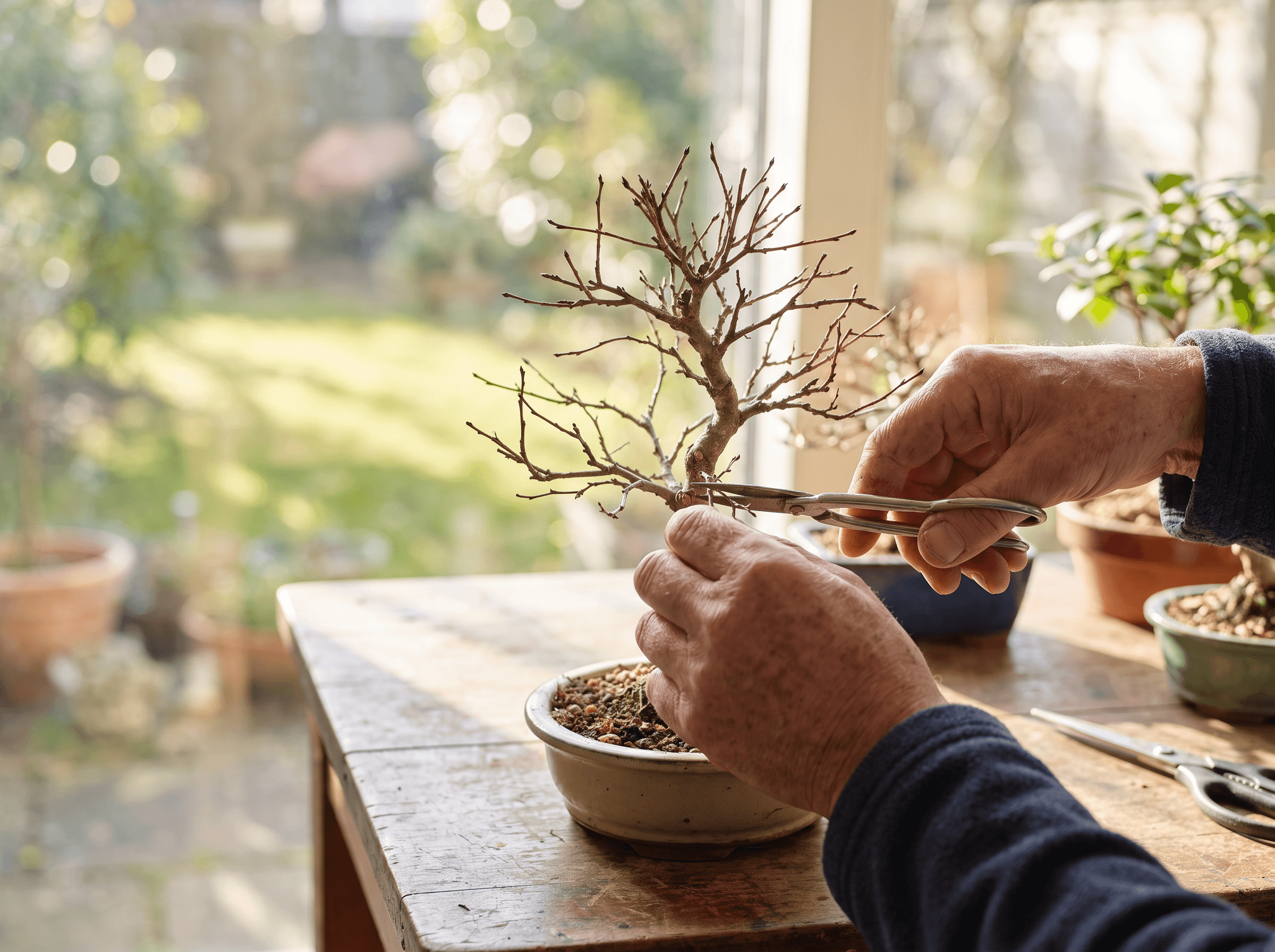
Every year around late February I get the same question in one form or another: is it time to prune yet? And the honest answer is that it depends which kind of pruning you mean, because spring holds two separate pruning windows, not one.
Structural pruning, the kind where you're removing whole branches or making real decisions about the tree's silhouette, wants to happen before bud break on most deciduous species. Maintenance pinching, the light work of nipping back new shoots, is a separate job that starts once the structural window has closed and the tree is pushing active growth, on strong shoots it's done while the growth is still soft, not after it hardens. Treating them as the same task, on the same schedule, is how people end up either cutting too late or pinching at the wrong stage.
I've been growing in Southern Italy long enough to know my window looks different from a grower's in Milan or in northern Europe. Our last frost tends to come earlier here, so my structural cuts happen sooner. Your calendar has to be built around your own local last-frost date and around what each species on your bench is doing, not around a date I give you.
Structural cuts, before the buds open
For most deciduous species, maples and elms especially, the best window for real structural pruning is right before bud break, while the branch structure is still fully visible and the tree hasn't yet pushed hard into active growth. Cutting at this point means less sap bleeding than you'd get once the tree is running water up through the trunk in earnest, and it gives the tree the whole growing season to heal and respond before the next dormancy. I try to make my big decisions, the branches I'm removing entirely, the silhouette I'm working toward, in this window rather than putting it off.
Pinching comes later, after structural work is done
Maintenance pinching is a different job with a different clock. On strong, vigorous shoots I pinch while the new growth is still soft, using fingers rather than scissors, since that's the whole point of pinching over cutting and waiting too long just lets the internode thicken and lengthen more than I want. The exception is younger or weaker trees, or thin twiggy growth prone to dieback, where I let the shoot extend and firm up a little before working it, because pinching very soft tissue in those spots can kill the growing point back further than intended. Either way, this starts after the structural window has closed, once the tree is committed to active growth.
Timing shifts by species and by your local frost date
Conifers don't follow the same schedule as deciduous trees. Pines and junipers have their own pruning windows tied to their own growth patterns, which I cover separately because candle work on pines, for example, happens later in spring and is really its own technique. Flowering species add another wrinkle, since cutting into flower buds before bloom means losing flowers you might have wanted to see. The common thread is that you need to know your own last-frost date and build backward from there, not from a date on a calendar written for a different climate.
Let the tree's buds tell you, not the month
I check buds by eye and by feel more than I check the date. Tight, unmoved buds mean you still have your structural window open. Buds that have started swelling and separating mean the window is closing fast, and buds that have already cracked open mean you've missed it for that particular tree this year. Different trees on the same bench, even the same species, can be a week or two apart depending on how much winter sun they got or how sheltered their spot was, so I go tree by tree rather than doing the whole collection on one afternoon.
What happens if you prune too late
Cut into a maple that's already pushing sap hard and you'll see it, a wet, sometimes dripping cut that takes longer to seal and stresses the tree at a point when it's already spending a lot of energy on leaf-out. It's not always fatal, I've made this mistake myself more than once over the years, but it slows recovery and on a weaker tree it can set growth back for the whole season. If you've missed the early window, it's often better to hold off on major cuts until the following dormant season rather than forcing it through active growth.
Common questions
What is the exact date I should start pruning my bonsai in spring?
There isn't one exact date, because it depends on your species and your local climate. The rule I use is before bud break for structural work, which in my part of Southern Italy tends to fall earlier than it would further north. Watch your own trees' buds rather than relying on a fixed date.
Can I do structural pruning and repotting on the same day?
You can, and both fall in roughly the same early spring window, but doing major root work and major branch removal on the same visit is a lot of stress at once. On an older or weaker tree I'll often spread the two out by a couple of weeks rather than stacking them.
My tree's buds have already opened. Is it too late to prune this spring?
For structural cuts, yes, largely. Once leaves are out the tree has already spent energy on leaf development and cuts will bleed more and heal more slowly. Light pinching is still fine later in the season. If you've missed the structural window, wait for next dormancy rather than forcing a big cut now.
Should I pinch new growth while it's still soft, or wait for it to harden?
On strong, vigorous shoots I pinch while they're still soft, using fingers rather than scissors, since waiting lets the internode thicken more than I'd like. On younger or weaker trees, or thin twigs prone to dieback, I let the shoot firm up a little first, because pinching very soft tissue there can damage the growing point. It depends on the tree's vigor as much as the species.
Does this timing apply to junipers and pines as well?
Not exactly. Conifers have their own separate pruning rhythms, and pines in particular have candle work that happens later in spring rather than the pre-bud-break window that applies to most deciduous trees. Treat conifers as their own category rather than folding them into the deciduous schedule.
Will spring pruning remove my flowers on a flowering bonsai?
It can, depending on the species and where the flower buds sit on the branch. Some flowering trees set buds on old wood the previous year, so pruning right before bud break can cut off flowers you were hoping to see. I check bud placement carefully on flowering species before making structural cuts in that window.
Is it normal for different trees to need pruning at different times in the same spring?
Yes, very normal. Even two trees of the same species can be a week or more apart depending on how much light or shelter they had over winter. I go tree by tree by checking buds rather than pruning the whole collection on a single date.
What tools should I use for early spring structural cuts?
Sharp concave cutters for anything more than pencil thickness, and a clean blade generally, since a ragged cut heals slower and is more prone to dieback at this time of year when the tree is about to put a lot of energy into new growth right around the wound.
You might also like
General guidance based on 20+ years of practice. Every tree, climate, and year is different — when in doubt, ask us.