
Best Time of Year to Prune Bonsai
There's no single date that works for every bonsai, but there's a reliable pattern once you separate structural cuts, light maintenance trims, flowering species, and conifers into their own timelines.
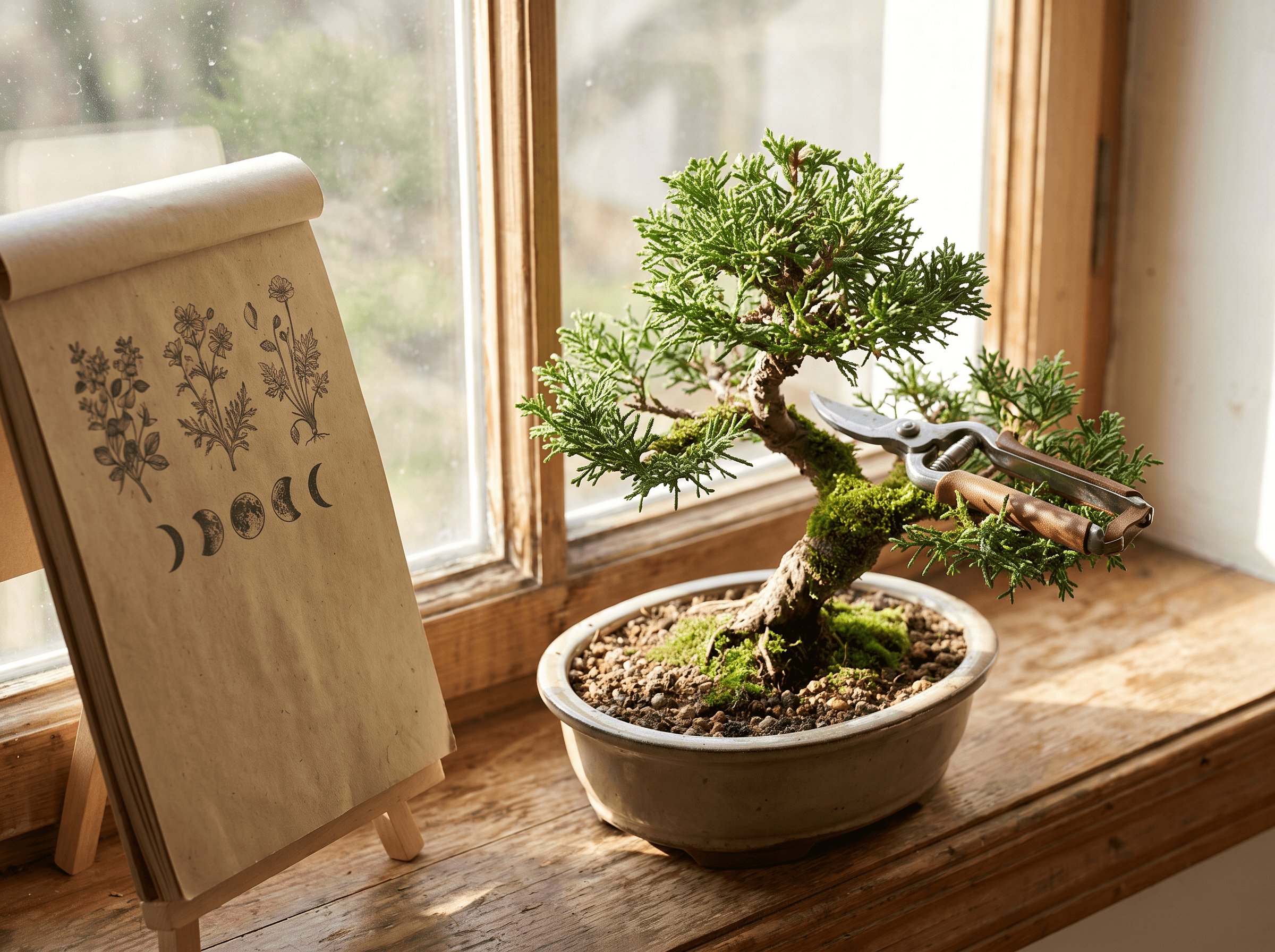
This is one of those questions where people want a simple answer and the honest answer has a few branches in it, no pun intended. Timing matters more in pruning than almost any other bonsai task, because a cut made at the wrong point in a tree's yearly cycle can do real damage even when the technique itself was perfectly fine.
The good news is there's a pattern that covers most situations, and once you understand why the pattern exists, working out the exception for a species you're less familiar with gets a lot easier. It comes down to matching the size of the cut to how much stress the tree can absorb at that point in its cycle.
I'll go through the general rule most temperate deciduous species follow, then the exceptions that trip people up most: flowering trees and conifers, plus the seasons to avoid heavy work altogether regardless of species.
The general rule for temperate deciduous species
For most temperate deciduous bonsai, heavier structural pruning is commonly done sometime during dormancy, which can mean late autumn, deep winter, or right before the buds break in early spring depending on the species, your climate, and what you're trying to achieve with the cut. Pruning close to bud break means the tree's energy reserves are intact and about to be redirected into fresh growth, so it recovers from a heavy cut quickly and the wound has the whole growing season ahead of it to callus over, while some growers prefer autumn or winter cuts for other structural reasons specific to the tree. Light maintenance trims, on the other hand, happen throughout the growing season itself, whenever new shoots need pinching or tidying to keep the silhouette in shape. Those two general windows, dormant-season structural work and in-season maintenance trims, cover a good share of what most growers need to know, though the exact timing within dormancy is worth researching for your specific species and region.
Flowering species: prune after flowering, not before
This is where I see the most avoidable mistakes. Flowering bonsai, azalea being the classic example, set next year's flower buds not long after this year's flowers finish, so if you prune in late winter the way you would a non-flowering deciduous tree, you cut off buds that were going to become next season's flowers. The fix is simple once you know it: prune flowering species right after they finish flowering, giving them the rest of the season to set new buds before the following year's bloom. Prune too early and the tree looks fine, it just doesn't flower, which is a frustrating way to find out you got the timing wrong.
Conifers run on their own calendar
Conifers don't follow the deciduous pattern closely, and different conifers have their own preferred windows and even their own vocabulary for the work. Pines are the clearest example, and it helps to separate two distinct techniques: candle pinching, lightly shortening the new candles by hand, versus decandling, removing the new candles entirely to force a second, more refined flush. Decandling on refinement-stage pines is typically done from late spring into early summer, with the exact timing shifting by species and local climate, and it's a specialist technique worth learning specifically rather than guessing at. Junipers are a separate case again: structural pruning on junipers is generally done in early spring or late autumn, and junipers should be thinned and pruned by hand rather than sheared uniformly like a hedge, since shearing encourages dense outer growth at the expense of the interior. Other conifers, hinoki and other scale-foliage species among them, have their own preferences too, so it's worth learning the specific window and technique for whatever conifer you're working with rather than assuming one conifer rule covers all of them.
Seasons to avoid for heavy structural work
For many deciduous species, the two windows to be more cautious about for heavy structural cuts are the height of summer heat and hard winter freezes. In summer heat, a tree is already under water and temperature stress, and a heavy cut on top of that can push it past what it can recover from. During hard freezes, the tree has limited ability to respond to a wound at all. This isn't a universal rule for every technique on every species, though. Pine decandling is a notable exception done in late spring to early summer, and different conifers have their own specialist windows that don't map neatly onto the deciduous calendar. Treat this as a caution for heavy deciduous structural cuts specifically, and check the species-specific guidance in this article before assuming it applies to conifer work.
Common questions
Can I prune bonsai in the middle of summer?
Light maintenance trimming is fine through summer, since that's the height of active growth. Heavy structural cuts on many deciduous species are riskier in summer heat, when the tree is already dealing with water and temperature stress, so it's generally better to save major deciduous work for the dormant season. Pines are an exception, since decandling is specifically a late spring to early summer technique, so check the guidance for your particular species rather than applying one summer rule to everything.
When should I prune a flowering bonsai like azalea?
Right after it finishes flowering, not before. Flowering species set next year's flower buds soon after this year's bloom ends, and pruning too early, in late winter for instance, removes those buds before they even form and costs you a season of flowers.
What is candle pruning and when do I do it on pines?
It helps to separate two techniques. Candle pinching lightly shortens the new candles by hand, while decandling removes them entirely to force a more refined second flush. Decandling on refinement-stage pines is typically done from late spring into early summer, with the exact timing shifting by species and local climate. Both are specific to pines and don't apply the same way to other conifers.
Is it safe to do structural pruning in winter?
For most temperate deciduous species, some point during dormancy, from autumn through late winter and often right before growth starts, is a reasonable window, with the exact preference varying by species and grower. The risk is hard freezes, when the tree has very limited capacity to respond to a wound. Local climate and species matter here, especially for tropical bonsai, which don't go through the same dormant cycle at all.
Why didn't my azalea bloom this year after I pruned it?
This almost always comes down to pruning at the wrong time, most likely in late winter or early spring before flowering, which removes the buds that were set to become that year's flowers. Prune azaleas right after they finish blooming instead.
Do all conifers follow the same pruning schedule?
No. Pines have their own distinct late spring to early summer window for decandling, junipers are generally structurally pruned in early spring or late autumn and should be thinned by hand rather than sheared, and other conifers like hinoki have their own preferences again. It's worth learning the specific window and technique for whatever conifer species you're working with rather than assuming one rule fits all.
How do I know if I'm about to prune at the wrong time of year?
Check whether the cut is structural or maintenance, and check the species. Structural cuts on non-flowering deciduous trees are safest in late winter or early spring, flowering species need pruning right after bloom, and conifers have their own species-specific windows worth researching individually.
You might also like
General guidance based on 20+ years of practice. Every tree and every climate is different — when in doubt, ask us.