
Candle Pruning Pines in Spring
Candle pruning is really a vigor-balancing tool, and on a two-flush pine, late spring is when it does its job.
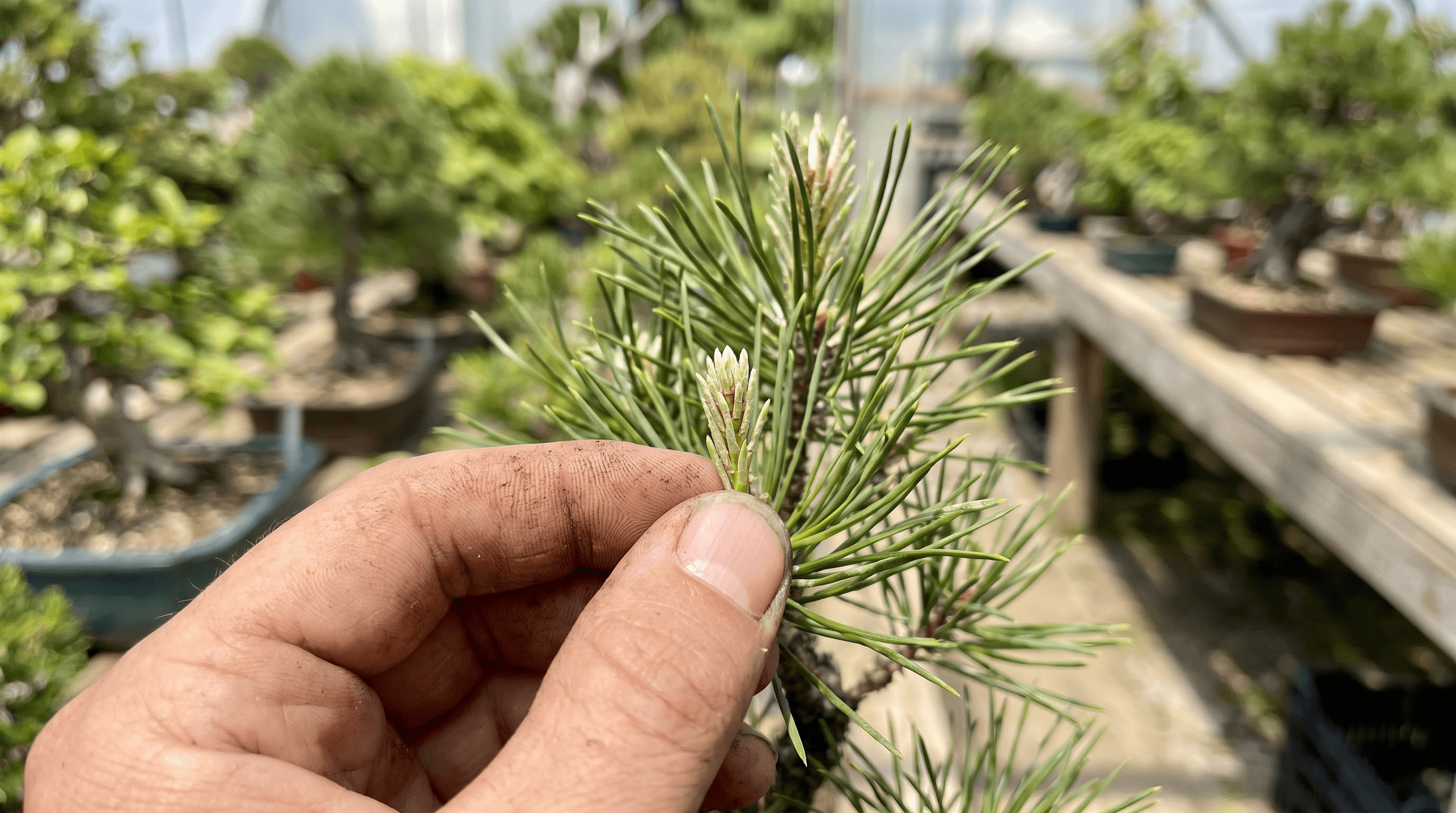
Pines confuse people new to this hobby because so much of the general spring advice, prune before bud break, wire while structure is visible, simply doesn't apply the same way to them. Candle work is its own technique, on its own timeline, and it only makes full sense once you understand what a candle actually is and what shortening it accomplishes.
The candle is that upright, soft new shoot a pine pushes in spring before its needles have separated and hardened. On species that flush twice a year, black pine and red pine being the classic examples, what happens to that candle across spring and into early summer, thinning it while it's still soft, then fully removing it a bit later, determines whether the tree pushes a second, more controlled flush later in the season.
I want to be clear this only applies fully to two-flush pines. Single-flush pines, most white pines among them, work on a different technique entirely, and treating them the same way as a black pine is a common and costly mistake.
What candle pruning is actually doing
Shortening or removing the spring candle on a two-flush pine redirects the tree's energy toward a second flush of growth later in the season, one that tends to come in shorter, denser, and with smaller needles than the uncontrolled first flush would have produced on its own. It's a vigor management tool as much as a shaping one, letting you even out growth between strong and weak areas of the tree by treating candles differently depending on how vigorous that part of the canopy already is.
Timing: candle selection versus full decandling
There are really two windows here, and mixing them up is the most common mistake. Early in spring, while the candle is still soft and extending, is when I do any thinning or selecting, choosing how many candles to keep on a whorl and removing surplus or overly strong ones. Full decandling, cutting the entire candle off at its base to trigger the second flush, happens later, generally once that spring flush's needles have emerged and are hardening off, and it often extends into early summer depending on your climate and how vigorous the tree is. Cut too early, before the candle has built up enough stored energy, and decandling is less effective at producing a strong second flush. I watch the candles and needles themselves rather than a fixed date, since a warm spring pushes the whole sequence earlier and a cool one pushes it later.
Balancing vigor across the tree
The real skill in candle work is treating different parts of the tree differently on purpose, and this is where the decandling step itself does most of the work. Strong, vigorous candles, usually on the upper and outer parts of the tree where light is best, get fully decandled, cut back hard or removed entirely once they've reached the right stage. Weaker candles, often lower and more shaded, get left substantially longer, sometimes only lightly thinned rather than fully decandled, or decandled a little later than the strong ones. Done consistently over a few seasons, this evens out a pine's natural tendency to grow stronger at the top and weaker lower down, which is one of the persistent shaping challenges with the species.
Single-flush pines need a different approach entirely
White pines and other single-flush species don't push a second, controllable flush the way black and red pines do, so decandling their spring candle the same way doesn't produce the same result and can simply weaken the tree without the compensating benefit. Their technique typically involves candle selection or shortening while still soft, a different goal built around needle count and bud selection rather than forcing a second flush, and full decandling generally doesn't apply to them the way it does to black and red pine. If you're not certain which category your pine falls into, it's worth confirming before applying black pine style decandling to it.
What the tree looks like after candle work
Right after cutting, a candle-pruned pine can look a bit stark, especially on the strongly treated upper branches, but that's expected and temporary. Within a few weeks new buds start forming at the cut point, and by later in the season those develop into the second flush the whole technique is designed to produce, generally with finer, denser growth than the original candle would have given you left alone.
Common questions
What exactly is a candle on a pine?
It's the upright, soft new shoot a pine pushes in spring before its needles have separated and hardened, named for its shape. On two-flush pines like black and red pine, what happens to this candle determines whether the tree pushes a controlled second flush of growth later in the season.
When exactly should I candle prune my black pine?
It depends on which step you mean. Early thinning or selecting happens in spring while the candle is still soft. Full decandling, the step that actually triggers a second flush, comes later, once that flush's needles have emerged and are hardening off, often extending into early summer depending on your climate and the tree's vigor. I watch the candles and needles themselves rather than a fixed date, since a warmer spring pushes the whole sequence earlier and a cooler one pushes it later.
Can I candle prune a white pine the same way as a black pine?
No, white pines are single-flush and don't respond to candle shortening the same way two-flush pines do. Applying black pine technique to a white pine can weaken it without producing the intended second flush, so it's worth confirming which category your pine belongs to first.
Why do some candles on my pine get cut harder than others?
This is intentional vigor balancing. Strong candles, typically in the upper, best-lit parts of the tree, get cut back harder or removed to slow that area down, while weaker candles lower in the tree get left longer to encourage them, evening out growth across the tree over time.
What does a pine look like right after candle pruning?
A bit stark and bare at the cut points initially, especially where strong candles were cut back hard, but this is temporary. New buds typically start forming at the cut within a few weeks, developing into the second flush over the following weeks of the season.
What happens if I miss the decandling window for that year?
Once the point where decandling should have happened for your climate and that tree's vigor has passed, you've generally missed the opportunity to redirect that flush into a second one for the season. It's not harmful to the tree to skip a year, but the vigor balancing and needle refinement candle work provides won't happen until you catch the window the following year.
Do all pine species need candle pruning every spring?
No, only two-flush pines benefit from this specific technique, and even among those, not every candle on every tree necessarily gets treated every year depending on your development goals for that particular tree and how much vigor balancing it currently needs.
You might also like
General guidance based on 20+ years of practice. Every tree, climate, and year is different — when in doubt, ask us.