
Maintenance Pruning vs Structural Pruning
Maintenance and structural pruning aren't two versions of the same task, they're two different jobs with different tools, different timing, and very different consequences if you get them confused.
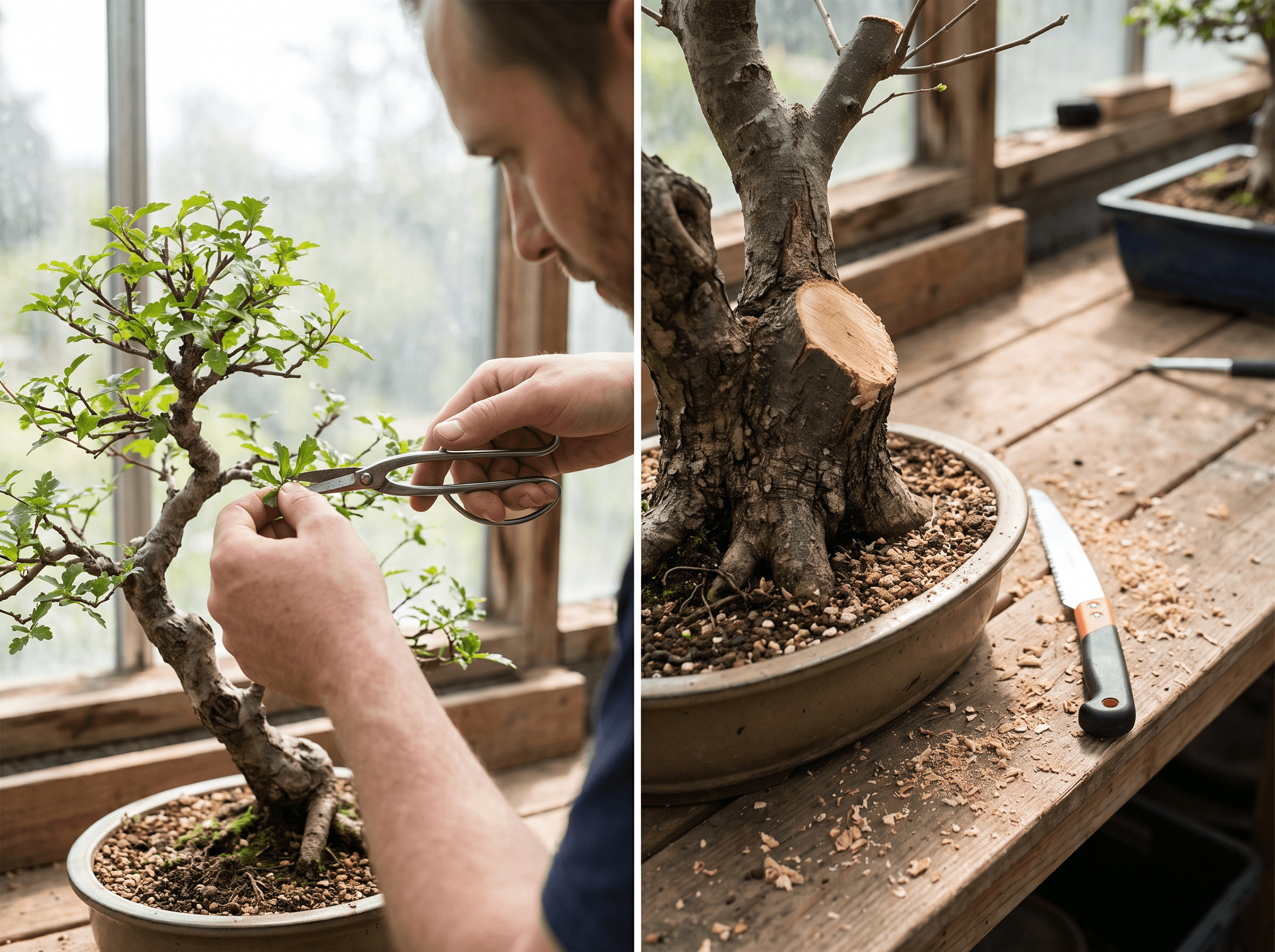
A question I get a lot, usually from someone who's had a tree for a year or so and is starting to read more widely: what's actually the difference between the light trimming I do every couple of weeks and the heavier cutting I see in styling videos? It's a fair question, because both involve shears and both involve removing part of the tree, but that's roughly where the similarity ends.
Maintenance pruning is the routine work: light, frequent trimming during the growing season that keeps the silhouette you already have and encourages the tree to ramify, meaning it pushes out finer, more numerous branch tips. Structural pruning is different in kind, not just degree. It's heavier, far less frequent, and it actually changes the tree's design, removing a branch entirely, reducing the trunk, or resetting the whole shape.
Confusing the two, especially doing structural work at the wrong time of year thinking it's just a bigger version of maintenance trimming, is one of the more common ways a perfectly healthy tree ends up weakened or dead. So it's worth being precise about what separates them.
What maintenance pruning actually is
Maintenance pruning is the pinching and trimming you do throughout the growing season to hold the tree's current shape and push it toward finer ramification, meaning more, smaller branch divisions rather than a few long unbranched shoots. It's light by nature. You're removing new growth, not established wood, and a healthy tree in season barely notices it happened. How often depends heavily on species and vigor, from frequent pinching on a fast-growing tree in peak season to just a few rounds a year on something slower, but it's generally low-risk compared to heavier work, provided you're paying attention to how the species you're working on actually responds to being cut back.
What structural pruning actually is
Structural pruning is the heavier, much less frequent work that changes the tree's actual design: removing a branch you've decided doesn't belong, reducing a trunk to change its taper or height, or resetting the primary framework of the tree. This isn't something you do every session, or even every year on an established tree. It's deliberate, planned work, and timing is genuinely species-specific: many deciduous trees take structural cuts well in late winter or early spring before growth resumes, some, like Japanese maples, are better cut in autumn or midsummer instead because they bleed heavily if cut while dormant, and conifers such as pines tend to follow their own separate schedule. Whatever the species, structural pruning puts real stress on the tree that it needs time and the right conditions to recover from.
Timing is where the real risk lives
This is the part beginners underestimate. Doing structural work at the wrong time of year, say, a hard trunk chop in the middle of summer heat or heavy branch removal at a point in dormancy a given species doesn't tolerate well, can weaken or even kill a tree that was otherwise perfectly healthy. Maintenance pruning is forgiving about timing because it's light. Structural pruning is much less forgiving, because a large wound needs the tree's resources to heal it, and those resources are harder to come by when the tree is dormant or already under stress from heat, drought, or a recent repot.
Sealing wounds: usually skip it for maintenance, often considered for structural
Maintenance trims leave small wounds on soft new growth that a healthy tree generally closes over quickly on its own, so sealant is rarely necessary. Structural cuts are a different story, especially on species prone to dieback such as pines and other conifers, where a larger wound is a real entry point for infection and dieback can travel back further than the cut itself. Many growers use cut paste or wound sealant on cuts like these to protect the wound while it calluses over. The size and species of the cut should guide the decision, not habit.
How to tell which one you're actually about to do
A simple test: if the cut is removing something the tree grew this season and the tree's overall shape stays the same afterward, that's maintenance. If the cut removes something that's been part of the tree's structure for a year or more, or it visibly changes the tree's silhouette, that's structural, and it deserves the planning, timing, and possibly the sealant that structural work needs. When in doubt, treat the cut as structural and give it the more careful timing. Being overly cautious costs you a season at most. Getting it wrong can cost you the tree.
Common questions
Can I do structural pruning at the same time as maintenance pruning?
You can, but they're usually best kept separate in practice, since structural pruning needs specific timing (often dormancy or early season depending on species) that doesn't line up with the ongoing rhythm of maintenance trims through the growing season.
How often should structural pruning happen on an established tree?
Much less often than people expect, sometimes once every few years or even longer once a tree's design is largely settled. Structural pruning is about deliberate design changes, not routine upkeep, so there's no fixed schedule the way there is with maintenance trims.
Do I need different tools for maintenance versus structural pruning?
Generally yes. Fine shears handle maintenance trimming well, but structural cuts on thicker branches usually call for concave cutters or knob cutters, which remove larger material more cleanly and leave a wound that heals flatter than a flush cut with regular shears.
Why did my tree decline after a trunk chop that seemed fine at the time?
This is almost always a timing issue. Trunk chops and other heavy structural cuts made outside a species' safe window, in summer heat or at a point in dormancy that species doesn't tolerate well, put real stress on a tree's limited reserves and can cause dieback or decline weeks after the cut looked fine.
Does maintenance pruning ever need wound sealant?
Rarely. The wounds from trimming soft new growth are small and a healthy tree generally closes them on its own within a short time. Sealant is much more relevant for larger structural cuts, particularly on species prone to dieback.
How do I know if a cut counts as structural?
If it removes wood that's been part of the tree's framework for a year or more, or changes the tree's overall silhouette, treat it as structural. New season's growth trimmed back to maintain the existing shape is maintenance.
Can beginners do structural pruning?
Eventually, but it's worth spending at least a season or two comfortable with maintenance pruning first. Structural cuts carry real consequences if timed or executed badly, and that judgment mostly comes from experience handling a tree through a full growing cycle, including learning the timing quirks of the specific species you're working with.
You might also like
General guidance based on 20+ years of practice. Every tree and every climate is different — when in doubt, ask us.