
Spring Bonsai Pest Surge: What to Watch For
Aphids find fresh spring shoots on bonsai before you do, most years, which is exactly why the first few weeks of new growth deserve a closer look than usual.
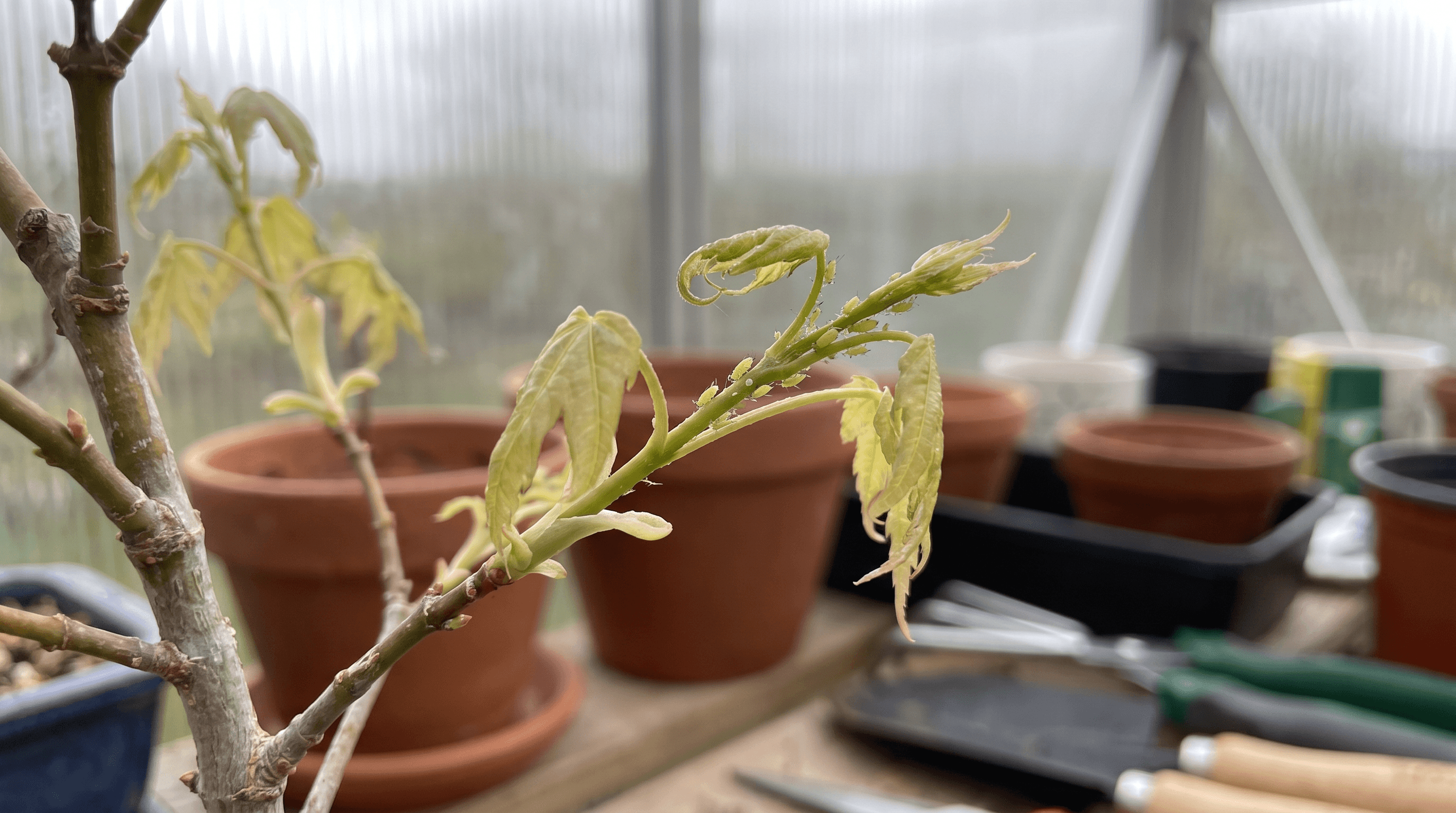
Spring growth is soft, sugar-rich, and easy to pierce, which makes it the preferred target for soft-bodied pests, aphids especially, the moment it appears. Aphids are the ones I see most, clustering on the newest tips almost as soon as they emerge, but they're rarely alone.
The advantage spring gives you, if you use it, is scale. A handful of aphids on one shoot in April is a five-minute problem. That same population left unchecked into an established summer infestation, spread across the tree and maybe onto its neighbors, is a much bigger job with a much higher chance of real damage to the tree.
So the spring pest routine isn't really about a special treatment, it's about looking closely and looking often, right when the new growth is at its most vulnerable and the problem is at its smallest.
Why new growth attracts pests first
Soft-bodied insects like aphids feed by piercing plant tissue and drawing out sap, and fresh spring growth is exactly the tissue that's easiest for them to access, thin-walled, high in sugars, not yet toughened up the way mature leaves and shoots are. This is also why you'll often see pests concentrated on the very newest tips of a tree while older growth nearby stays clean, they're going for the easiest, richest food source available.
What to actually look for on close inspection
I check the undersides of new leaves and the tips of extending shoots specifically, since that's where aphids and similar pests cluster first, rather than just glancing at the tree from a distance. Small clusters of tiny, often green or black, soft-bodied insects are the most common sight. A sticky residue on leaves or on the bench underneath, honeydew from feeding aphids, is often the first thing people notice even before they spot the insects themselves.
Early detection makes treatment simple
Catching a small aphid cluster early usually means treatment is as simple as a strong blast of water to knock them off, or a light application of insecticidal soap directly on the affected shoots. If I do reach for insecticidal soap, I test it on a single shoot first and apply it during the cooler part of the day, since tender new growth and some species can be more sensitive to it than mature foliage. Left to build up over weeks into a larger, spread-out infestation, the same pest problem becomes harder to fully clear and more likely to have already caused visible damage, curled leaves, stunted shoots, or the sooty mold that sometimes grows on leftover honeydew.
A simple weekly inspection habit
I go over every tree's newest growth roughly once a week through the spring surge, which for me runs from the first real flush of new shoots through several weeks of active growth. It doesn't take long once it's a habit, a close look at shoot tips and leaf undersides on each tree, and it catches problems while they're still small enough to deal with in minutes rather than becoming a bigger project.
Other early spring pests worth watching for
Aphids get most of the attention, and they're the pest most strongly tied to the spring flush specifically. Spider mites are a different story, they favor hot, dry conditions and tend to become the bigger concern later, in summer, rather than in the cooler, damper weeks of early spring, though it's still worth knowing what fine speckling or faint webbing on leaves means if you spot it. Scale insects can turn up at any point in the growing season too, and a quick way to tell the two apart is location, aphids cluster on soft new tips, while scale tends to sit flush against bark or stems rather than the newest growth. None of these need a different inspection routine, the same close, regular look at new growth catches all of them early enough to matter.
Common questions
Why do aphids show up on bonsai in spring specifically?
Fresh spring growth is soft, thin-walled, and sugar-rich, which makes it the easiest and most attractive feeding target for soft-bodied pests like aphids. Older, hardened growth is tougher and less appealing to them by comparison, so new shoots take the brunt of it.
How often should I check my bonsai for pests in spring?
I check roughly once a week through the spring growth surge, focusing on the newest shoot tips and the undersides of new leaves, since that's where pests like aphids concentrate first and are easiest to catch before a population builds up.
What does an early, small aphid infestation actually look like?
Small clusters of tiny soft-bodied insects, often green or black, on new shoot tips or leaf undersides, sometimes with a faint sticky residue on the leaves or the surface below the tree from their feeding. It's usually easy to miss unless you're looking closely at the newest growth specifically.
Is it enough to just spray water on aphids, or do I need a pesticide?
For a small, freshly caught cluster, a strong blast of water is often enough to knock most of them off and disrupt the population. For anything more established, insecticidal soap applied directly to the affected growth is a reasonably gentle next step before reaching for anything stronger.
Can aphids spread from one bonsai to another on the same bench?
Yes, an established infestation on one tree can spread to neighboring trees, especially ones with similarly tender new growth nearby. This is part of why catching a small cluster early on one tree matters beyond just that individual tree's health.
Are aphids the only pest I need to watch for in spring?
No, but aphids are the pest most tied to spring specifically. Spider mites tend to become more of a concern later, as the weather turns hot and dry, and scale insects can turn up at any point in the growing season. The same close weekly inspection of new growth catches all of them early enough to deal with easily.
Does spring pest pressure ease off once the surge of new growth slows?
Aphid pressure specifically tends to ease, since much of it is tied to the abundance of soft, tender tissue during the flush of new spring growth, and hardened foliage is a much less attractive target. That doesn't mean pest pressure overall eases off, though, spider mites in particular tend to pick up as summer heat and dryness set in, so regular inspection is still worth keeping up well past spring.
You might also like
General guidance based on 20+ years of practice. Every tree, climate, and year is different — when in doubt, ask us.