
Summer Bonsai Pest Pressure: Spider Mites and More
Hot, dry summer weather is exactly what spider mites need to go from a handful you'd never notice to a population that can defoliate a branch in a couple of weeks.
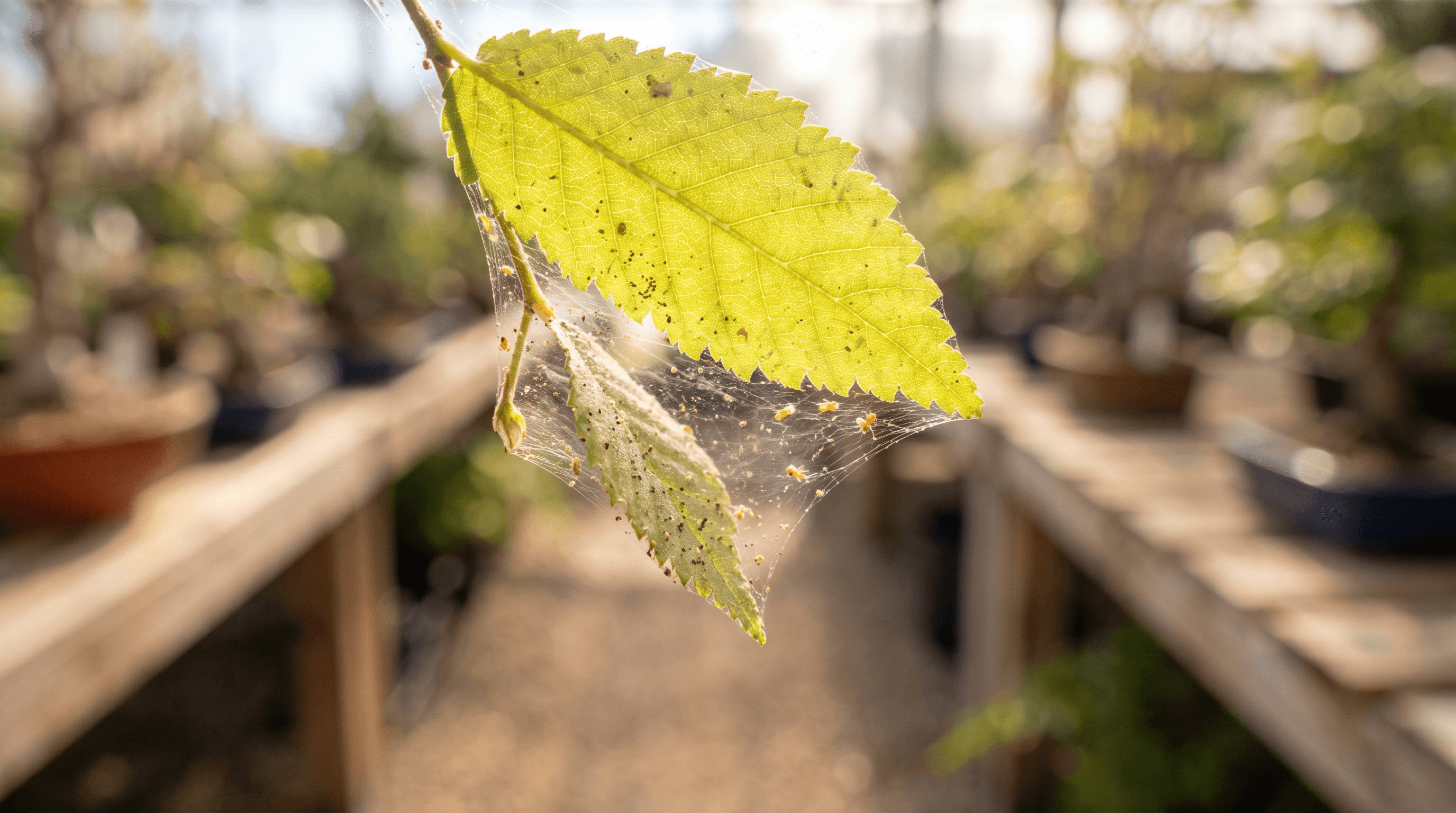
Every pest has a season it prefers, and for spider mites that season is summer, specifically the hot, dry stretches where humidity drops and temperatures climb. I see more spider mite damage in July and August than in the rest of the year combined, and it's almost always on trees that weren't being checked closely enough during exactly the weeks the mites were building up.
What makes them tricky is how small and how well hidden they are. A spider mite is barely visible to the naked eye, and the early damage they cause, fine stippling on leaf surfaces, is easy to dismiss as ordinary summer stress or sun exposure. By the time you see the fine webbing that gives them away, or leaves turning bronze and dropping, the population has usually been established for a while.
Spider mites aren't the only pest that picks up in summer, but they're the one most strongly tied to this exact set of hot, dry conditions. What follows is how I keep ahead of them, along with the general summer vigilance that catches other pests before they get out of hand too.
Check leaf undersides regularly, not just the canopy from a distance
Spider mites live and feed mostly on the underside of leaves, so a quick glance across the top of a tree's foliage misses them almost entirely until damage is already visible from a distance. I make a habit of turning over a few leaves on each tree during my regular summer watering rounds, particularly on species I know are more prone to mites. A sheet of white paper held under a branch and tapped gently is a useful trick too, since it knocks mites loose and they show up as tiny moving specks against the white background.
Good watering and occasional rinsing work as prevention
Spider mites favor hot, dry, dusty conditions, so keeping trees well watered and avoiding drought stress through the driest stretches is worth doing for mite prevention as much as for the tree's general health. I also give the foliage of susceptible trees an occasional thorough rinse with a hose during hot, dry stretches, which physically knocks mites off the leaves and disrupts their webbing. Grouping pots together or misting the surrounding area may help a little on the margins, but I wouldn't count on it as a primary defense. It's not a cure for an established infestation, but consistent watering plus regular rinsing through the driest weeks meaningfully reduces how bad things get.
Catch it early, because populations build fast in the heat
Spider mite reproduction speeds up considerably in hot weather, which is part of why an infestation that looks minor one week can be genuinely damaging two weeks later. If I find early signs, light stippling, a bit of fine webbing at leaf joints, I act immediately with a thorough rinse and closer monitoring rather than waiting to see if it gets worse. Waiting is the mistake I see most often, since people assume a few damaged leaves aren't worth the effort until the whole branch has gone bronze.
Other pests pick up in summer too, so general vigilance still matters
While spider mites are the headline pest of hot, dry summer weather, aphids, scale, and various caterpillars can all show up or increase activity during the growing season as well. I don't treat summer pest checking as a spider-mite-only exercise. The same regular, close inspection that catches mites early, undersides of leaves, new growth tips, bark crevices, also catches most other summer pests before they become a real problem.
Common questions
How do I know if it's spider mites and not just heat stress or sunburn?
Fine, silky webbing at leaf joints or between leaves is the clearest sign specific to spider mites. Stippling alone can look similar to sun or heat damage, so I check for webbing and tap a branch over white paper to look for tiny moving specks before assuming it's mites versus general summer stress.
Which bonsai species are most prone to spider mites?
In my experience, junipers and other conifers with fine foliage tend to get hit hard, along with certain deciduous species during hot, dry stretches. Almost any species can get mites under the right conditions though, so I don't rule any tree out just because it's not typically flagged as high risk.
Does misting actually help prevent spider mites?
A little, but I wouldn't rely on it as the main defense. What matters more is keeping the tree well watered and avoiding drought stress through the driest weeks, and giving susceptible foliage an occasional forceful rinse, which physically knocks mites off and disrupts their webbing. Misting or raising humidity around the bench can help a bit on the margins, but it's not a substitute for those two habits.
How often should I be checking for spider mites during summer?
I fold it into my regular watering routine, so effectively every time I'm at the bench, which in peak summer is daily or close to it. A dedicated closer check, turning leaves over and looking for webbing, I do at least weekly on species I know are more susceptible.
Can spider mites kill a bonsai if left untreated?
A severe, prolonged infestation can cause significant defoliation and real stress to the tree, and repeated heavy infestations over a season can weaken it considerably. It's rarely an immediate death sentence for an otherwise healthy tree, but I wouldn't let it go unaddressed.
Do spider mites go away once summer ends?
Their populations generally drop as humidity rises and temperatures cool going into autumn, since those conditions are less favorable for them. That said, I still check periodically rather than assuming the risk disappears the moment the calendar changes.
Is a chemical treatment necessary or can I manage mites without one?
For light, early infestations I usually manage with rinsing, good watering, and close monitoring before reaching for anything chemical. For a heavier, established infestation, a miticide, horticultural oil, or insecticidal soap labeled for mites tends to work better than a general broad-spectrum insecticide, since mites aren't insects and don't respond the same way, and a broad insecticide can also kill off the natural predators that would otherwise help keep mite numbers down.
You might also like
General guidance based on 20+ years of practice. Every tree, climate, and year is different — when in doubt, ask us.