
Thrips on your bonsai
Silvery or bronze streaking across the leaf surface, scattered with tiny black specks, is the classic sign of thrips, slender insects that rasp the leaf open before sucking out the sap underneath.
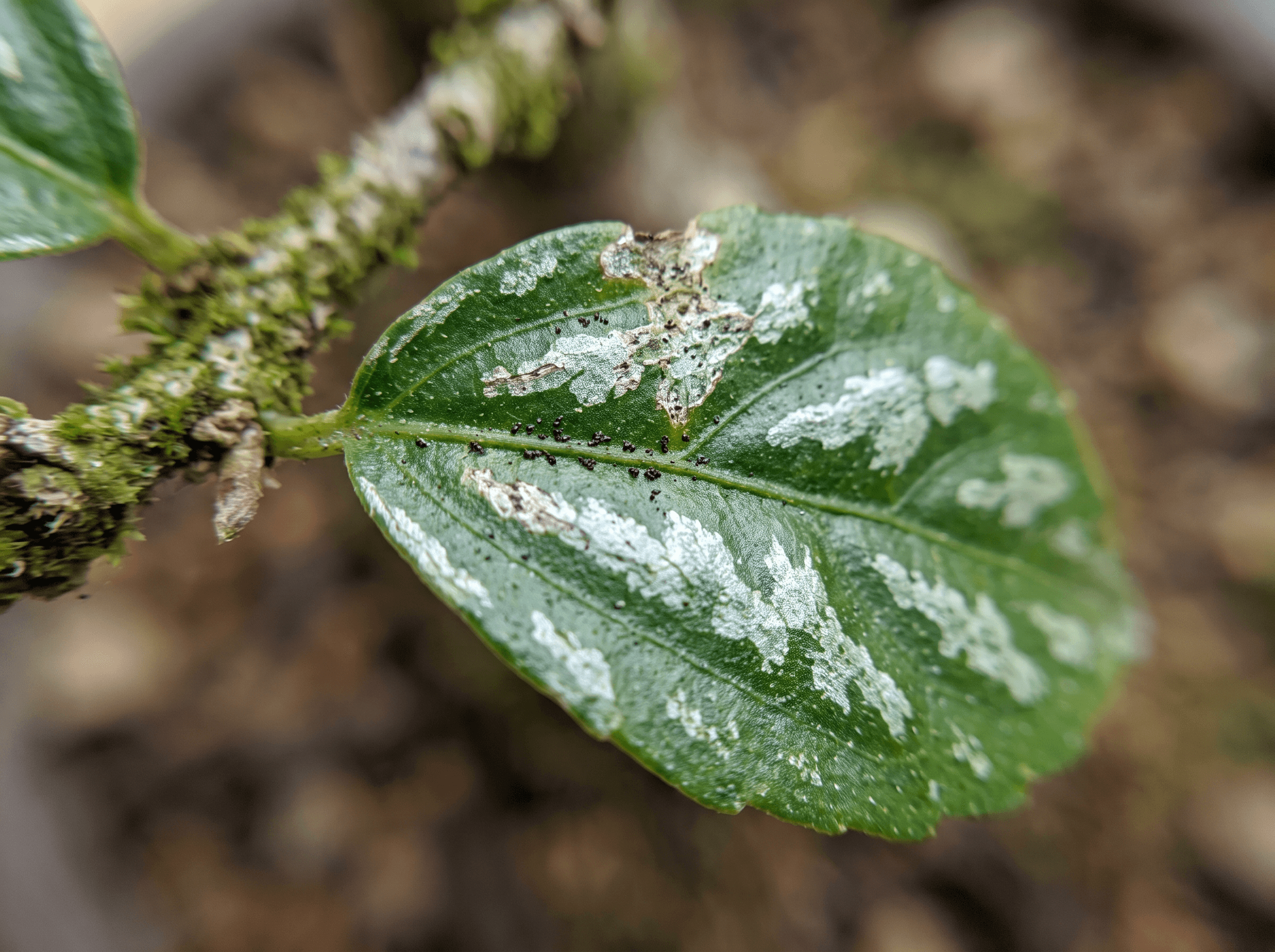
Thrips are among the hardest bonsai pests to actually see. They're slender, barely a couple of millimetres long, pale yellow to dark brown depending on the species, and they move fast when disturbed, darting into leaf folds and crevices rather than sitting still to be found. Most owners notice the damage they leave behind long before they spot the insect itself.
Their feeding method is distinctive once you know what to look for. Thrips scrape at the leaf surface to rupture the cells, then feed on the sap that leaks out, and that scraping leaves behind a papery, silvery or bronze streaked patch that catches the light differently from healthy leaf tissue. Scattered through the damaged area you'll usually find tiny black specks, thrips droppings, which is one of the more reliable ways to confirm thrips rather than some other cause of leaf discolouration. Heavier feeding on new growth can twist or stunt the emerging leaves before they've even fully opened.
Because the initial streaking can look a little like sun scorch or spider mite damage from a distance, thrips get misdiagnosed more often than most pests on this list. The frass is your best confirmation; black, varnish-like specks scattered through silvery streaking strongly point to thrips, since sun damage and mite damage don't typically leave that kind of residue behind. Catching them early matters because they reproduce fast in warm weather and have overlapping generations, meaning you'll have eggs, nymphs and adults all present at once by the time an infestation is obvious.
Likely causes
Thrips feeding damage
How to tell: Silvery or bronze streaking and fine speckling across the leaf surface, with tiny black frass dots scattered through the damaged patches. New growth on a heavily affected branch sometimes comes in twisted, curled or stunted, since thrips target the softest, most actively growing tissue first.
The fix: Hang blue or yellow sticky traps to catch adults and track how bad the population actually is. Treat with insecticidal soap or a spinosad-based product, focusing the application on new growth and the undersides of young leaves where thrips concentrate, and repeat every seven to ten days for a few rounds since overlapping generations mean new adults keep emerging as you're treating the current ones. Insecticidal soap only works on direct contact and leaves no lasting residue, so thorough coverage matters more than the product itself, and it's worth patch-testing first since some species, Japanese maple among them, can be sensitive to it, particularly in hot weather or on a tree that's already stressed. If the tree is flowering, hold off on spinosad, since it's harmful to bees and other beneficial insects visiting the blooms.
Introduced on new plant material
How to tell: The damage appeared shortly after you brought a new tree, cutting, or piece of collected material near the rest of your collection, or after reusing old potting mix or leaf litter that hadn't been cleaned out first. Thrips travel easily on plant material and can pupate in soil debris, going unnoticed on a new arrival for a week or two before the streaking becomes visible.
The fix: Inspect new material closely before placing it near other trees, and isolate anything new for a couple of weeks as a general habit, not just for thrips but for most pests on this list. Avoid reusing old potting mix or leaf litter without cleaning it out first, since that's a more realistic entry point than sealed fresh substrate. If you do find thrips on a new arrival, treat it fully in isolation before it joins the rest of your collection.
Hot, dry weather driving rapid breeding
How to tell: The infestation seemed to appear and spread quickly during a stretch of hot, dry weather. Thrips reproduce fastest in warm conditions, and a dry spell only helps them along by giving them ideal breeding conditions with fewer natural checks.
The fix: Keep the tree properly watered through hot spells, since a stressed, drought-affected tree is more vulnerable to sustained thrips damage. Light overhead misting can also help disrupt thrips activity, though it shouldn't replace a proper soap or spinosad treatment.
How to prevent it
Check new growth regularly through the growing season, since thrips damage on soft young leaves shows up faster than on mature foliage and gives you the earliest warning. Quarantine any new tree, cutting, or collected material for a couple of weeks before it goes near established trees, and avoid reusing old potting mix or leaf litter without cleaning it out first, since thrips can pupate in soil debris. If you're bringing trees back outdoors after winter, give them a close look before they rejoin a crowded bench where thrips can move easily from one to the next.
Common questions
How do I tell thrips damage from spider mite damage?
Both cause a silvery, stippled look to the leaf, but thrips leave tiny black frass specks scattered through the damage while spider mites leave fine webbing. If you're unsure, hold a sheet of white paper under a branch while you tap or shake it; both pests can be dislodged onto the paper, so use a hand lens to see what landed. Mites show up as tiny roundish dots on the move, often with fine webbing nearby, while thrips are slender and elongated and may hop or fly off rather than just crawl.
Does thrips damage heal once the insects are gone?
No, the silvery streaking and scarring on damaged leaves is permanent, that tissue doesn't repair itself. What you're aiming for is stopping further damage; healthy new growth coming in after treatment will be undamaged as long as the thrips are actually gone.
What time of year are thrips worst?
Warm, dry stretches of the growing season, typically late spring through summer, are when I see the most thrips activity, since their reproduction speeds up with the heat. They slow down considerably in cool, damp weather.
Can thrips damage kill a bonsai?
On their own, rarely, thrips are more of a cosmetic and stress problem than a lethal one. A heavy, sustained infestation across multiple growing seasons can weaken a tree significantly by damaging successive flushes of new growth, but a single season's infestation, caught and treated, isn't something a healthy tree can't recover from.
Are thrips harder to get rid of than other bonsai pests?
They're trickier than something like scale mainly because they're so hard to spot early and because their overlapping generations mean a single treatment round rarely finishes the job. Persistence with repeat applications matters more with thrips than with most pests.
Do thrips affect indoor bonsai as much as outdoor ones?
They can, particularly in warm, dry indoor conditions during winter, though I see them more often on outdoor trees during hot summer stretches. Either way the treatment approach is the same.
You might also like
General guidance based on 20+ years of practice. Every tree is different — when in doubt, ask us.