
Whitefly on your bonsai
A cloud of tiny white insects lifting off the leaves the moment you brush against the tree is almost always whitefly, small sap-sucking insects that cluster on leaf undersides and scatter the instant they're disturbed.
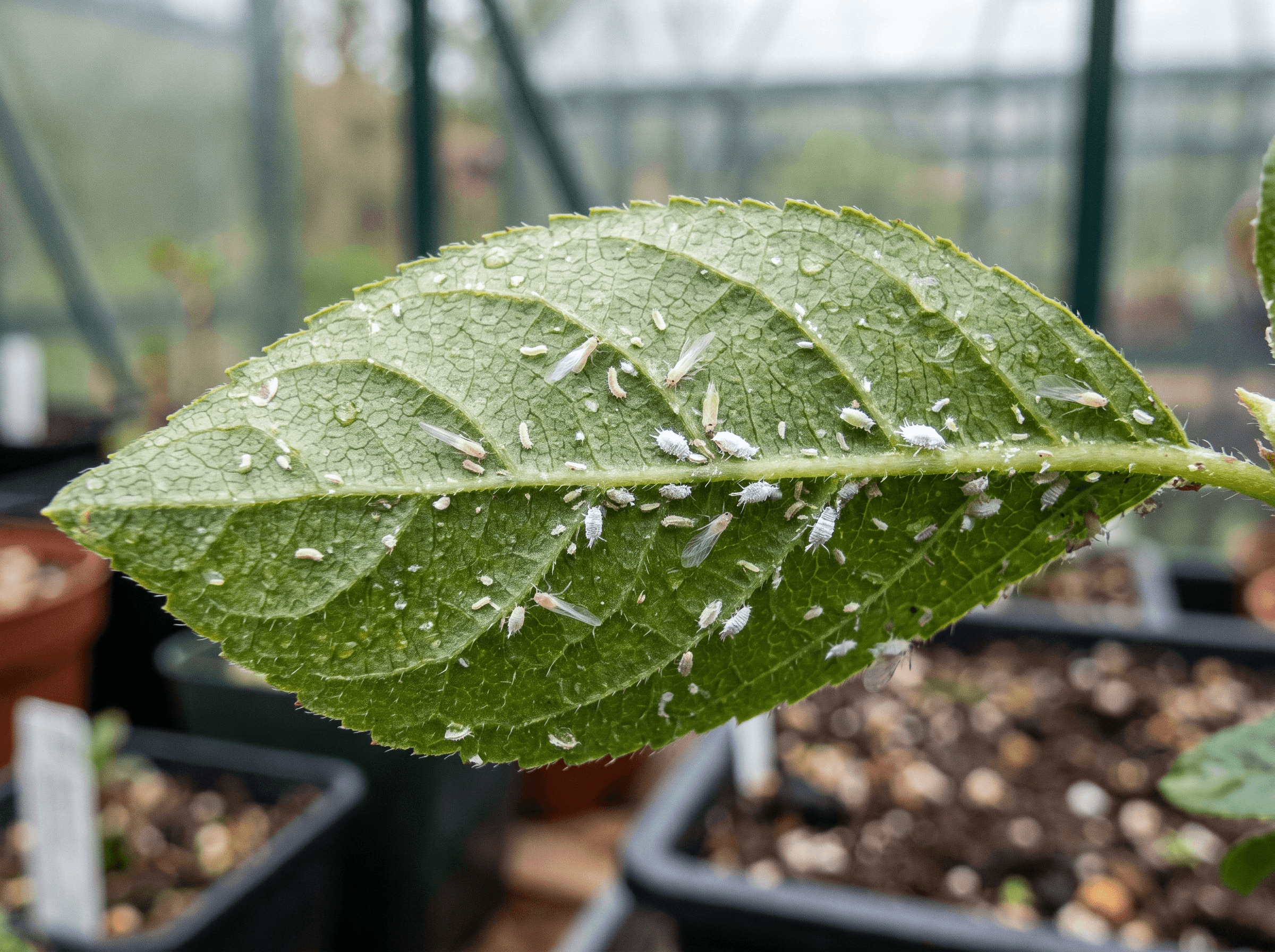
Whitefly announce themselves in a way most pests don't. Brush a branch or even just walk past the tree and a fine cloud of tiny white, moth-like insects lifts off and hangs in the air for a second before settling back down. That visible burst is usually the first thing an owner notices, well before they spot any actual damage on the leaves.
The adults you see flying are only part of the problem, and honestly not the part doing most of the damage. Turn a leaf over and look closely at the underside and you'll usually find flat, pale, almost translucent nymphs stuck in place, along with tiny eggs. These immobile nymphs are the ones actually feeding on the sap, and because they don't move and blend into the leaf surface, they're easy to miss even when the adult population above is obvious.
Like aphids, mealybugs and scale, whitefly feed by piercing the leaf and drawing sap out, and they excrete the excess sugar as a sticky honeydew that coats the leaves below and can develop into sooty mould over time. A light whitefly presence is mostly a nuisance, but a sustained infestation stresses the tree, weakens new growth, and combined with the mould, cuts down how much light the leaves can actually use.
Likely causes
Whitefly infestation
How to tell: Tiny white insects fly up in a small cloud when you shake or brush a branch, then settle back onto the foliage within a minute or two. Turn the leaves over and look closely at the undersides; you'll find flat, pale, scale-like nymphs and small oval eggs stuck to the surface, often clustered on the leaf undersides in loose groups.
The fix: Hang yellow sticky traps near the tree to catch adults and get a sense of how large the population actually is, since the traps tell you more than counting the visible cloud. Treat the whole tree with a product labelled for the plant and pest, insecticidal soap or neem oil are the usual choices, spraying the undersides of the leaves thoroughly since that's where the nymphs actually live and where a contact spray needs to reach. Test on one or two leaves first and avoid spraying in direct sun or heat, since some bonsai, jade, Japanese maple, certain azaleas and palms among them, can react poorly to soap or oil sprays. Whitefly eggs hatch continuously over an extended period rather than all at once, so plan on repeating the treatment weekly for three to four weeks rather than expecting one spray to finish the job.
Warm, still, crowded conditions
How to tell: The infestation seemed to explode shortly after the tree moved indoors for winter, or after it got placed in a crowded, still-air spot among other plants. Whitefly breed fast in warm, sheltered conditions with little air movement, and a group of plants sitting close together gives them an easy route from one to the next.
The fix: Increase airflow around the tree with a small fan or by simply giving it more space from neighbouring plants; good air circulation is recommended alongside treatment, though it's a supporting habit rather than a control on its own. Where the season allows, move the tree back outdoors; the drop in temperature and exposure to natural predators like lacewings and parasitic wasps both help keep populations down.
Sticky honeydew and sooty mould
How to tell: A faintly sticky film on the leaves and on the surface underneath the tree, sometimes developing into a dark, sooty coating over the following weeks. This is honeydew left behind by the whitefly feeding, and the mould that grows on it further blocks light from reaching the leaf surface.
The fix: Once the whitefly population is under control, wipe the honeydew off with a damp cloth and rinse the foliage if mould has already started. The mould isn't attacking the tree directly, but it can't establish without the sugary residue feeding it, so treating the whitefly is what actually solves this.
How to prevent it
Whitefly usually arrive on new plant material or ride in on a nearby houseplant, so it's worth checking the undersides of leaves on anything new before it sits close to the rest of your collection. During the growing season, a quick shake test every week or two, just brush a branch and watch for that telltale white cloud, catches an infestation while it's still small enough to deal with in one or two treatment rounds instead of a month of repeat spraying.
Common questions
How is whitefly different from aphids or scale?
Whitefly are the ones most likely to lift off in a visible white cloud when disturbed; that's the clearest tell. Aphids can occasionally have winged individuals too, but they're mostly small, soft-bodied and stationary on stems and new growth, and they don't produce that moth-like cloud. Scale insects form hard or waxy bumps that don't move at all once settled. All three produce similar sticky honeydew, so the flying cloud is your fastest way to spot whitefly specifically at a glance.
Can whitefly spread to my other plants?
Yes, easily, adults fly readily between plants that are close together, which is exactly why crowded indoor spaces see infestations spread fast. Isolate an infested tree from the rest of your collection while you treat it, and check neighbouring plants for early signs.
How long does the sticky trap approach take to work?
Sticky traps alone won't clear an infestation; they catch adults and help you monitor the population, but they don't touch the eggs or nymphs on the leaves. Combined with regular soap or neem treatments, expect a noticeable drop in numbers within two to three weeks, though a full three to four rounds of treatment and continued monitoring is what actually gets a heavier infestation under control, and how quickly it clears depends on coverage, temperature and how established the population was to begin with.
Is whitefly worse on certain bonsai species?
Ficus is one of the more commonly affected species in my experience, along with other soft-leaved tropicals often kept indoors, since whitefly favour the warm, still conditions those trees are typically grown in. In my experience conifers and other hardier outdoor species see it less often, though that's a general observation from practice rather than a hard rule.
Do I need to throw out a badly infested tree?
No, whitefly rarely kills a bonsai outright even in a bad infestation; it's a treatable problem rather than a fatal one. Sustained damage over a long period without treatment can weaken the tree significantly, but a consistent treatment routine over a few weeks brings it back.
Will one strong spray get rid of whitefly for good?
Unlikely, since the eggs on the leaf undersides survive a single application and continue hatching for days afterward. Treat this as a multi-week routine rather than a one-time fix, and don't stop after the visible cloud disappears, keep going for the full three to four rounds.
You might also like
General guidance based on 20+ years of practice. Every tree is different — when in doubt, ask us.