
Feeding Your Bonsai as Spring Growth Begins
Feed too early on the promise of swelling buds and you're offering fertilizer to a root system that isn't ready to use it yet.
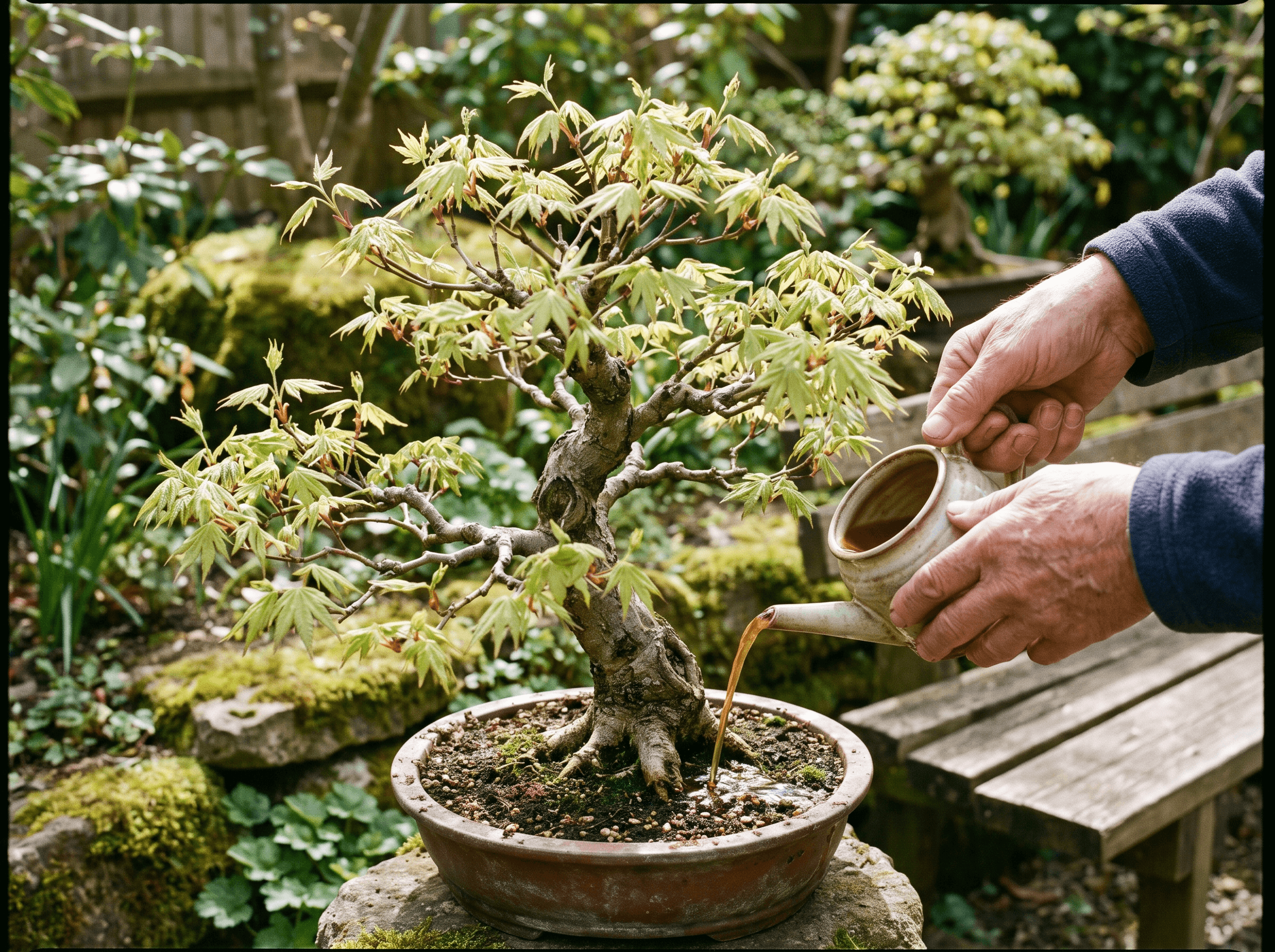
The question I get most in early spring, right after the pruning and repotting questions, is when to start feeding again. People see the first bud swell and want to jump straight to a full feeding schedule, and I understand the instinct, but it's a bit backward.
Buds swelling is the tree preparing to grow, not the tree actively growing yet. Fertilizer works by supporting growth that's already underway, so feeding at the swelling stage is feeding ahead of demand, and it mostly just sits there or, worse, encourages salt buildup in soil the roots aren't yet drawing on heavily.
I wait for a clearer signal, and I ramp up gradually rather than switching the tree straight onto a full summer feeding rate. It's a slower start than most people expect, but it matches what the tree is actually doing rather than what the calendar suggests.
Wait for growth, not just bud swell
My rule of thumb is to hold off on feeding until new growth is visibly underway, leaves opening, needles extending, that kind of clear activity, rather than starting at the first hint of a swelling bud. A swollen bud tells you the tree is preparing to grow. Visible extension tells you it's actually growing and using resources, which is when fertilizer starts doing something useful instead of sitting unused in the substrate. This is a conservative rule of thumb rather than a strict law every grower follows, some feed successfully from the point buds start extending rather than waiting for full leaf-out, and timing varies somewhat by species. But erring toward waiting costs little, so it's where I default.
Start light, then build up as growth accelerates
Once I do start, I don't jump straight to a full summer feeding rate, though opinions differ on whether reducing strength is actually necessary, some experienced growers feed at label strength from the start with no issue. My own habit is to ease in over a few weeks as the new growth picks up pace, generally following the product's own directions for strength rather than a fixed fraction, since that gradual ramp matches the tree's own gradual move into active growth. Spring growth tends to accelerate over several weeks rather than switching on overnight, so a slower ramp-up on feeding mirrors that.
Newly repotted trees need a longer pause
If a tree was repotted this spring, I treat it more cautiously, though growers genuinely disagree on how long to wait. Some feed a repotted tree fairly soon afterward with a light, low-nitrogen feed, while others wait several weeks for new growth to confirm the roots are functioning again. My own approach leans toward the more cautious end: I watch for clear new growth on the repotted tree specifically before feeding it, rather than going by a fixed number of days or matching the schedule I'd use on an untouched tree of the same species.
Different fertilizer choices for the early ramp
I lean toward a more balanced or slightly nitrogen-forward feed in this early window to support the leaf and shoot growth that's happening, saving a heavier bloom or fruit-focused feed for later in the season on species where that applies. Organic feeds that release more slowly suit this ramp-up period well, since they're gentler on a root system that's still finding its rhythm after winter.
Signs you've started too early or fed too much
A white, crusty buildup on the soil surface is the clearer warning sign, it usually points to salts accumulating because the roots aren't drawing on the fertilizer yet. Solid fertilizer just sitting visibly on the surface isn't automatically a problem on its own, since many organic feeds break down slowly and are meant to sit there for a while. Combined with a crust, or with a tree that clearly isn't growing, it's worth backing off, watering a bit more generously to help flush excess salts, and waiting for clearer growth signals before resuming.
Common questions
Should I feed my bonsai as soon as I see buds swelling in spring?
No, I'd hold off. Bud swell means the tree is preparing to grow, not actively growing yet. Wait until you see real growth extension, leaves opening or needles pushing out, before starting to feed, so the fertilizer actually matches what the tree is using.
How much should I feed at the start of spring compared to summer?
I ease in gradually over a few weeks as growth accelerates rather than jumping straight to a full summer feeding rate, generally following the fertilizer's own label strength rather than a fixed reduced fraction. Some growers feed at full strength from the start with good results, so this is more a cautious personal habit than a strict requirement.
When can I start feeding a bonsai I just repotted this spring?
Later than you'd think, and later than an unrepotted tree of the same species. I wait for clear new growth on that specific tree before resuming feeding, which is usually a good few weeks past repotting, since the root system needs time to recover first.
What kind of fertilizer is best for early spring feeding?
I tend toward a balanced or slightly nitrogen-forward feed to support the leaf and shoot growth happening at this stage, often choosing a slower-release organic option since it's gentler on roots that are still finding their rhythm after winter dormancy.
What are the signs I fed my bonsai too early?
A white crust forming on the substrate is the clearer sign that salts are accumulating because the roots aren't using the fertilizer yet. Solid fertilizer just sitting on the surface isn't necessarily a problem by itself, since slow-release types are meant to break down gradually, but paired with a crust or a tree that isn't growing, it's worth easing off, watering more generously to flush the excess, and waiting for clearer growth.
Does every species start feeding at the same time in spring?
No, timing varies with how quickly each species and each individual tree moves into active growth. I go by visible growth on each tree rather than a fixed calendar date, which naturally staggers my feeding start dates across the collection.
Can too much early fertilizer actually harm the tree?
Yes, particularly on roots not yet actively drawing water and nutrients, where excess fertilizer salts can build up in the substrate and stress the root system rather than help it. Starting light and building up avoids this far more reliably than starting strong.
You might also like
General guidance based on 20+ years of practice. Every tree, climate, and year is different — when in doubt, ask us.