
Fertilizer burn on your bonsai
Brown, crispy leaf margins or scorched tips that show up within days of a feed, sometimes paired with a white crust on the soil, point to fertilizer burn rather than a watering or pest problem.
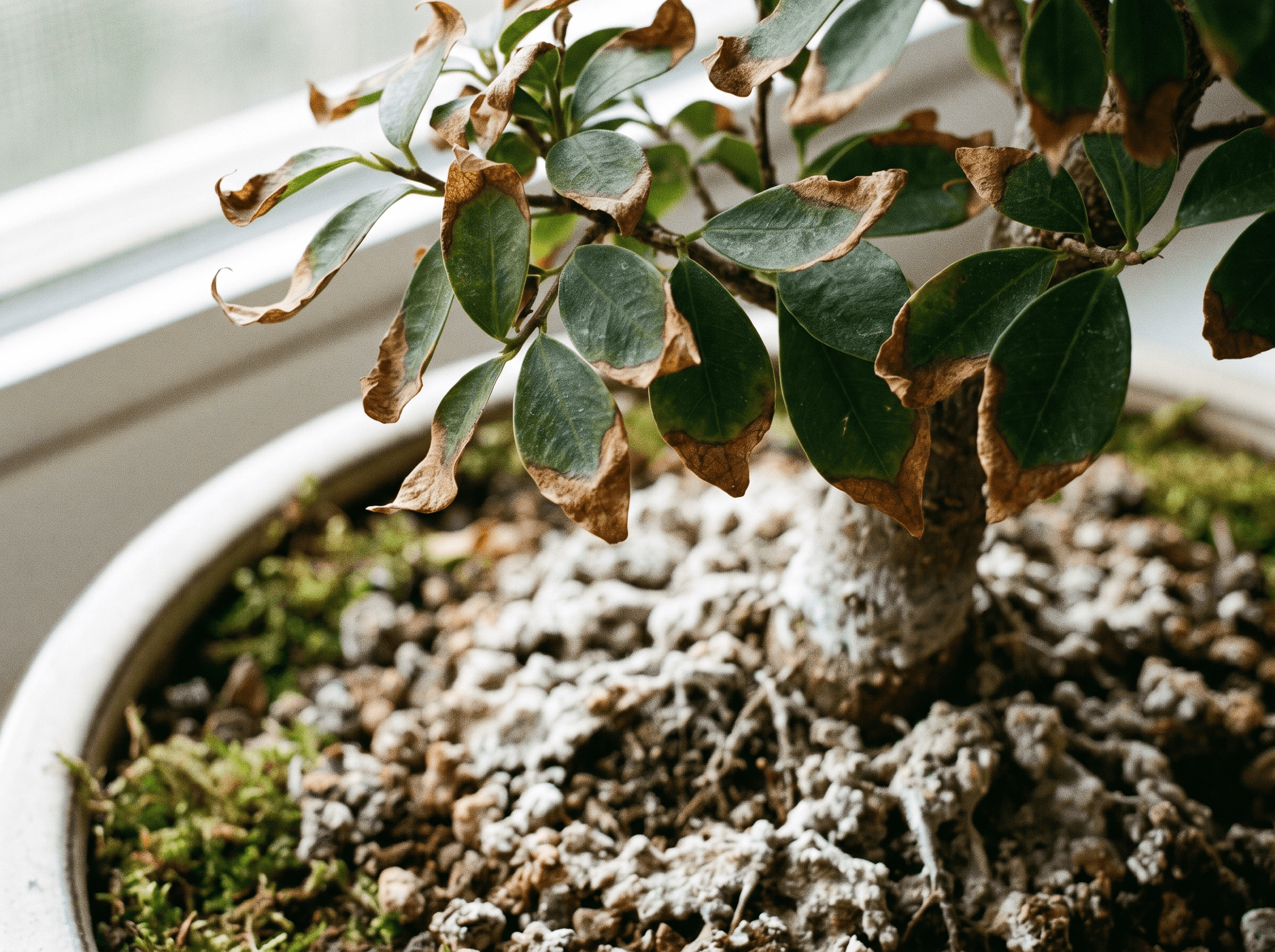
Fertilizer burn, also spelled fertiliser burn, is one of the more avoidable problems on this list, and one I still see fairly often, usually on trees fed by someone eager to see faster growth. The mechanism is simple: fertiliser is essentially a concentration of mineral salts, and when there's too much of it in the soil relative to the water available, it pulls moisture out of the root tissue by osmosis instead of the root drawing water in. The visible result, brown and crispy margins on the leaves, is really root damage showing up above ground.
What makes fertiliser burn easy to misdiagnose is the timing. It tends to appear fast, often within days of a feed, though a slow-release product or a build-up of salts from repeated applications can take a couple of weeks to show, which is quicker than many nutrient deficiencies and usually closely tied to a recent feeding. The pattern also tends to be fairly even across the tree rather than isolated to one branch, since the cause is in the soil the whole root system shares. If you can trace the onset back to a recent feeding, especially a stronger dose than usual or a fertiliser applied while the soil was already dry, burn should be high on your list.
Bonsai are more vulnerable to this than a tree in open ground because the root system is confined to a small volume of soil with nowhere for excess salts to disperse. A garden shrub can tolerate an overly generous feed because the surrounding soil dilutes it; a bonsai pot has no such buffer. That's why the standard advice for bonsai fertiliser is almost always to feed weaker and more often rather than following packaging aimed at garden or houseplant use, which is usually calculated for a much larger root volume.
Likely causes
Fertiliser applied too strong or too often
How to tell: Brown, crispy edges or tips appear on multiple leaves within a few days of feeding, often starting at the leaf margin and working inward, and you may also see a white or crusty mineral residue building up on the soil surface from repeated applications, though the same kind of crust can also form from hard tap water alone, so treat it as supporting evidence alongside the timing rather than proof by itself. Newer growth is frequently hit hardest since young tissue is more sensitive to salt concentration than mature leaves.
The fix: Remove any visible fertiliser pellets, cakes, or granules from the soil surface first, and check the drainage holes aren't blocked. Then flush the pot thoroughly with plain water, several times the volume of the pot, letting it run through and out the drainage holes completely to wash the excess salts out of the root zone rather than just dampening the surface. Stop feeding immediately, and if the tree looks stressed, give it a sheltered spot out of strong sun and wind while it recovers. After flushing, hold off feeding entirely for two to three weeks to let the roots recover, then resume at a lighter dose, roughly half of what you were using, and build back up slowly while watching how the tree responds.
Feeding a stressed, dry, or newly repotted tree
How to tell: The burn appeared shortly after a feed given to a tree that was already wilting from dryness, had just been repotted, or was otherwise under visible stress, since a compromised root system has far less tolerance for salt concentration than a healthy one. This combination is a common mistake with a tree that looks like it needs a boost rather than water.
The fix: Never feed a tree with dry soil; always water thoroughly first and only feed once the soil is properly moist, since dry roots concentrate whatever fertiliser is applied right against damaged tissue. Hold off feeding entirely for several weeks after repotting, generally until you see clear signs of new growth confirming the roots have re-established, since freshly cut or disturbed roots are especially vulnerable to salt damage.
Fertiliser placed directly against the trunk or roots
How to tell: Damage is concentrated on one side of the tree or on branches nearest to where a fertiliser pellet, stake, or concentrated liquid pour landed, rather than being spread evenly, pointing to a localised hot spot of salt concentration rather than an overall overfeeding.
The fix: Spread fertiliser evenly across the soil surface well away from the trunk rather than piling it in one spot, and with liquid feeds, pour slowly around the perimeter of the pot instead of directly at the base of the trunk. If you use slow-release pellets, space them out rather than clustering several together.
How to prevent it
The safest habit with bonsai fertiliser is to underfeed rather than overfeed, since the consequences of too little nutrition are far milder and slower to appear than the consequences of too much. Always dilute to a lower concentration than a general houseplant or garden label suggests, bonsai pots hold a fraction of the soil volume those instructions assume, and feed on a little-and-often schedule rather than occasional heavy doses. Water before you feed, never after a dry spell, and skip feeding altogether during dormancy, right after repotting, or when a tree is already stressed from heat, pests, or disease, since none of those are the moment to add more salt to the root zone. Keeping a simple log of when and how much you fed can save real detective work later if burn does show up.
Common questions
Is fertiliser burn permanent, or will the leaves recover?
The damaged leaf tissue itself won't heal, those brown crispy margins stay that way, but the tree as a whole usually recovers once the excess salts are flushed out and feeding is paused. New growth that follows is typically normal, and badly affected leaves can be trimmed away for appearance once new foliage is established.
How do I measure fertiliser correctly for a bonsai?
Use a proper measuring tool rather than eyeballing it, and treat the dose on a general plant fertiliser's packaging as a starting point to dilute further rather than follow exactly, since bonsai pots hold far less soil than the volumes those instructions are calculated for. When in doubt, err toward a weaker mix applied more frequently.
Can organic fertiliser cause burn too, or only synthetic?
Yes, organic fertilisers can burn a tree as well, though it tends to happen more slowly since the nutrients release gradually rather than dissolving into the soil solution all at once, so the risk is generally lower and slower than with liquid or fast-release synthetic feeds, but it isn't zero. Overapplying organic pellets or cakes, especially in a small pot, can still build up enough concentration to damage roots.
How soon after repotting is it safe to start feeding again?
Generally wait until you see clear new growth, which usually signals the root system has recovered enough to handle the added salt load. Depending on species and season this can be anywhere from three to six weeks, and it's worth erring on the later side if you're unsure.
How can I tell fertilizer burn apart from a watering problem?
Timing is the clearest clue. Burn tends to appear within days to a couple of weeks of a feed and is fairly even across the tree, while underwatering damage develops more gradually and overwatering damage tends to affect the whole tree with softer, less crispy symptoms and often a soggy soil smell rather than a dry, crusty one.
Should I water more to dilute fertiliser I've already applied?
A single thorough flush with several times the pot's volume in plain water is more effective than repeated light watering, since you need enough volume passing through the soil to actually carry dissolved salts out through the drainage holes rather than just redistributing them.
You might also like
General guidance based on 20+ years of practice. Every tree is different — when in doubt, ask us.