
Autumn Bonsai Fertilizing: When to Reduce Nitrogen and Stop Feeding
The nitrogen that builds a great bonsai canopy in May is the same thing that gets a branch tip killed by frost in November if you keep feeding it at full strength.
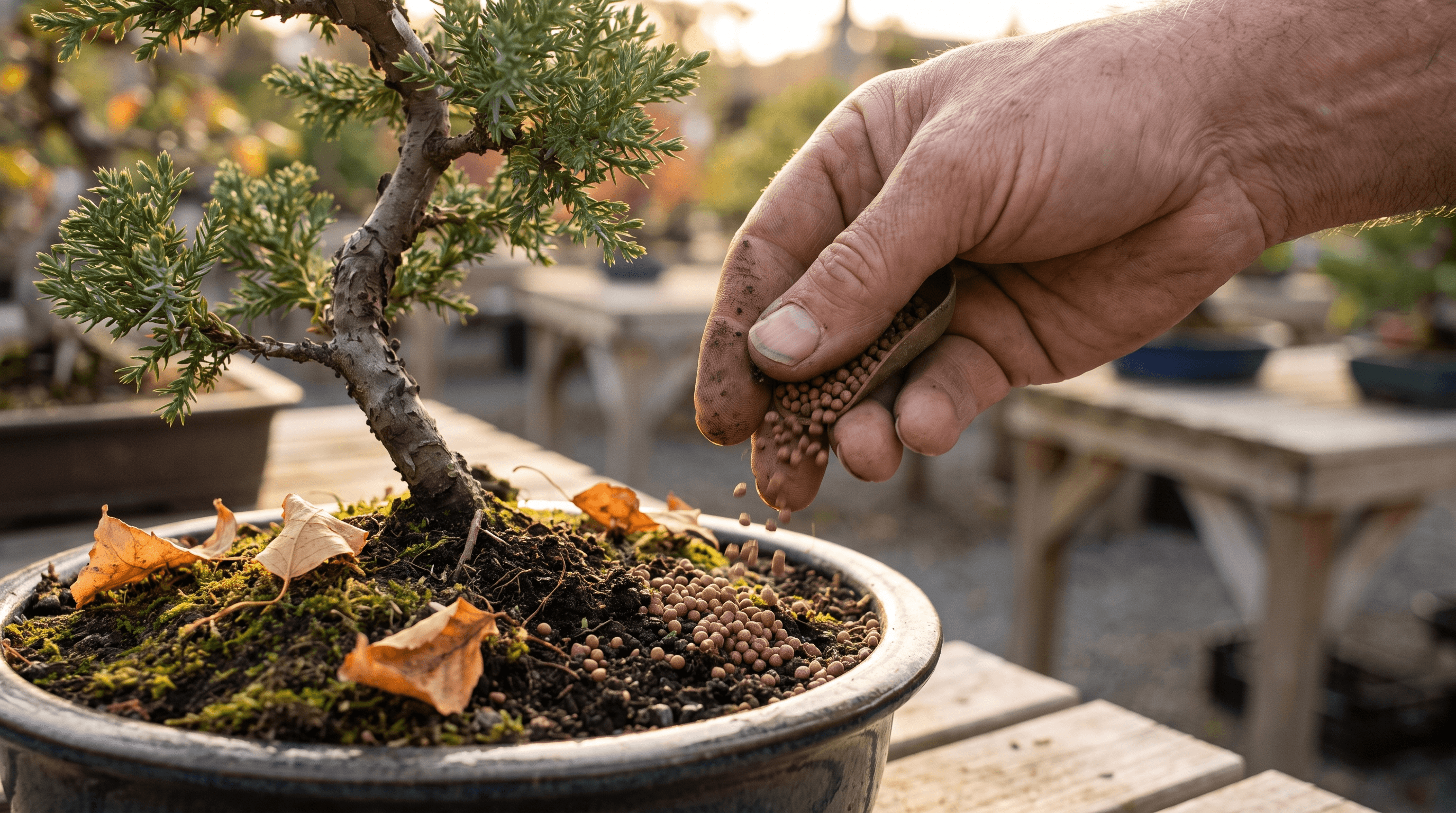
Feeding decisions in autumn are really about anticipating what's coming rather than reacting to what's already happening. By the time you can visibly see a tree struggling from soft, frost-damaged growth, the fertilizing mistake that caused it happened weeks earlier. So autumn feed management is one of those quiet, preventative jobs, done right it's invisible, done wrong it shows up as blackened shoot tips after the first real cold snap. This is about temperate, outdoor bonsai heading into seasonal dormancy, tropical species kept indoors year-round follow a steadier feeding rhythm and aren't really what this piece is about.
The core issue is nitrogen. It's the nutrient most responsible for pushing soft new extension growth, exactly the kind of growth that hasn't had time to harden and lignify before frost arrives, and it's exactly what a tree naturally wants less of as it prepares to shut down for the season. Keep feeding a high-nitrogen mix at full strength into October the way you would in June, and you're actively working against the tree's own seasonal instincts.
I don't stop feeding cold turkey though, and I don't think most experienced growers do either. It's a taper, with a shift in what you're feeding along the way, not just less of the same thing.
Taper nitrogen as growth visibly slows
I watch for the point where new extension growth has clearly eased off, usually sometime in September here in a mild, Mediterranean-type climate, and that's my cue to start reducing feed strength or frequency rather than waiting for a specific calendar date. Continuing a full-strength, nitrogen-heavy feed schedule past this point pushes the tree to keep producing new growth it doesn't actually need and can't properly harden before winter. The taper doesn't need to be dramatic all at once, cutting strength by roughly half and then again a few weeks later works better than an abrupt stop, since it lets the tree's own slowdown and the reduced feed track each other.
Shifting toward lower-nitrogen or potassium-forward feed
Some growers, myself included on most of my collection, switch to a lower-nitrogen or more potassium-forward fertilizer in early autumn rather than just diluting the same summer feed. Higher-potassium, lower-nitrogen feeds are commonly used at this stage to support root strength and the seasonal transition, rather than a guarantee of toughening any particular shoot or bud. This isn't a strict requirement, plenty of trees do fine simply on a reduced dose of a balanced feed, but if you have access to a fertilizer formulated with a lower nitrogen ratio for this window, it's a genuinely useful tool for the transition rather than a marketing gimmick. Pines are something of an exception worth flagging separately, many growers keep feeding them at a higher nitrogen level right through to early autumn, until that year's new needles have hardened off, and only taper after that, so check what's recommended for the specific species in front of you rather than applying one rule across the whole collection.
Knowing when to stop entirely
I stop feeding altogether once a tree is clearly moving into dormancy, no active growth, leaf color changing on deciduous species, or activity visibly slowing on evergreens. Feeding a fully dormant tree offers little practical benefit, uptake and growth response are minimal at that point, though exactly how minimal depends on species, climate, and the fertilizer itself. The exact date varies a lot by species and by how mild or how sharp the autumn is running that particular year, which is why I go by what the tree is showing rather than picking one calendar date and applying it across the whole collection.
What happens if you don't taper
I've seen this play out on trees that got fed on a summer schedule right into late October, a flush of soft new growth pushed out in response, still tender when the first real cold hit, and blackened, damaged tips within days. The damage itself usually isn't fatal to the tree overall, but it's wasted energy the tree spent producing growth that then had to be pruned away, and it's entirely avoidable with a gradual taper instead of an abrupt full-strength-to-nothing switch.
Common questions
When exactly should I start reducing fertilizer in autumn?
I go by the tree's growth rate rather than a fixed date, starting the taper once new extension growth has clearly slowed, which for most of my collection lands somewhere in September in a mild climate. Cooler climates further north would likely see this earlier, and a particularly warm, extended autumn here can push it later.
Is nitrogen really the main thing to worry about in autumn feeding?
It's the main driver of the problem, yes. Nitrogen pushes soft extension growth that doesn't harden in time for frost, which is exactly the opposite of what a tree needs heading into winter, so reducing nitrogen specifically, more than just reducing feed volume in general, is the useful lever here.
Do I need a special autumn fertilizer or can I just dilute my summer one?
Diluting your regular summer feed works fine for most trees and most growers. A dedicated lower-nitrogen or potassium-forward autumn feed is a nice-to-have that some growers prefer for the seasonal transition, but it's not a strict requirement if you're already tapering the dose of what you normally use.
What happens if I keep feeding at full strength too late into autumn?
The tree is likely to keep pushing new soft growth in response, and that growth often doesn't have time to harden before frost arrives, leading to blackened or damaged shoot tips once real cold hits. It's rarely fatal to the whole tree, but it's avoidable wasted energy and unnecessary stress.
Should I fertilize a recently repotted tree the same way in autumn?
A tree repotted earlier in the year is often back on a normal feeding rhythm by autumn, so the same taper usually applies, though recovery time varies by species and by how extensive the root work was. If you repotted something unusually late in the season, I'd be cautious with feed until you see clear signs of root recovery, rather than assuming the normal taper applies right away.
How do I know when to stop feeding completely for the season?
Stop once the tree shows clear signs of moving into dormancy, no active new growth, autumn leaf color underway on deciduous species, or a general slowdown on evergreens. Feeding past that point does little for the tree, since uptake and growth response drop off sharply once dormancy sets in.
Does this taper apply to evergreen species too, or just deciduous ones?
Both, though the visible cue differs, and pines specifically often run on their own timeline since growers commonly keep feeding them at higher nitrogen until that year's needles have hardened. Deciduous trees give you leaf color as an obvious signal, while other evergreens like juniper require watching more subtly for slowed shoot extension, but the underlying logic of tapering nitrogen as growth slows applies broadly once you've checked what's normal for the specific species.
You might also like
General guidance based on 20+ years of practice. Every tree, climate, and year is different — when in doubt, ask us.