
Feeding Through Summer Heat
A tree fighting off extreme heat isn't in a good position to make use of a full feeding schedule, and pushing on with one anyway can add stress rather than help.
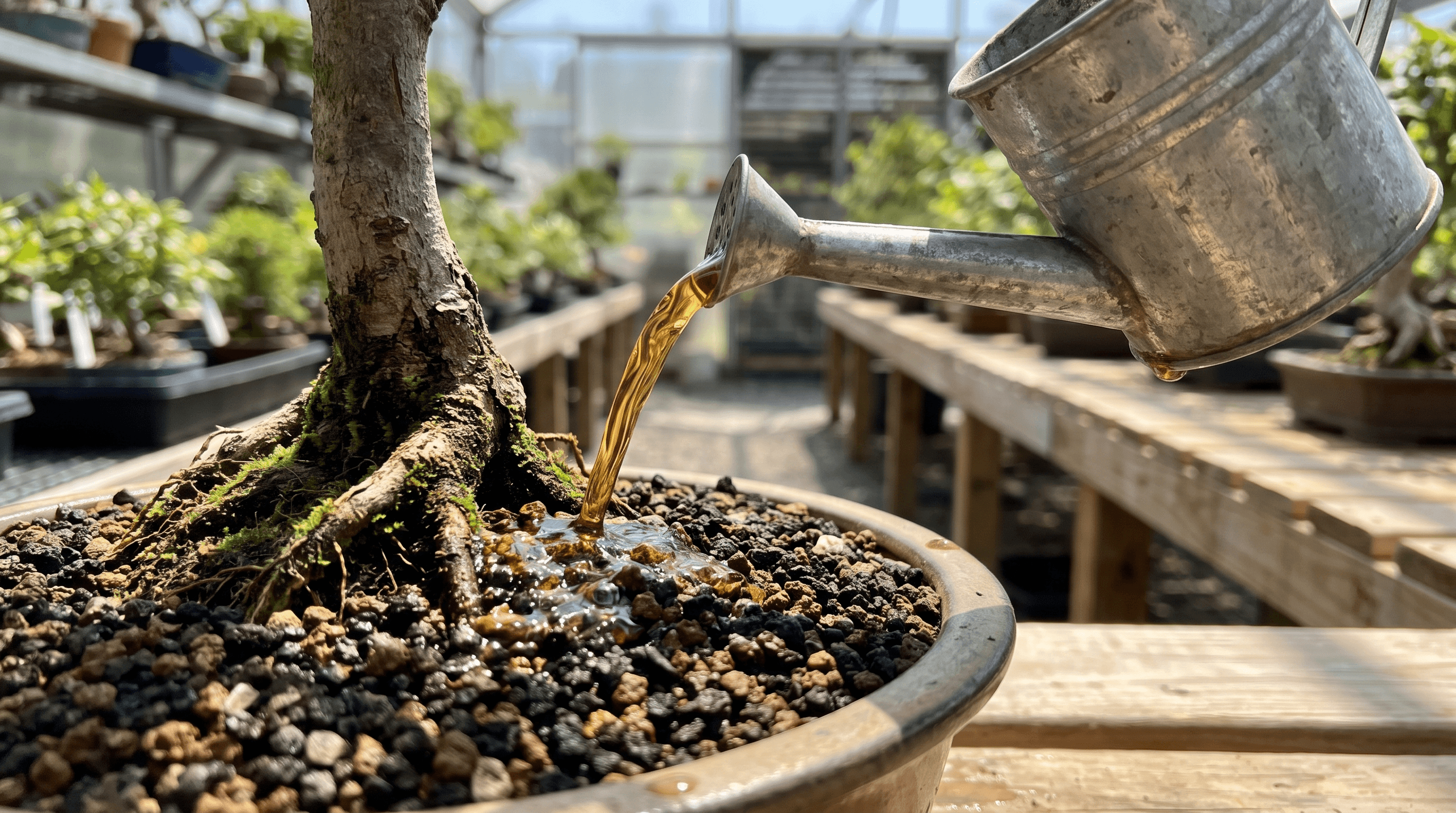
Feeding is one of those bonsai tasks that people tend to treat as a constant, a schedule set once in spring and followed straight through until autumn regardless of what else is going on. Through most of summer that's roughly fine. Through the most extreme heat spells, I think it's worth reconsidering, and it's something I've adjusted my own approach on over the years after watching how trees actually respond.
The logic isn't complicated once you think about what a tree is doing during severe heat stress. It's managing water loss, protecting its foliage, and generally in survival mode rather than active growth mode. Fertilizer is usually less useful to a tree that's barely growing, and in some cases a full dose on a stressed root system can add to the load rather than help.
This isn't an argument for stopping feeding for the whole summer, most of the season still calls for a normal schedule. It's specifically about how I handle the worst heat spells and how I bring feeding back once conditions improve.
A stressed tree can't use nutrients the way a healthy one can
During extreme heat, a tree redirects its energy toward basic survival, managing water loss and keeping foliage from scorching, rather than toward the kind of active growth that actually uses fertilizer well. To be clear, this is specifically about genuine heat stress, not ordinary summer warmth. Most of the season, a well-watered, actively growing tree handles a normal feeding schedule just fine, generally with a balanced feed rather than spring's more nitrogen-heavy mix. It's the worst spells that change my approach: feeding on the usual schedule through one of these can mean the fertilizer goes largely unused, or in some cases adds a bit of extra load to a root system that's already working hard just to keep the tree hydrated. I ease off during those specific stretches rather than sticking rigidly to the calendar.
I don't stop entirely, I scale back
This isn't about withholding all nutrition for weeks at a time. During the worst heat I typically stretch out the interval between feedings, and sometimes drop to a lighter dose as one option, though reducing strength isn't the only reasonable approach, some growers simply feed less often at full strength instead. A tree still ticking over with some growth, even slowed growth, benefits from a light feed more than it would from none at all. I reserve a full stop only for trees showing real, visible heat stress, wilting or noticeably dull foliage, where I want the plant focused entirely on recovery rather than processing anything extra.
Resume the normal schedule once temperatures moderate
As soon as a heat spell breaks and I see the tree pushing healthy new growth again rather than just holding steady, I bring feeding back to the regular schedule. I don't overcompensate with a heavier dose to make up for the pause, that's not necessary and can stress a tree that's still recovering. A steady return to normal strength is enough; how quickly a tree picks its growth rate back up after that varies quite a bit by species and by how severe the stress was.
Watering and feeding decisions go hand in hand here
I never feed a tree that's dry or under water stress, regardless of the season, but this matters even more in summer since heat and water stress are so often happening together. A well-watered, healthy tree can generally handle its normal feeding schedule even in warm weather, it's specifically the combination of extreme heat and visible stress that changes my approach. If watering is solid and the tree still looks strong, I don't automatically cut feeding just because the thermometer is high.
Common questions
At what temperature should I start easing off feeding?
I don't work off a fixed number, since it depends on what the trees are used to and how they're responding. I ease off once I see clear signs of heat stress, wilting or dull, tired-looking foliage, during an unusually severe or prolonged hot spell, rather than reacting to any specific temperature reading.
Will pausing fertilizer for a few weeks hurt my bonsai's growth for the year?
A short pause during genuine heat stress isn't going to set a healthy tree back meaningfully over the course of a full growing season. The bigger risk to overall growth is usually the heat stress itself, not the brief gap in feeding.
Should I switch to a different type of fertilizer in summer instead of just reducing amount?
I mostly adjust quantity and frequency rather than switching fertilizer types specifically for summer heat. Some growers prefer a more balanced or slightly lower-nitrogen feed through summer generally, but that's a separate consideration from the heat-stress adjustment I'm describing here.
How do I know when it's safe to resume normal feeding after a heatwave?
I look for the tree actively pushing new growth again, rather than just looking stable, before returning to the full schedule. Stability alone can mean the tree has stopped declining but hasn't yet recovered enough to make good use of nutrients.
Does this apply to all species equally?
Heat tolerance varies a lot between species, so a tree that's naturally suited to hot, dry conditions might barely need this adjustment while a more heat-sensitive species could need it every summer. I go by how the individual tree is responding rather than applying a blanket rule across the whole collection.
Is it risky to feed right after a heatwave breaks, or should I wait a few days?
I usually wait a few days after a severe heat spell ends before resuming feeding, giving the tree a little time to show it's genuinely recovering rather than just experiencing a temporary break in the heat before another spell hits.
Can overfeeding during heat actually damage a bonsai?
It can add to the stress a tree is already under, particularly if the root system is struggling with heat and water demand at the same time. It's rarely dramatic on its own, but combined with existing heat stress it's an unnecessary extra burden I'd rather avoid.
You might also like
General guidance based on 20+ years of practice. Every tree, climate, and year is different — when in doubt, ask us.