
Bonsai Overwatering vs Underwatering: How to Tell the Difference
Overwatered and underwatered bonsai can look surprisingly similar from the leaves alone, which is exactly why checking the actual soil matters more than guessing from foliage.
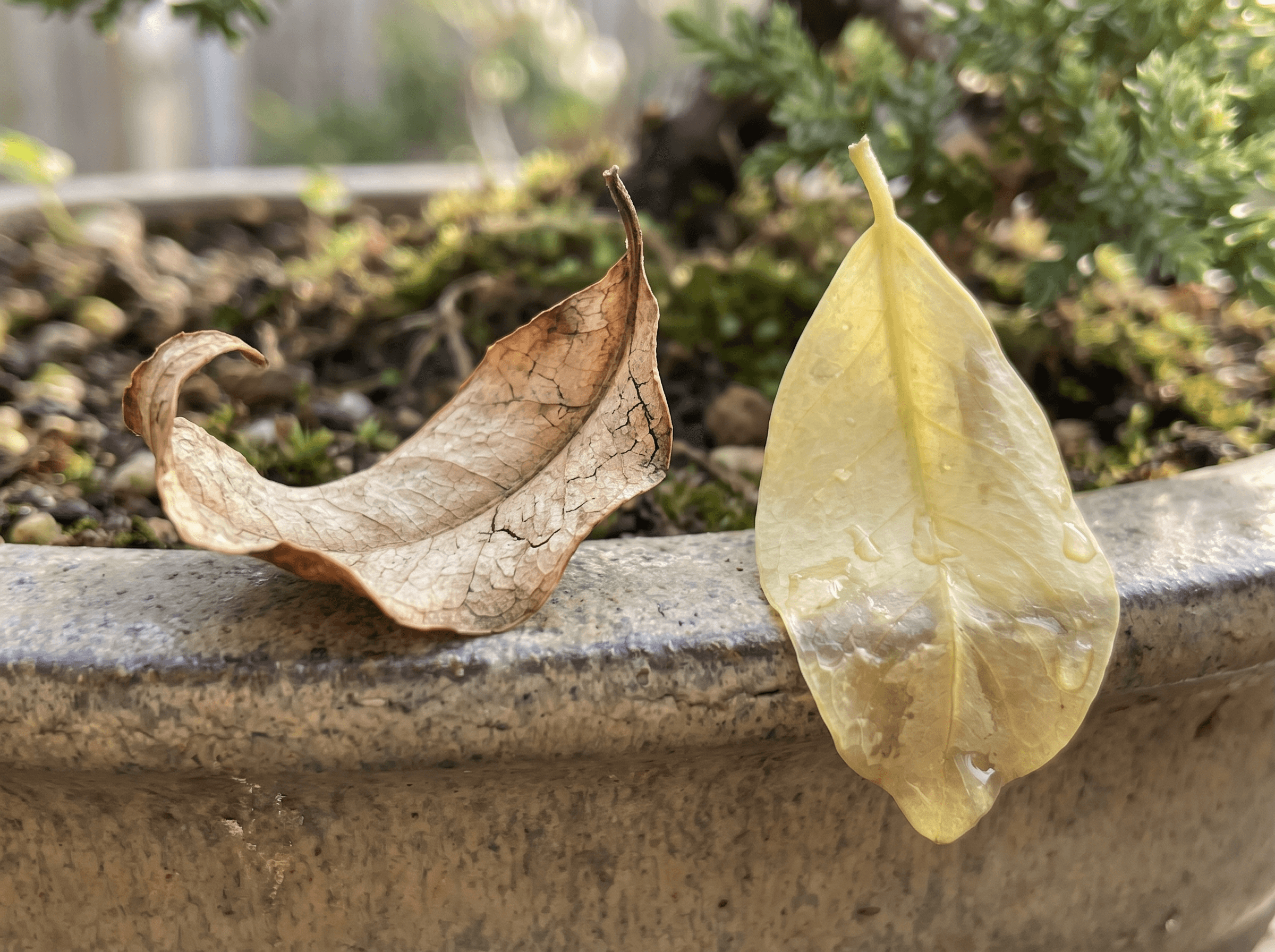
I've had people bring me photos of a wilting bonsai absolutely convinced it needs more water, when the soil underneath was waterlogged and the roots were already rotting. The wilting looked identical to what a genuinely dry, underwatered tree does. That overlap is the single biggest trap in diagnosing bonsai watering problems, and it's why leaves alone aren't a reliable diagnostic tool on their own.
The two problems have opposite causes and opposite fixes, but the visible symptoms can converge in confusing ways, especially early on before things get severe. What doesn't lie is the soil itself. Checking actual moisture at the roots, not just how the leaves look, is the most reliable way to tell which direction you're dealing with.
Let's go through what each one actually looks like, where they overlap, and what to check to tell them apart with confidence.
Signs of underwatering
Dry, brittle soil that's pulled slightly away from the sides of the pot is the clearest early sign. Foliage often wilts or droops, but the telling detail is that it tends to perk back up relatively quickly, sometimes within hours if the stress was mild, after a thorough soak, since the tree was simply thirsty rather than structurally damaged. Leaf edges going crispy and brown, especially on species with broader leaves, is another common sign, along with a pot that feels noticeably light when lifted. Underwatering, caught reasonably early, tends to recover well once proper watering resumes, though severe or prolonged drying can still damage fine roots and slow that recovery.
Signs of overwatering
Soil that stays visibly wet or soggy for days without drying at the surface is the main indicator, sometimes accompanied by a sour or stagnant smell coming from the pot, which can suggest roots are starting to decay in low-oxygen, waterlogged conditions, though smell alone isn't a definitive test. Leaves may yellow rather than crisping at the edges. In more advanced, severe cases, the trunk base can feel soft or start darkening, a sign of advanced crown or trunk-base rot rather than a routine overwatering symptom, and it needs urgent attention. Overwatering damage takes longer to reverse than underwatering, since rotted roots don't simply recover once watering stops.
Why the symptoms can look confusingly similar
Wilting is the overlap. A dry tree wilts because there's no water available to the leaves. An overwatered tree with rotting roots also wilts, in this case because the damaged root system can no longer take up the water that's actually sitting right there in the soggy soil. From the leaves alone, both can look like the plant is thirsty, which leads a lot of people to water an already drowning tree even more, making the underlying rot worse. This is precisely why the soil check has to come before you decide what to do, not after you've already guessed from the leaves.
How to actually tell them apart
Press a finger just below the surface of the soil, and if you can, check slightly deeper with a wooden skewer or similar. Genuinely dry, crumbly soil at that depth points to underwatering, even if the leaves look distressed. Cool, wet, or soggy soil that's clearly retained moisture, especially combined with any odd smell, points to overwatering, regardless of how wilted the foliage looks. If you're not sure, the pot's weight is a useful secondary cue: unusually light suggests dry, unusually heavy suggests still saturated.
Drainage is usually the real cause behind chronic overwatering
If a tree keeps ending up overwatered despite you being careful about frequency, the substrate is very often the actual culprit rather than your watering habits. A mix that's too fine, too compacted, or simply not suited to fast drainage will hold water far longer than a proper bonsai substrate should, no matter how carefully you time your waterings around it. If this keeps happening with a particular tree, it's usually worth addressing the substrate itself at the next repot rather than continuing to fight it with watering adjustments alone.
Common questions
How can I tell if my bonsai is overwatered or underwatered just by looking at it?
Wilting alone can't tell you, since both problems can cause it. Check the soil directly: dry and crumbly points to underwatering, cool and soggy with possibly a sour smell points to overwatering. The soil is a far more reliable indicator than the leaves on their own.
Will an overwatered bonsai recover if I stop watering it?
Sometimes, if caught early before significant root rot has set in. Letting the soil dry out somewhat and switching to a proper free-draining substrate helps. But if roots have already rotted and the trunk base is soft or darkening, recovery becomes much harder and may not be possible.
What does a sour or rotten smell from bonsai soil mean?
It can mean roots are decaying due to prolonged waterlogging, similar to the smell of anaerobic decomposition. It's a useful supporting clue rather than a definitive test on its own, but combined with soggy soil it shouldn't be ignored, since together they usually mean the problem has progressed past the earliest stage.
Why do my bonsai's leaves perk back up after watering even though they looked wilted?
That's a strong sign of underwatering rather than overwatering. A genuinely thirsty tree tends to recover turgor pressure in its leaves fairly quickly after a proper soak, sometimes within hours if the stress was mild. An overwatered tree with damaged roots typically doesn't bounce back the same way, since the roots themselves can't take up the water even once it's available.
Can overwatering and underwatering happen to the same tree at different times?
Very commonly, actually, especially when someone is watering on a fixed schedule instead of checking soil. The same tree can swing between too wet and too dry depending on weather and season if watering isn't adjusted to what the soil is actually doing at the time.
What does a soft or blackening trunk base mean on a bonsai?
This is a serious, advanced sign of crown or trunk-base rot that has spread beyond the roots, not a routine overwatering symptom. It needs prompt attention, typically involving removing the tree from wet conditions, checking root health directly, and improving drainage, since leaving it can be fatal to the tree.
Is it better to underwater or overwater a bonsai if I'm unsure?
If forced to choose, slightly underwatering is the safer mistake, since it tends to be quicker and easier to recover from than root rot caused by overwatering. That said, neither is actually good practice, and the real fix is checking the soil before watering rather than defaulting to either extreme.
You might also like
General guidance based on 20+ years of practice. Every tree and every climate is different — when in doubt, ask us.