
Bonsai wilting even with watering
A bonsai wilting even with watering, when the soil is clearly damp, feels contradictory, but it usually means the roots can't take up the water that's there, not that the tree needs more of it.
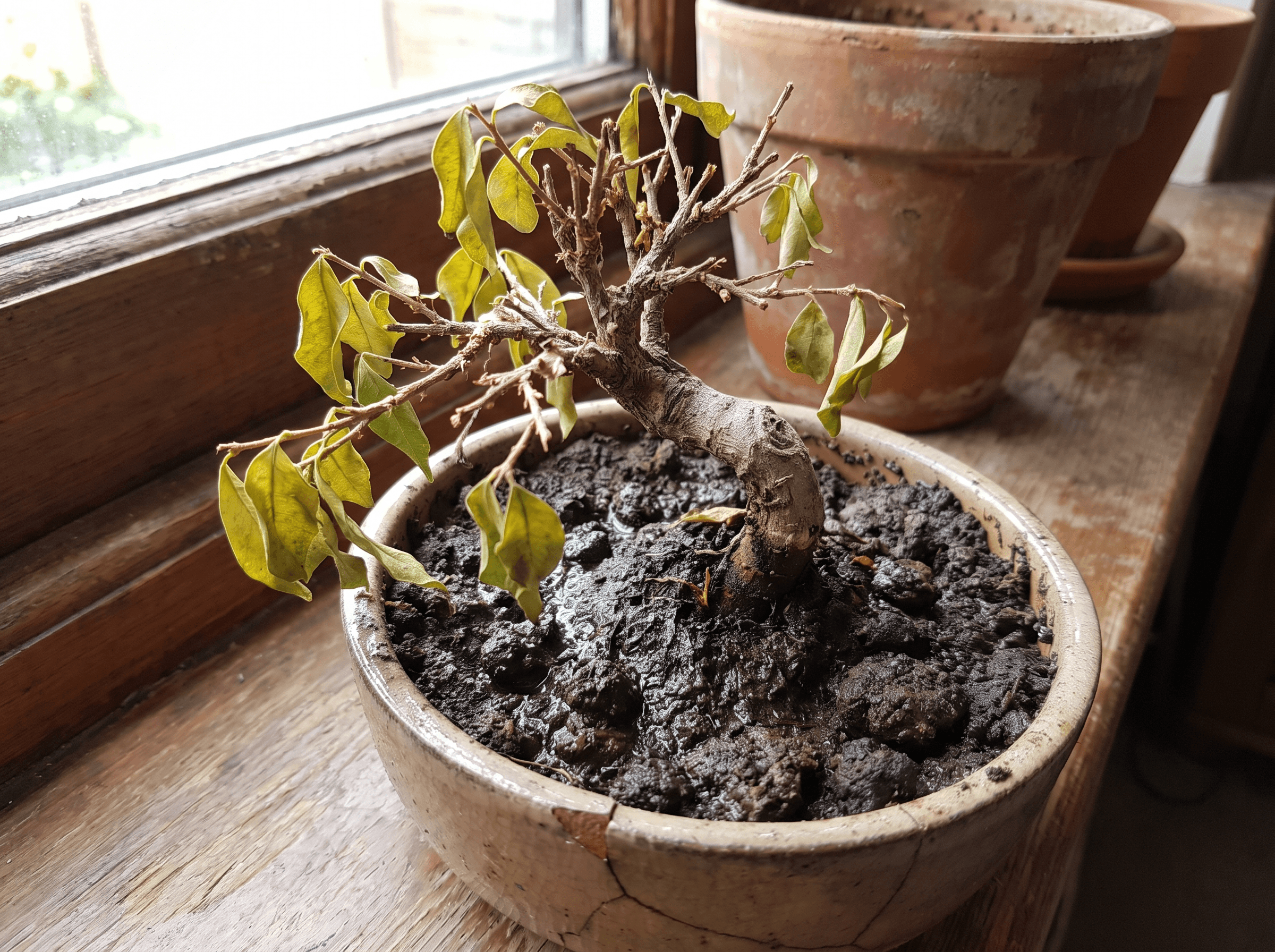
Wet soil and a wilting tree feels like it shouldn't be possible. Most people's instinct when a bonsai droops is to reach for the watering can, and that instinct is usually right for a tree that's actually dry. But if you've checked the soil and it's clearly moist, sometimes still wet from the day before, and the foliage is still hanging limp, more water isn't going to fix it. In my experience this is one of the situations where growers get stuck, because the obvious response makes the underlying problem worse rather than better.
The reason comes down to what roots actually need to do their job. A root doesn't just sit in wet soil and soak water up passively; it has to be alive, functioning, and able to breathe. Fine roots and root hairs need oxygen and healthy living tissue to keep moving water into the plant, and if those roots are damaged, rotted, or packed so tightly that no air reaches them, the tree can be sitting in a full reservoir of water and still be unable to draw on it. It's the plant equivalent of dying of thirst next to a full glass you can't lift. The water is there. The mechanism that moves it into the tree is not working.
This is worth working through properly rather than guessing, because the fixes for a wet-wilt are close to the opposite of what you'd do for a dry-wilt, and watering more can quickly make the problem worse. The soil moisture tells you the wilting isn't about supply. What you need to find out is why the roots aren't using what's already there, and that almost always means getting your hands into the pot rather than just looking at the leaves.
Likely causes
Root rot from overwatering
How to tell: Soil stays wet day after day and never really dries out between waterings, yet the tree wilts as if it hadn't been watered at all. Slide the tree out of the pot, or dig gently at the surface, and check the roots directly: healthy roots are firm and pale, while rotted roots are dark, soft, and often slip apart or turn to mush when you handle them, sometimes with a sour smell. Once enough of the root mass has gone this way, the tree simply doesn't have enough working roots left to keep the foliage supplied, no matter how much water sits in the pot.
The fix: Treat it as root rot, not a watering problem. Remove the tree from the pot, and cut away only the roots that are clearly dark, mushy, or smell off, using clean tools so you don't spread the rot to healthy tissue, then repot into fresh, free-draining soil rather than the same waterlogged mix. After repotting, protect the tree from heat, wind, and other stress while it recovers, and hold off on heavy top-pruning or fertilising until you see clear signs of new growth. Water more sparingly and let the top layer of soil dry out somewhat between waterings while the remaining roots recover, since a smaller root system needs less water, not the same amount as before. Root work done outside the species' normal season carries more risk, so treat this as an emergency response to confirmed rot rather than a routine repot.
Root-bound, pot-bound roots
How to tell: The tree hasn't been repotted in a few years, and if you look closely you can see roots circling the surface of the soil or pushing out through the drainage holes. Inside the pot the root mass has become so dense and tangled that water runs straight through without the roots ever really absorbing it, especially at the centre of the rootball where there's no room left for anything, air included. It behaves almost like rot from the outside, wilting despite what looks like adequate watering, but the cause is congestion rather than decay.
The fix: Repot at the right time for the species, generally as it comes out of dormancy, rather than waiting for a convenient weekend. Tease the roots apart carefully, cut back the thickest circling roots, and open up the rootball enough that new feeder roots have somewhere to grow into fresh soil. Skipping a repotting cycle once is rarely fatal on its own, but a pot-bound tree left untouched for several years is running on a shrinking fraction of the root capacity it actually needs.
Underlying pest damage to the roots
How to tell: You've ruled out obvious drainage problems and the roots don't look rotted when you check them, but the tree still wilts and generally looks unwell despite consistent, sensible care. This is the harder case to diagnose because nothing jumps out at you immediately. Soil-dwelling pests such as root aphids or vine weevil larvae can chew through fine roots without leaving anything visible above the soil line until the damage is already significant, and a recent stress like an extreme heat spell, a sudden move indoors, or transport can knock a root system back enough to cause the same symptom.
The fix: Go through the roots more carefully than a quick glance, looking specifically for chewed tips, small white grubs, or unusually thin, sparse root growth rather than obvious rot or circling. Identify the pest before treating anything, since root aphids and vine weevil larvae call for different responses, then follow the label directions on any product for your region and the species involved rather than reaching for a generic treatment. Biological controls, such as nematodes applied to the soil for vine weevil grubs, are worth considering where appropriate instead of a chemical drench, and it's also worth checking whether the potting mix itself is the source, since some pests arrive in unsterilised organic material. If you find nothing conclusive, think back over the last few weeks for anything the tree went through, because sometimes the wilting is simply the root system's delayed reaction to a stress that's already passed.
How to prevent it
The habit that actually prevents this is checking the roots whenever you repot, rather than trusting the top growth to tell you the whole story. A tree can look reasonably healthy above the soil for weeks while the roots underneath are quietly failing, so use every repotting as a chance to actually inspect what's down there: colour, firmness, smell, how tightly packed the mass has become. Stick to a repotting schedule appropriate to the species and the size of the pot rather than repotting reactively only once a tree is already struggling, since by the time wilting shows up the root damage is usually well established. If you're ever unsure whether a tree is due, err on the side of checking a season early. It costs you very little and it's the only real way to catch this before it becomes visible.
Common questions
Should I water more if my bonsai is wilting?
Not automatically. Check the soil first, and if it's already moist, adding more water won't help and can make root rot worse. Wilting with wet soil points to a root problem, so your first move should be inspecting the roots, not reaching for the watering can.
How can I check the roots without doing a full repot?
You don't always need to disturb the whole rootball to check on a specific worry. Gently ease the tree out of the pot to look at the outer roots and the drainage holes, which is often enough to spot rot or circling without cutting anything back, then slide it back in if everything looks fine. That quick diagnostic slip-out is different from a scheduled repot with root pruning, though. Scheduled root maintenance is normal upkeep on its own timeline and is worth doing even on a tree that looks fine, not something you wait to justify with a visible problem.
How is this different from wilting caused by underwatering?
Underwatering wilt comes with dry soil that's pulled away from the pot's edges and feels light when you lift the pot, and the tree usually perks back up within hours of a thorough watering. Wilting with genuinely moist soil that doesn't improve after watering, or gets worse, is the signal that the problem is in the roots rather than the water supply.
How quickly do I need to deal with this?
Treat it as urgent rather than something to monitor for a week. Root rot in particular spreads through the root mass as it progresses, and every day you wait is more root tissue lost, which makes recovery harder and slower. If you've confirmed rot, repot within the next few days rather than waiting for ideal weather or a more convenient time.
Does wilting always mean a root problem?
No. Extreme heat, transplant shock, or a recent move to a different spot can cause temporary wilting on their own, even with healthy roots and correctly moist soil, as the tree adjusts. The distinguishing factor is duration: temporary stress wilting usually eases within a day or two once conditions stabilise, while a root problem persists or worsens regardless of what you do with watering.
Can a tree recover fully after root rot?
Often, yes, provided you catch it before the majority of the root mass is affected and you remove the rotted roots promptly. A tree with a reduced root system will need lighter watering and reduced feeding while it rebuilds, and you should expect slower growth for a season or two, but a tree that still has a reasonable core of healthy roots after cleanup usually bounces back.
You might also like
General guidance based on 20+ years of practice. Every tree is different — when in doubt, ask us.