
Indoor vs Outdoor Bonsai: What's the Difference
Almost every classic bonsai species is actually an outdoor tree, and the single biggest mistake beginners make is buying one and keeping it indoors year-round.
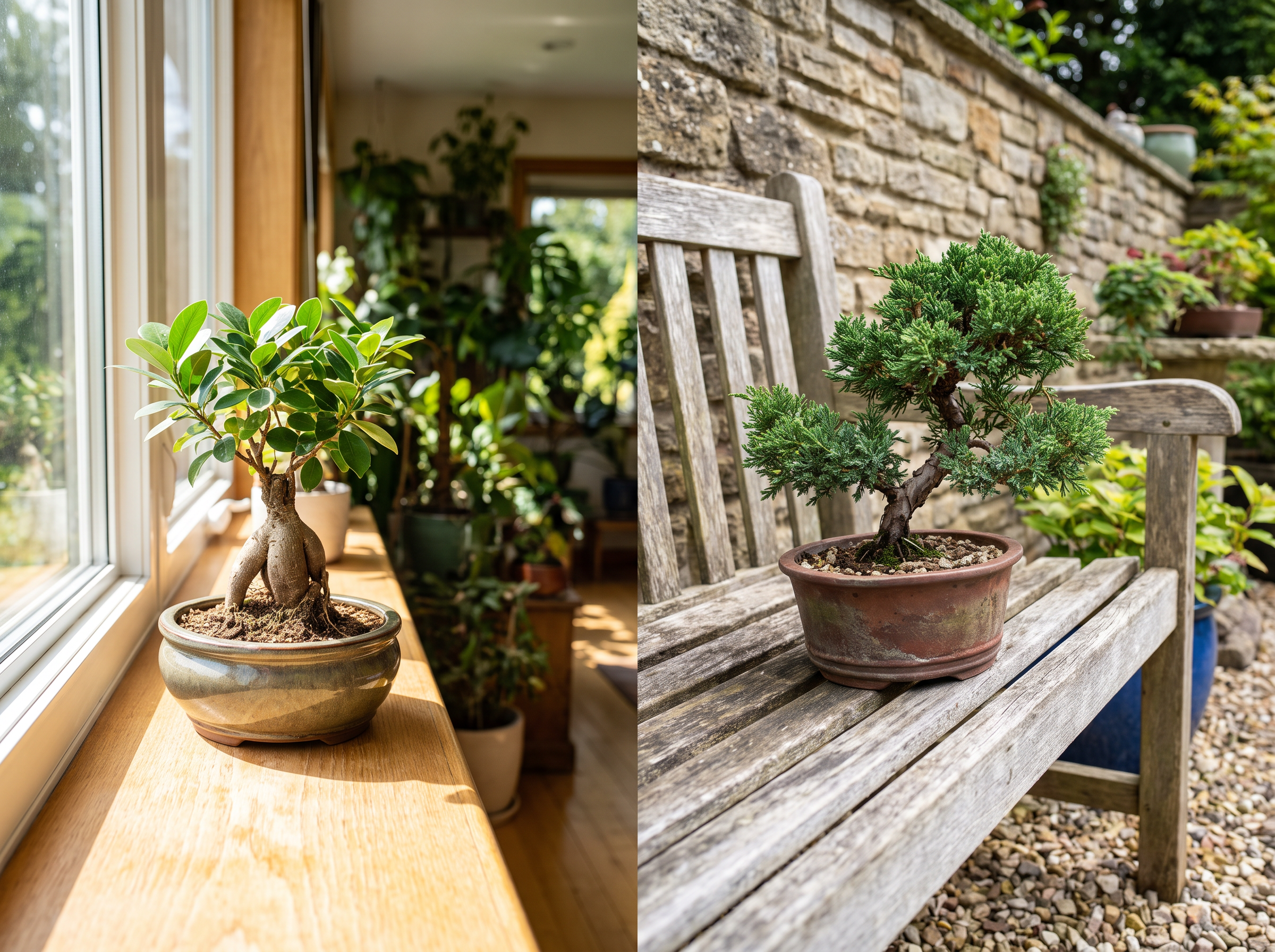
This is probably the most misunderstood thing about bonsai, and I don't blame anyone for the confusion. Every gift shop and shopping mall kiosk sells small potted trees under fluorescent lights and calls them indoor bonsai, so it's a reasonable assumption that bonsai in general are houseplants. They mostly aren't. Juniper, pine, maple, elm, most of what people picture when they think of a classic bonsai, are temperate trees that grow outdoors in nature and need real outdoor seasons to survive long term, including actual winter cold.
There is a genuine category of true indoor bonsai, but it's a much smaller group: subtropical and tropical species that naturally tolerate the fairly stable warmth of a home environment without needing a dormant winter period. Ficus is the most common example. The trick is knowing which category your tree belongs to before you decide where it lives, because getting this wrong is the single most common reason first bonsai fail.
Once you understand which group a species falls into, the indoor versus outdoor question mostly answers itself.
Temperate species need real winter, not a warm room
Juniper, pine, spruce, maple, elm, and most other species associated with traditional bonsai are temperate trees. In the wild they experience a full seasonal cycle, including a genuine cold dormancy in winter where growth slows and the tree effectively rests. Kept permanently indoors, that dormancy never happens properly, and the tree slowly weakens over months or a couple of years rather than dying immediately, which is part of why the mistake is so common. People assume the tree is fine because it doesn't collapse right away. By the time the decline is obvious, real damage has usually been done. One partial exception worth knowing about is Chinese elm, which is more adaptable than most temperate species and can be grown indoors in very bright light, though it still tends to be stronger and more resilient with cooler winter conditions or time outdoors when that's an option.
True indoor bonsai are a different category of tree entirely
Ficus is the safest and most forgiving choice in this group. It's subtropical, doesn't require winter dormancy, and tolerates typical home conditions better than most alternatives. Carmona (sometimes called Fukien tea) and serissa are also genuinely tropical or subtropical species suited to indoor life, but both tend to be fussier about consistent watering and humidity than ficus, so they suit someone willing to pay closer attention rather than a first tree. All three still want as much light as you can give them and appreciate time outdoors in warm weather if that's possible, but they can live their whole lives in a heated home without the seasonal cycle a juniper needs. If your only realistic option is a permanently indoor environment, choosing from this group isn't a compromise, it's simply the correct choice for that situation.
Indoor light is much weaker than outdoor light, even by a window
This surprises almost everyone the first time I explain it. Direct outdoor sunlight is dramatically more intense than what reaches a plant sitting a metre back from a window indoors, even a bright, south-facing one, largely because glass filters some light and intensity drops off fast with distance from the opening. A tree that looks like it's getting plenty of light on a windowsill is often receiving dramatically less light than it would outdoors. This is why even genuine indoor species benefit from the brightest spot available, and why struggling indoor bonsai often improve dramatically just from being moved outside for the warm months.
How to tell which category your tree needs before you buy
Ask, or check the label, for the species name specifically, not just whether it was sold as an indoor or outdoor bonsai, since that labeling is inconsistent and shops sometimes get it wrong. If it's a subtropical or tropical species like ficus, carmona, or serissa, indoor life works. If it's a temperate species like juniper, pine, maple, or elm, it needs real outdoor seasons, meaning a balcony, terrace, or garden, not just a bright room. When in doubt, look up the specific species rather than trusting a generic in-store label.
Common questions
Can any bonsai actually live indoors year-round?
Only true subtropical or tropical species, such as ficus, carmona, and serissa. Temperate species like juniper, pine, maple, and elm need a real outdoor winter and will decline over time if kept permanently indoors, even with good light and care otherwise.
Why did my mall-bought bonsai die within a few months?
Almost always a species and environment mismatch. Many mall and gift-shop bonsai are temperate species like juniper sold as generic indoor decoration, which sets the tree up to fail from day one regardless of how well it's watered or cared for otherwise.
Do indoor bonsai need any outdoor time at all?
It helps even for genuine indoor species. A ficus or carmona that spends the warm months outside, once temperatures are reliably mild, tends to grow noticeably stronger than one kept indoors permanently, thanks to the much higher light levels and fresh air outdoors.
How much light does an indoor bonsai actually need?
As much as you can realistically give it. A spot directly in front of a bright, unobstructed window is the minimum, and supplemental grow lighting genuinely helps if your available window light is limited, since indoor light levels are far weaker than outdoor sun even in a bright room.
Can I move an outdoor bonsai species indoors temporarily, like in winter?
Not into a warm living room, no, and this is a common misconception. Most temperate species actually need the winter cold outdoors for proper dormancy rather than protection from it. Some do need shelter from extreme freezes or wind depending on species and climate, but that usually means an unheated garage or cold frame, not a heated indoor space.
What's the difference between a subtropical and a temperate bonsai species in practice?
Temperate species evolved to experience a full seasonal cycle including cold winter dormancy and will suffer without it. Subtropical and tropical species evolved in climates without hard winters, so they tolerate the relatively stable warmth of an indoor environment without needing that dormant period.
Is ficus the only good option for indoor bonsai?
It's the most common and forgiving, but not the only one. Carmona and serissa are both genuinely suited to indoor life as well, though both tend to be a bit more particular about consistent watering and humidity than ficus, which is part of why ficus remains the default recommendation for beginners.
You might also like
General guidance based on 20+ years of practice. Every tree and every climate is different — when in doubt, ask us.