
Bonsai Cut Paste Wound Sealant: When to Use It and How to Apply It
Cut paste isn't something you need on every trim. Many growers reserve it for bigger structural cuts where slow healing and moisture loss are a real concern, rather than treating it as a must for infection prevention on every wound.
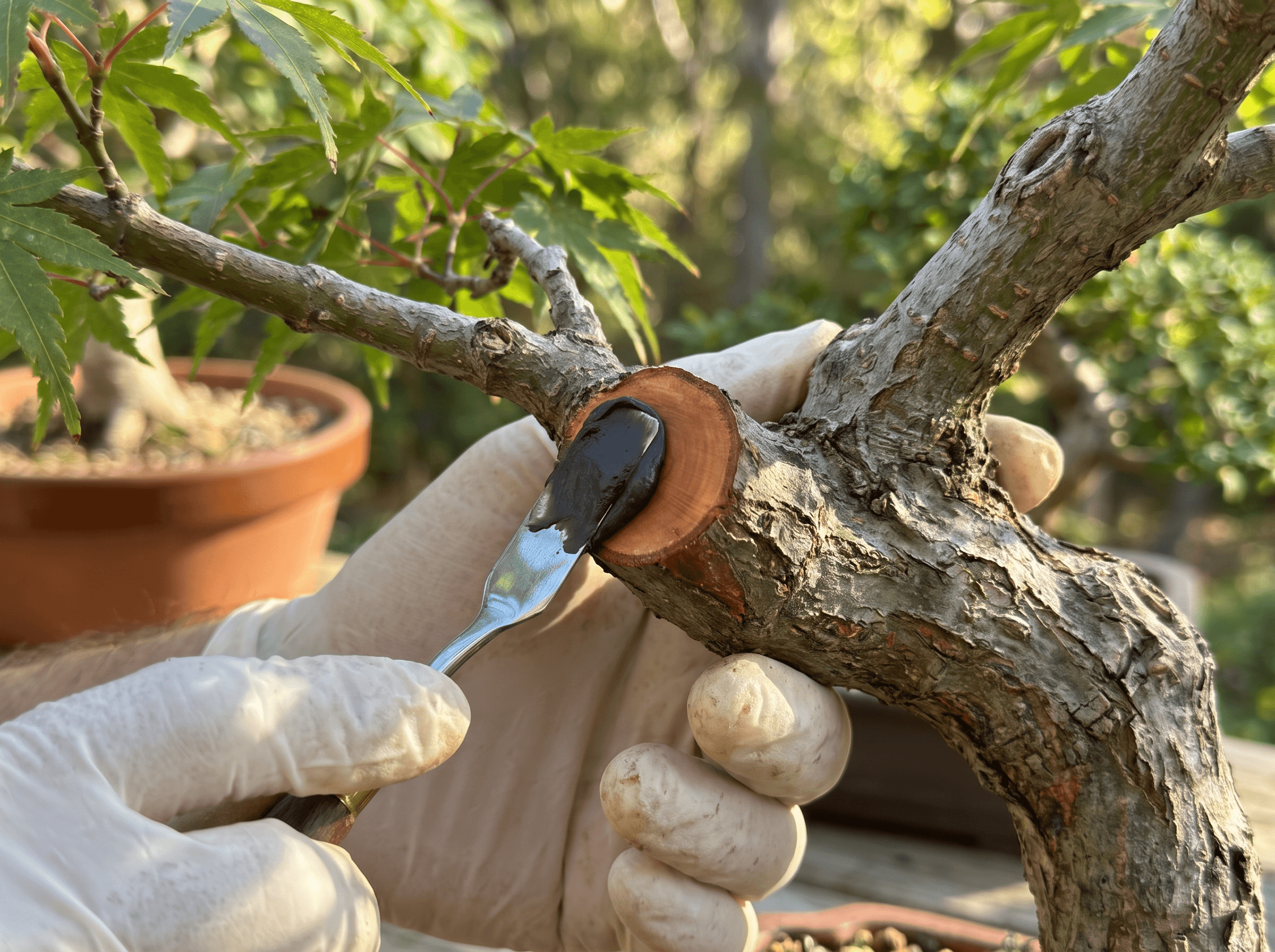
Cut paste is one of those products beginners either ignore completely or apply to absolutely everything, and neither approach is quite right. It has a real job to do on the right cut: many growers use it to protect larger pruning wounds from drying out and to help resinous species avoid heavy sap loss, and some believe it aids callusing, though not every experienced grower agrees it's necessary on every wound. It's mainly useful on bigger structural cuts rather than every small trim you make during the season.
I keep a tub of it on the bench, but I probably use it on maybe one cut in twenty. Most of what I prune is small enough that the tree closes it over on its own without help, and putting paste on a tiny maintenance trim doesn't help much, it just wastes product and occasionally traps moisture somewhere it doesn't need to be.
Where cut paste genuinely matters is the larger cuts, and especially certain species where an open wound is a real risk rather than a cosmetic afterthought. Here's how I decide when to use it and how to apply it properly once I have.
When a wound actually needs sealing
The rule of thumb I use is size and type rather than a strict timeline: structural cuts, removing an established branch, reducing a trunk, taking off a thick stub, are the ones that stay open long enough, and dry out enough, to be worth sealing. Fine trims from routine maintenance pruning generally don't qualify. Small wounds on healthy, vigorous growth generally close up fine on their own, and sealing them adds very little benefit for the extra step.
Species where sealing matters more
Some species are simply more prone to dieback and sap loss from an open wound than others. Resinous conifers, pine, spruce, and larch are the usual examples, fall into this category, where an unsealed cut can weep sap for a long time and dieback can travel back down the branch further than the original cut. Many deciduous species heal faster on their own and often don't need sealant except on the largest cuts, though this varies enough by species and grower experience that it's worth treating as a general tendency rather than a fixed rule. Knowing your species' healing tendency matters as much as knowing the size of the cut.
Prepare the cut properly before applying anything
In practice, I work through the same few steps every time. First, make a clean cut with sharp tools so the wound edge is smooth rather than torn, since a ragged edge is harder for the tree to callus over cleanly. Second, let the cut sit for a short while if sap is still actively weeping, applying paste over active sap tends not to adhere well and can trap moisture against the wound instead of protecting it. Third, apply a thin, even layer over the cut surface, working from the center out to the bark edge, rather than piling it on thick in the middle. Cut paste should go onto a dry cut, never a wound that's still wet from recent watering or one that shows any sign of disease or rot. Never seal a wound you suspect is already infected, sealing traps the problem in rather than solving it.
Petroleum-based versus putty-style cut paste
Both petroleum-based sealants and cut-paste putty do the same core job, but they handle differently. Petroleum-based products go on thinner and spread more like a paint, which works well on flatter, more regular wounds. Putty-style cut paste is thicker and mouldable by hand, which makes it easier to press precisely into an irregular wound shape, around a stub or an uneven cut, without it running off before it sets. I tend to reach for putty on anything with real texture to the wound and the thinner product on cleaner, flatter cuts.
Common questions
Do I need to seal every pruning cut on my bonsai?
No. Small maintenance trims on healthy growth generally callus over on their own without help and don't need sealant. Save cut paste for larger structural cuts where slow healing and drying out are actual concerns.
How long does cut paste stay on the wound?
It's meant to stay in place until the wound has callused over underneath, which varies a lot by cut size and species, and can take a long time on bigger cuts. Reapply if it cracks or flakes off before healing is complete.
Can I apply cut paste to a wet cut right after pruning?
It's better to let the cut dry slightly first if sap is actively weeping. Paste applied over a wet, sappy wound often doesn't adhere well and can trap moisture against the cut rather than protecting it.
Which species benefit most from wound sealant?
Resinous conifers, pine, spruce, and larch in particular, tend to benefit the most, since they're prone to sap loss and dieback from open wounds that can travel back past the original cut. Many deciduous species heal faster on their own and often only need it on their largest cuts.
What's the difference between petroleum-based sealant and cut-paste putty?
Petroleum-based sealant spreads thinner, closer to a paint, and suits flatter, regular wounds. Putty-style cut paste is thicker and can be shaped by hand, which makes it easier to apply precisely to an irregular wound around a stub or uneven cut.
Is it bad to seal a wound that looks infected?
Yes, avoid it. Sealing over a wound with signs of rot or disease traps the problem underneath rather than protecting it. Address the infection first, which may mean cutting back further into clean wood, before applying any sealant.
Will cut paste help a wound heal faster on any tree?
It may help most on larger cuts and on species prone to dieback, though not every experienced grower agrees it's necessary even there. On small trims and vigorous healers, the tree closes the wound on its own quickly enough that sealant makes little practical difference either way.
You might also like
General guidance based on 20+ years of practice. Every tree and every climate is different — when in doubt, ask us.