
Common Beginner Mistakes That Kill Bonsai
Most bonsai deaths in the first year trace back to a handful of predictable mistakes, and almost none of them are about the tree being fragile.
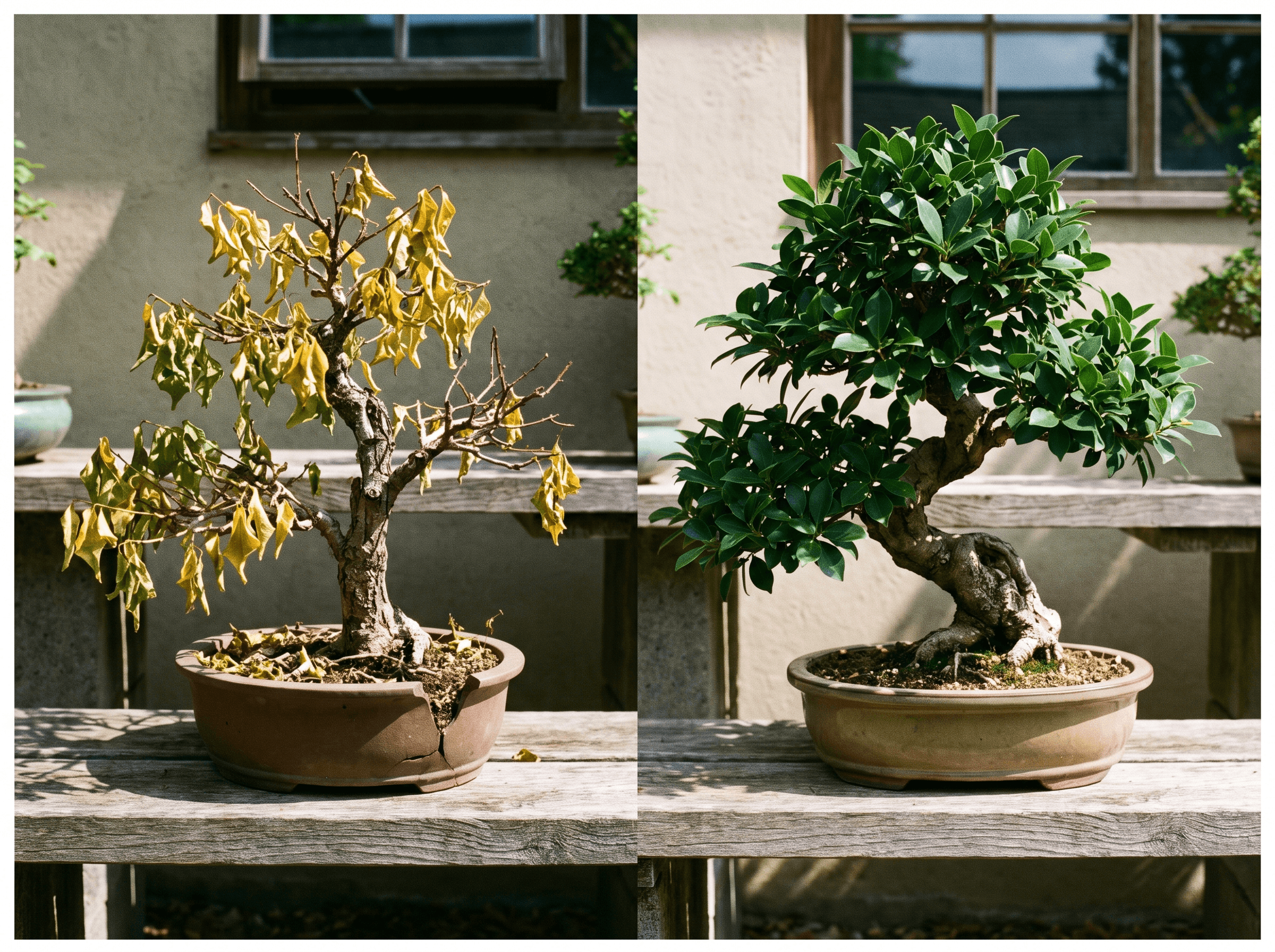
After years of selling and helping people troubleshoot struggling trees, I can usually tell within a minute or two of hearing someone describe their bonsai what's actually going wrong. The mistakes repeat, almost always the same handful, regardless of species. None of them come from bad luck or a particularly delicate tree. They come from a few specific misunderstandings about what bonsai actually need, which is genuinely good news, because it means they're avoidable once you know what to look for.
The thing I want beginners to hear most is that a small tree is not a low-maintenance tree. It's the opposite. A bonsai in a shallow pot with a restricted root system needs more attentive care than the same species would need planted in open ground, not less, because there's so little soil buffering it against mistakes. Treating the small size as a sign it needs less attention is where a lot of the trouble starts.
Keeping an outdoor species indoors permanently
This is one of the most common causes of death I see, and it's rarely fast or obvious. Juniper, pine, maple, and similar temperate species need real outdoor seasons, including actual winter cold for proper dormancy. Kept in a warm living room year-round, they decline gradually over months, sometimes a year or more, which is exactly why the mistake persists: by the time it's visibly dying, the cause isn't obvious anymore. If your tree is a classic outdoor species, it needs to actually be outdoors.
Watering on a schedule instead of checking the soil
Watering every Tuesday and Friday feels manageable, but pot size, weather, season, and species all change how fast soil dries out, sometimes dramatically from one week to the next. A fixed schedule guarantees you'll eventually either drown a tree that didn't need water yet or let one dry out completely because it needed water sooner than the calendar said. Checking the actual soil moisture before every watering, rather than following a routine, is the single habit that prevents both overwatering and underwatering.
Using regular potting soil instead of a free-draining bonsai mix
Standard potting soil is designed to hold moisture for a deep-rooted plant in a large container. In a shallow bonsai pot, that kind of heavy, water-retentive mix usually stays wet for far too long, suffocating roots and inviting rot, since bonsai roots need oxygen almost as much as they need water. A proper bonsai substrate, typically a mix of particulate materials like akadama, pumice, or lava rock depending on species and climate, drains fast enough that roots get both water and air. This one substitution alone solves a huge share of chronic overwatering problems.
Repotting too often out of impatience
New growers, excited and eager to see progress, sometimes repot more frequently than the tree actually needs, disturbing the root system before it's had time to properly recover and establish. Most bonsai need repotting only every one to a few years depending on species, age, and pot size, not every few months. Younger, faster-growing trees are often on the shorter end of that range, sometimes annually, while older, well-established trees can frequently go two to three years or more between repots, particularly if drainage still looks good and the tree is otherwise healthy. Constant root disturbance stresses the tree and can set back its development further than leaving it alone would have.
Not giving the tree enough light
Bonsai, whether indoor or outdoor species, generally need more light than people assume, and a spot that looks reasonably bright to the human eye is often far dimmer than what the tree actually wants. Indoor species need the brightest available window, ideally supplemented, and outdoor species generally need several hours of direct sun each day, though the exact amount varies by species and climate, rather than dappled shade under a porch roof. Weak, leggy growth and pale foliage are usually a light problem before they're anything else.
Ignoring pests until they're established
A few small insects on a leaf or a bit of webbing along a stem is easy to dismiss as nothing. On a small tree with limited foliage, though, a pest population can establish and spread fast, and by the time damage is obvious across the whole tree, the infestation is usually well entrenched. Checking foliage and stems regularly, and dealing with anything unusual early, saves a lot of trouble compared to catching it late.
Common questions
What's the number one reason beginner bonsai die?
Keeping an outdoor, temperate species like juniper or pine indoors permanently is one of the most common reasons, in my experience. It's such a slow decline that people rarely connect the cause and effect until real damage is done, which is part of why it remains such a persistent, if avoidable, mistake.
Is it normal for a new bonsai to lose some leaves at first?
Some adjustment shedding after a change in environment, like moving from a nursery to your home, is common and not necessarily alarming. Ongoing, worsening leaf loss over weeks is a different story and usually points to a watering, light, or root problem that needs attention.
Can a bonsai recover from being watered incorrectly for a while?
Often, yes, especially if you catch it before root damage is severe. Underwatering recovers faster than chronic overwatering, since waterlogged roots can rot and that damage doesn't reverse. Switching to checking the soil before watering, rather than a fixed schedule, is the fix in either direction.
How do I know if my bonsai isn't getting enough light?
Weak, stretched, leggy new growth reaching toward the light source, paler than normal foliage color, and generally sparse growth compared to what's typical for that species are the usual signs. Moving the tree to a brighter spot, or adding supplemental light indoors, is usually the fix.
Why is my bonsai's soil always wet?
Most often it's the substrate itself, not the watering frequency. Regular potting soil, or a bonsai mix with too much fine, moisture-retentive material for the species and pot, simply doesn't drain fast enough. Switching to a proper free-draining bonsai substrate at the next repot usually resolves this.
How often should I actually repot a bonsai?
It depends on species, age, and pot size, but roughly every one to a few years is typical, with younger, faster-growing trees needing it more often than older, established ones. Signs it's due include water draining noticeably slower than it used to, or, when you check by sliding the tree gently from its pot, a root mass that's become dense and tightly packed rather than showing visible soil between roots.
Is bonsai actually a lot of work, or is that a myth?
It's more attentive than most houseplants, mainly because a shallow pot and restricted root system leave little buffer for mistakes, but it isn't constant labor. A few minutes of checking soil moisture and foliage most days, plus occasional pruning and seasonal care, is realistically what it takes.
You might also like
General guidance based on 20+ years of practice. Every tree and every climate is different — when in doubt, ask us.