
Best Water for Bonsai: Tap, Rain, or Filtered
Ordinary tap water is fine for most bonsai in most places; the water question that actually matters only shows up over years, not days, and mostly affects acid-loving species.
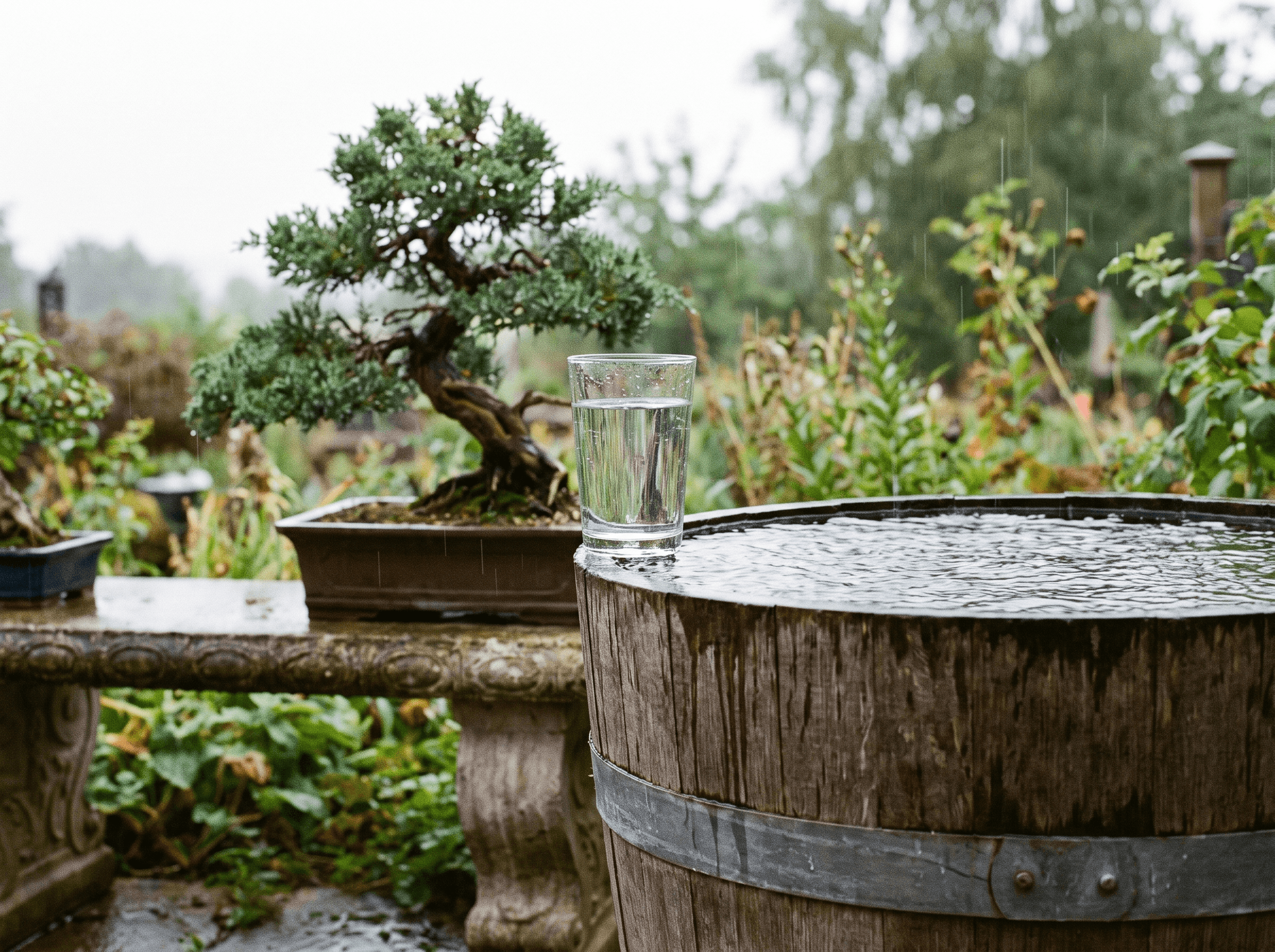
I get this question constantly, usually from someone who's just read a forum thread arguing that tap water is slowly killing their tree. It isn't, in the vast majority of cases. People spend money on filtration jugs or start hauling rainwater across the garden for trees that would have been completely happy with what comes out of the hose.
Here in Campania the water is hard, full of dissolved limestone from the hills, and I've grown junipers, pines, and olives on it for two decades without issue. Where hard tap water actually becomes a real problem is with species that specifically want acidic soil, azalea and camellia being the two you'll run into most. Feed those trees consistently alkaline water for a couple of years and you'll see it in the leaves eventually.
So this isn't really a tap versus rain versus filtered debate in the abstract. It's about knowing what your local water is like and matching that to what your particular tree needs, which is a much smaller and more manageable question than the internet makes it out to be.
Tap water is fine for most bonsai, most of the time
For the majority of common bonsai species, pines, junipers, maples, elms, ficus, ordinary municipal tap water works without any special treatment. Drinking-water safety standards aren't quite the same thing as horticultural suitability, since factors like hardness, sodium, and mineral content matter more for plants than for whether water is safe to drink, but in practice most municipal tap water still falls comfortably within what these species tolerate. If your tap water tastes normal and doesn't leave heavy white scale on your kettle, that's a reasonable everyday sign you're probably fine, and checking your utility's published hardness report is a more reliable way to know for certain if you want to be sure.
Where hard water becomes a real problem
The concern is specifically hard, alkaline tap water combined with an acid-loving species. Azalea and camellia are the classic examples in bonsai, both naturally adapted to acidic forest soils. Water them for a long stretch with hard, high-pH water and the minerals gradually push the soil pH upward, which interferes with how the roots take up iron and other nutrients. The visible result is chlorosis: new leaves come in pale yellow with the veins staying green, a slow decline rather than sudden damage, which is exactly why it catches people off guard. If you're growing one of these species and your tap water is genuinely hard, it's worth paying attention to.
Rainwater: naturally soft, free, not mandatory
Rainwater is naturally soft and slightly acidic, which makes it a good match for acid-loving species and a pleasant option for everything else too. I keep a couple of barrels under the roof gutters and use that water on the azaleas whenever it's available. But I want to be clear that this is convenience, not necessity. If collecting rainwater is a hassle for you, or you don't have anywhere sensible to store it, you're not putting your trees at risk by skipping it, as long as your tap water isn't unusually hard.
Water softeners: good for your pipes, bad for your trees
This is the one I'd actually flag as a genuine mistake. Most home water softeners work by swapping calcium and magnesium ions for sodium, which is great for your appliances but builds up sodium in the soil over repeated watering. Trees don't handle sodium buildup well, and it shows as root stress and leaf burn along the margins over time. A smaller number of systems regenerate with potassium instead, which is less of a concern, so it's worth knowing which kind of softener you actually have. If your house has a sodium-based softener plumbed into the main line, water your bonsai from an outside tap, a separate unsoftened line, or rainwater instead. Don't use sodium-softened water on bonsai long term.
Do you need to let tap water sit first?
You'll see advice to let tap water sit out overnight so the chlorine dissipates before watering. For most species and most municipal water supplies this isn't necessary, and chlorine levels in tap water are low enough that the small volume you're pouring onto a bonsai makes no practical difference to root health. Worth knowing though: some utilities disinfect with chloramine instead of plain chlorine, and chloramine doesn't dissipate from standing water the way chlorine does, which is a common reason people find the old sit-it-out advice doesn't seem to change anything either way. I don't bother with it in my own nursery and never have. If you enjoy the ritual of a watering can sitting out, that's fine, but treat it as optional rather than a rule you're breaking by skipping it.
Common questions
Is filtered or distilled water better for bonsai than tap water?
Not generally, no, though it isn't harmful either. Distilled water simply contributes no minerals of its own, rather than actively removing anything from the tree, so it isn't the water itself doing damage. If you use it regularly, keep up with fertilizing so the tree isn't relying on tap water for minerals it's no longer getting. Filtered water is harmless but rarely necessary unless your tap water has a specific known problem, like excessive chlorine or heavy hardness.
How do I know if my tap water is too hard for my bonsai?
Heavy white limescale buildup on kettles, taps, or shower heads is a reasonably reliable sign of hard water. Many water utilities also publish hardness figures on request. If you're growing azalea, camellia, or another acid-loving species and your water reads hard, that's when it's worth switching that particular tree to rainwater.
Can I use bottled mineral water on my bonsai?
You can, but it's expensive and usually unnecessary, and some mineral waters are actually quite alkaline themselves, which defeats the purpose if you're trying to help an acid-loving species. Rainwater does the same job for free.
What's the best water specifically for azalea and camellia bonsai?
Rainwater is the safest default if your tap water is hard or alkaline. If you don't have access to rainwater, a diluted acidifying feed formulated for ericaceous plants, applied occasionally, can help offset alkaline tap water, though it's a workaround rather than a fix.
Does rainwater need to be treated before I use it on bonsai?
No treatment is needed for water collected fresh and used within a reasonable time. Just keep the collection barrel covered to keep out debris, algae, and mosquito breeding, which is really a cleanliness precaution more than a strict rule about how many days is too many.
Can I mix tap water and rainwater?
Yes, and honestly this is what most growers end up doing in practice, using rainwater when it's available and tap water when it isn't. There's no downside to alternating between the two for the same tree.
Is well water safe for bonsai?
Usually, but well water varies enormously by location and can be high in minerals, iron, or sulfur depending on the aquifer. If you notice mineral crusting on the soil surface or your trees seem to struggle despite good watering habits, it's worth having the well water tested.
You might also like
General guidance based on 20+ years of practice. Every tree and every climate is different — when in doubt, ask us.