
Wilting or leaf drop after repotting (bonsai transplant shock)
Bonsai transplant shock after repotting is normal to a degree: the tree just lost part of its root system, but knowing what's expected versus what's worth worrying about matters.
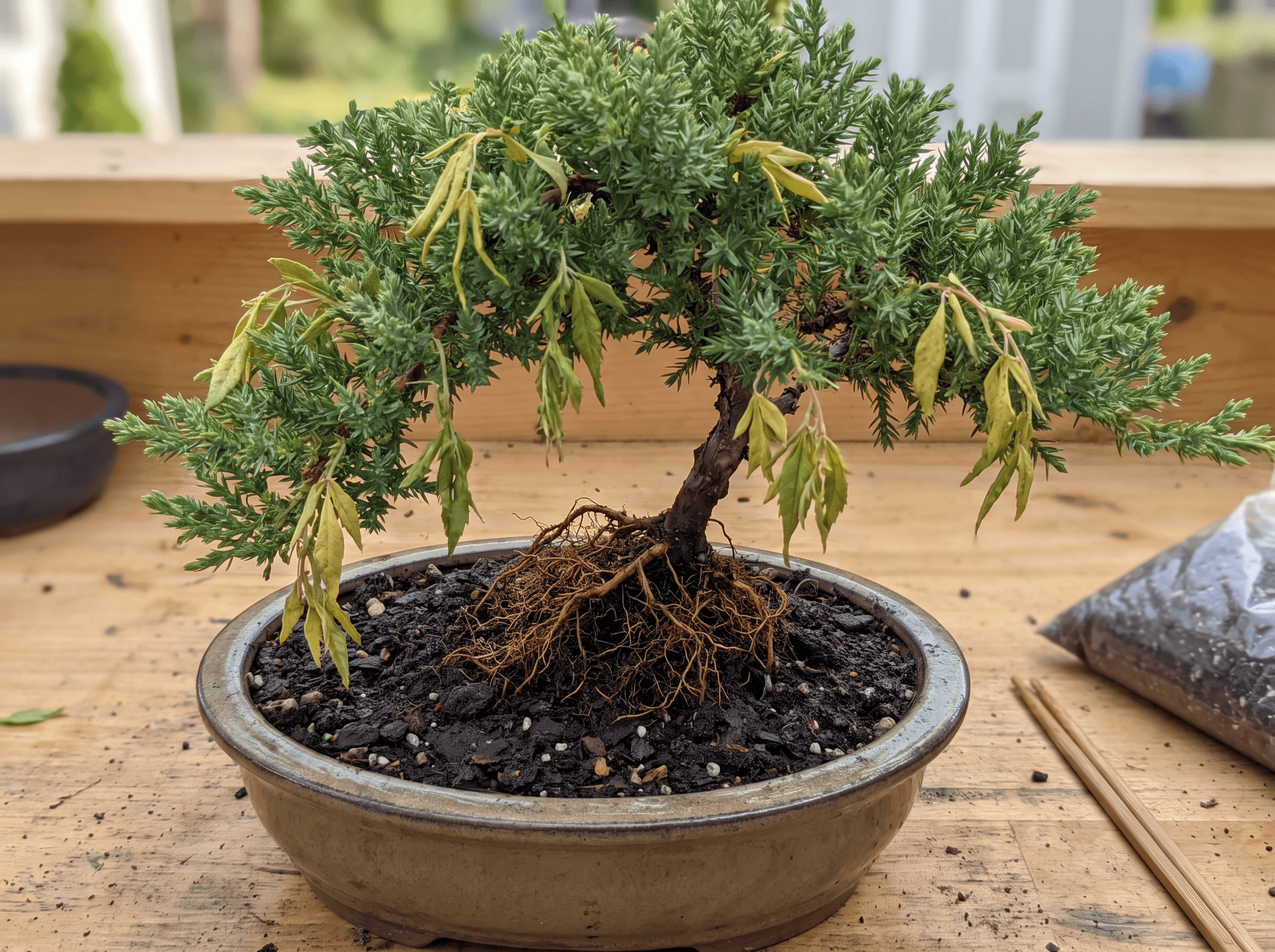
Some sulking after repotting is normal, and it catches a lot of people off guard the first time they see it. This is ordinary bonsai transplant shock: you've just put your tree through something that, from the roots' point of view, is genuinely rough. A portion of the root mass got cut away, some of the old soil was worked loose and removed from the rest, and the whole thing was settled into fresh substrate it hasn't grown into yet. How much of that old soil comes off, and whether the roots get rinsed clean or just combed out, depends a lot on the species: many deciduous trees tolerate a fairly thorough wash, while conifers and other sensitive evergreens are usually handled more conservatively, with soil worked out gently rather than rinsed away, since bare-rooting can set them back badly. A few drooping leaves, or a scattering of yellow ones on the bench under the tree in the days that follow, isn't a sign you did something wrong. Most of the time it's just the tree registering the change.
What's happening underneath is fairly simple once you think it through. The canopy above the soil, all that foliage, was built and maintained by a root system that's now smaller than it was a week ago. Roots pull up the water and nutrients needed to support exactly that amount of top growth, no more. Cut roots away and the plumbing that supplied the existing leaves is suddenly undersized for the job. The tree responds the way most plants do under that kind of imbalance: it drops the leaves it can no longer support, or lets some go soft and wilted while it sorts out which ones it can keep running. I think of it as the tree rebalancing its own budget rather than failing outright.
Where this tips from expected into worrying is mostly a question of scale, duration, and a handful of concrete red flags. A handful of yellowing leaves, some droop in the afternoon heat, slower growth for a few weeks, that's the tree doing exactly what I just described, and it usually turns a corner within a month, sooner if you're deep in the growing season. What should get your attention is wilting that spreads across nearly the whole canopy, or signs the roots themselves are in trouble: soil that smells sour rather than earthy, roots that come out black and mushy instead of firm and pale when you check them, bark that's gone soft or wrinkled and shriveled, twigs that snap dry instead of bending, or no green showing when you scratch a bit of bark and find brown all the way through. The same goes for a tree that shows no sign of stabilising after five or six weeks of otherwise good care, though that window fits deciduous and tropical species better than it does conifers. Recovery timelines depend heavily on species and season, and a full recovery, canopy filled back in and root system re-established, can take a whole growing season for pines, junipers, and other slow growers. That pattern points to something beyond ordinary shock: root rot setting in from overwatering during recovery, or roots that were damaged badly enough that the tree can't rebuild fast enough to keep up.
Likely causes
Normal transplant shock
How to tell: Some leaf drop, wilting or slowed growth in the days to weeks after repotting, on a tree that had its roots pruned during the process. The wilting is often worse in the afternoon and eases by morning, and any new leaves that emerge tend to be smaller than what the tree was producing before the repot. This is the pattern I'd expect on nearly every repot, and by itself it isn't a reason to intervene beyond good aftercare.
The fix: Keep the tree in bright, indirect light, out of harsh sun and any wind that would pull moisture out of the leaves faster than the reduced roots can replace it. Don't judge watering by the surface alone: the old rootball core can still be damp even when the fresh soil on top looks dry, so check moisture at the root zone where you can reach it, and water thoroughly once the tree actually needs it rather than on a fixed schedule. The goal is avoiding both extremes, soil that dries out completely and soil that stays saturated on top of a stressed root system, since either one slows recovery. Hold off on feeding until you see clear signs of new growth, because fertiliser pushes top growth the roots aren't ready to support yet. A light misting of the foliage on hot afternoons can ease some of that pressure on the leaves, but don't overdo it: heavy or frequent misting can keep the growing medium wetter than it should be, or mask a root-zone problem that misting alone won't fix.
Too much root removed at once
How to tell: The shock is severe: wilting across most of the canopy rather than a few isolated leaves, or major leaf drop that leaves the tree looking bare within days. This tends to line up with a repot where a large portion of the root mass, well beyond the usual third or so, was cut away in one session, sometimes combined with a full bare-rooting on a species that doesn't tolerate it well.
The fix: There isn't much to be done about it retroactively beyond consistent, careful aftercare now: shade, stable humidity, minimal handling, and patience while the tree works with the root system it has left. What you can do is treat this as information for next time. Note how much you removed and how the tree responded, and plan a more conservative schedule going forward, taking less root mass per session and spreading heavier root work over two or three repottings instead of one.
Repotted at the wrong time of year
How to tell: The repot happened outside the species' ideal window, during active summer heat, deep winter dormancy, or right as the tree was pushing a flush of new growth it hadn't hardened off yet. Recovery in these cases tends to be slower and shakier than a repot done at the right time, even when the technique and aftercare were otherwise fine.
The fix: There's no fixing the timing after the fact, so focus on getting the tree through this recovery as gently as possible and adjust your calendar for next time. In future, repot at the season best suited to the species, which for most temperate deciduous and many evergreen bonsai is just as growth is about to resume, when the tree has the energy reserves to rebuild roots quickly rather than sitting stalled through a stressful season.
How to prevent it
Most transplant shock problems trace back to one of three decisions made at repotting time rather than anything that happens afterward. Repot at the right time of year for the species you're working with; a tree repotted just before its growth push has weeks of active root development ahead of it, while one repotted into summer heat or winter cold is stuck recovering under stress it didn't need. Avoid removing more root mass than the tree can comfortably regrow in one season, and when in doubt, take less rather than more. You can always do more next time, but you can't put roots back once they're cut. And give the aftercare in the weeks that follow the same attention you gave the repot itself: the right light, careful watering, and a bit of patience matter just as much as clean cuts and good soil did on the day.
Common questions
How long does transplant shock usually last?
For most healthy trees repotted at the right time, you should see the worst of it easing within two to four weeks, with new growth confirming a real recovery within six to eight. Slower-growing species and conifers can take longer, sometimes running into the following growing season, so don't judge a pine by the timeline you'd use for a maple.
Should I fertilise to help it recover faster?
No, hold off. Fertiliser encourages the tree to push more top growth, which is the opposite of what a root system with fewer roots needs right now. Wait until you see clear new growth, leaves extending or new shoots forming, as your signal that the roots have re-established enough to handle the extra demand.
How can I tell normal shock from a tree that's actually dying?
Normal shock is partial and it stabilises: some leaves drop or wilt while others hold, and the trend over a few weeks is flat or improving. A dying tree tends to decline across the board, with bark that goes soft or wrinkled, branches that snap dry instead of bending, and no sign of new buds anywhere by the time you'd expect them. If you're not sure, scratch a bit of bark on a low branch; green underneath is a good sign, brown and dry all the way through is not.
Should I mist the foliage while it recovers?
A light misting on hot or dry days can help reduce moisture loss from the leaves while the roots catch up, and I do it on trees that are struggling visibly. It's conditional, though, not a substitute for correct watering at the roots: overdoing it can keep the growing medium wetter than it should be, and misting a tree sitting in soggy soil just adds humidity around a problem that's actually happening underground.
When is it safe to put the tree back in full sun?
Wait until you see clear new growth, extending shoots or leaves reaching their normal size, which tells you the root system has caught up enough to support full exposure again. Moving a stressed tree into strong sun too early just adds another source of water loss on top of a root system that's already behind.
What are the signs that recovery is actually underway?
New buds swelling, shoots extending, or leaves coming in at a normal size are the clearest signs. Firm, resilient foliage that's stopped wilting even in the afternoon is a good sign too, and if you gently tug on the tree and feel resistance rather than looseness in the pot, the new roots are already anchoring in.
You might also like
General guidance based on 20+ years of practice. Every tree is different — when in doubt, ask us.