
Your bonsai wobbles or is unstable in its pot
If your tree rocks, wobbles, tips, or has visibly shifted position in its pot when you nudge the trunk, it isn't firmly anchored, and that instability puts real stress on the roots that are trying to establish underneath it.
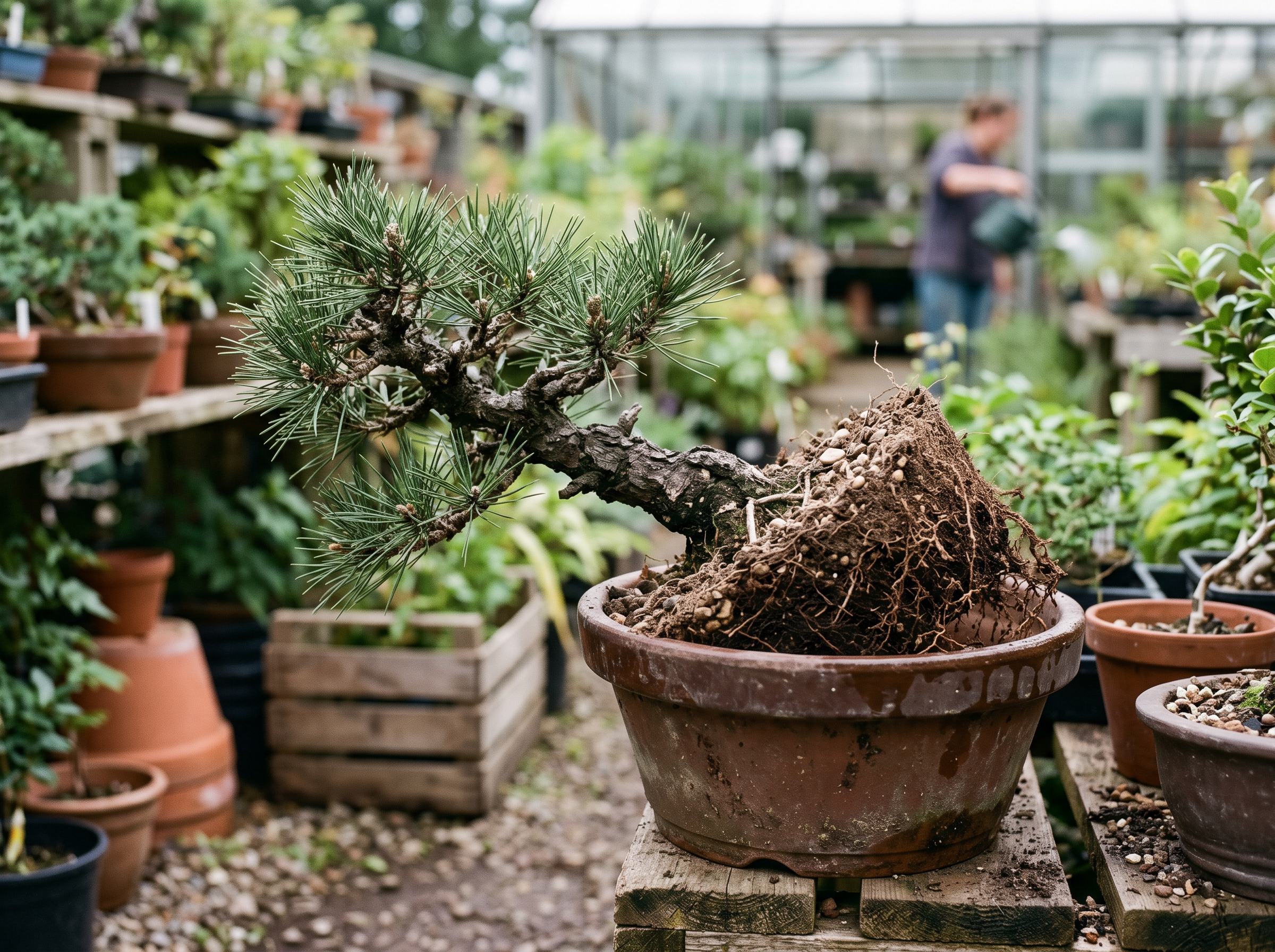
A bonsai that moves in its pot is dealing with more than just an untidy appearance. Every time the trunk rocks, even slightly, it disturbs the fine roots that are trying to make contact with the soil and grow into it. Those are exactly the roots the tree depends on for water and nutrient uptake, and exactly the ones that get damaged first by movement. Wind, being bumped on the bench, or even you handling the tree during watering can all cause enough movement to matter if the tree isn't anchored properly.
This comes up most right after a repot, when a lot of the fine root mass has just been trimmed away and the tree is more or less sitting on top of fresh soil rather than gripped by an established root system. It's also common on younger material or trees that have had significant root work done, where the root mass genuinely hasn't had time to build the kind of hold that keeps an older, well-established bonsai rock solid in its pot.
The fix is almost always mechanical rather than something wrong with the tree's health. In most cases the tree itself is otherwise fine, it just needs to be held still while nature does the rest of the work. I treat anchoring as one of the non-negotiable steps of every repot, not an optional extra for trees that seem like they need it, because a tree that's rocking around is fighting an uphill battle it doesn't need to fight.
Likely causes
Not wired down after the last repot
How to tell: The tree moves noticeably when you gently nudge the trunk side to side, and there's no anchoring wire visible running from the drainage holes over the root base, or you honestly can't recall the last repot including any anchoring at all. This is by far the most common reason I see for an unstable tree, it simply wasn't tied in.
The fix: At the next repotting, run anchoring wire through the drainage holes in the base of the pot and cross it over the root base before backfilling with soil, pulling it firm enough that the trunk doesn't shift when you test it but not so tight that you're crushing roots against the pot wall. This is standard practice for every single repot on every tree, not a special step reserved for trees that already look wobbly, since a tree anchored properly from the start never develops this problem in the first place. If the tree needs stabilising right now and a full repot isn't due, look for a non-invasive option first, soft ties looped around the pot and trunk, or a couple of chopsticks or bamboo stakes pushed into the soil and tied against the trunk, can stop the rocking without disturbing the roots. Save a full anchoring repair for the next proper repotting window unless the tree is already dangerously loose or has come out of the pot, in which case it's worth acting immediately rather than waiting.
Root system too small or immature for the pot and tree size
How to tell: The tree is otherwise healthy, feeding well, pushing new growth, no sign of pest or disease, but it simply hasn't built enough root mass yet to hold itself firmly. This shows up most on relatively young trees, material that's been recently and heavily root-pruned, or a tree that's been moved into a noticeably larger pot than the root ball currently fills.
The fix: Be patient through a full growing season while the roots develop and fill out the available space, since there's no shortcut that substitutes for time and consistent care here. Avoid unnecessary handling or repositioning in the meantime, since every bit of movement works against the very roots you're waiting on. Double-check that your anchoring wire is doing its job properly rather than just being present, a wire that's gone slack over the season isn't actually holding anything.
Pot too large or poorly matched to the tree's current root spread
How to tell: The tree has plenty of loose soil around a relatively small root ball, which makes even watering and establishment harder and can call for more anchor points to hold everything firmly. That said, a correctly installed tie-down should still be able to immobilise the root ball regardless of pot size, so ongoing rocking here usually still comes back to the tie-down itself: not pulled tight enough to begin with, worked loose over time, or the root ball itself starting to break apart.
The fix: At the next repot, size the pot appropriately to the current root spread rather than sizing up for where you expect the tree to be in a few years, since that also makes watering more predictable while the roots establish. If moving to a genuinely larger pot is the goal for development, pack and firm the soil thoroughly around the existing root ball and anchor at more than one point around the base, since a bigger volume of loose soil calls for a more thorough tie-down technique, not a lighter one, to keep the tree properly held.
How to prevent it
Anchoring wire through the drainage holes should be a standard part of every single repot you do, on every tree, regardless of how sturdy it looks going in. It takes a few extra minutes and it removes the entire problem before it starts. When you're firming soil in after a repot, use a chopstick to work it properly into all the gaps around the roots rather than leaving loose pockets that let the tree shift, and check the anchoring tension again once the soil has settled over the following weeks, since it's common for wire to loosen slightly as everything beds in. Keep newly repotted or young trees somewhere sheltered from strong wind and away from spots where they're likely to get bumped, and handle them gently during watering and general bench work while the roots are still establishing. A few minutes of care at repotting time saves a whole growing season of root damage from a tree that's constantly working itself loose.
Common questions
How tight should the anchoring wire actually be?
Tight enough that the trunk doesn't shift when you nudge it gently, but not so tight that you're compressing roots against the inside of the pot or cutting into bark at the base of the trunk. Firm and immobile is the goal, not crushing.
Can a wobbly tree be fixed without doing a full repot?
If the soil itself is still in reasonably good condition and you just need to address movement, you can sometimes carefully add anchoring without disturbing the whole root ball, working wire in at the edges. If the soil has broken down or the tree is genuinely loose throughout, it's better to wait for a proper repot and do the anchoring correctly at that point rather than a partial fix.
Will a heavier pot alone solve the instability?
No. A heavy pot resists being knocked over as a whole, but it does nothing to stop the tree itself from rocking within the soil, which is the thing actually damaging the roots. Anchoring the tree to the pot is what solves that, regardless of how much the pot itself weighs.
How long until the roots hold the tree firmly on their own?
Often a full growing season is enough for a healthy tree to establish enough root mass to feel solid without relying on the wire, though it can take longer on a slower-growing species or a tree that had a particularly hard root pruning, so treat that as a rough guide rather than a fixed deadline. I generally leave anchoring wire in place until the next appropriate repot, or until I've actually confirmed by hand that the tree is solid, rather than removing it on a set schedule.
Is some slight give in the pot always a problem?
A very slight amount of give right after repotting, before the soil has fully settled, isn't unusual and may firm up within the first few weeks. Ongoing, obvious rocking well beyond that initial settling period is what signals the tree actually needs attention.
Does instability alone explain a tree that's declining in other ways too?
It can certainly contribute, since damaged fine roots mean reduced water and nutrient uptake, which shows up as general weakness or slow growth. But if the tree is declining significantly beyond what movement alone would explain, it's worth checking for other causes as well rather than assuming instability is the whole story.
You might also like
General guidance based on 20+ years of practice. Every tree is different — when in doubt, ask us.