
Bonsai storm and wind damage: broken branches, torn bark, fallen pots
A snapped branch, torn bark, or a pot knocked flat after a storm needs quick, calm attention rather than panic, and most trees come through it fine.
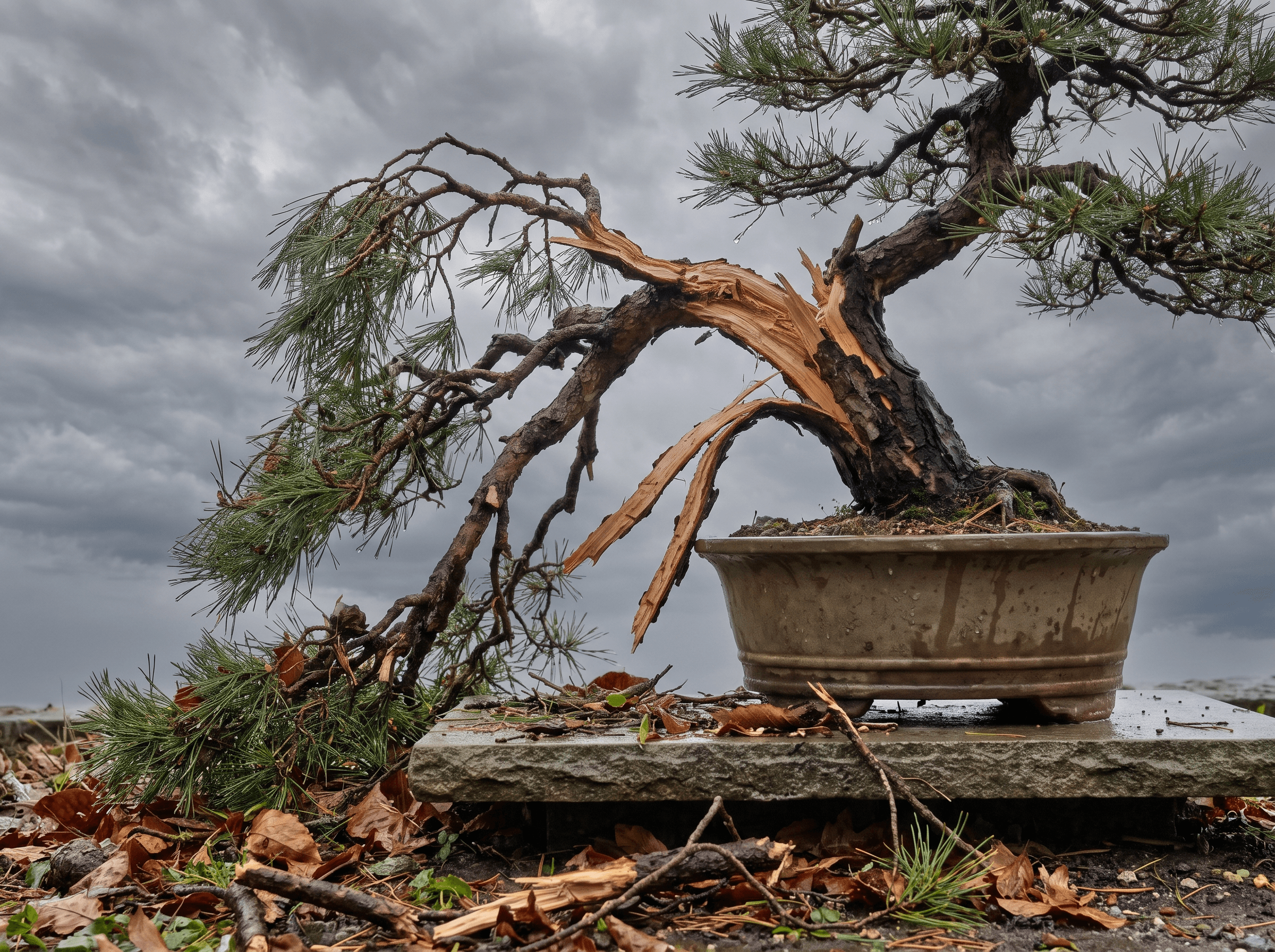
Living in Southern Italy, I get a call or two every autumn from someone who's come out to a terrace or garden after a rough night of wind to find a branch hanging by a thread of bark, or worse, the whole tree lying on its side with soil scattered across the paving. It's an unsettling thing to find, especially on a tree you've spent years shaping, but physical storm damage is usually more fixable than growers assume in the moment. Bonsai are, after all, still trees, and trees have been dealing with wind since long before anyone put one in a pot.
What matters most in the first hour is separating what actually needs action now from what can wait until you've calmed down and can think clearly. A torn branch with exposed wood needs a clean cut sooner rather than later, mainly to stop the wound drying out raggedly or inviting infection through torn, uneven edges. A tree knocked over needs its roots protected from drying out or further physical stress, but doesn't need to be repotted or fussed over immediately. Knowing which is which stops you from either ignoring something urgent or overreacting to something that just needs patience.
The other thing I'd say, having lost a few branches to gusts myself over the years, is that a storm alone doesn't usually kill a bonsai, though it can in the more severe cases, a snapped trunk, roots left exposed in summer heat, or a small pot that dries out fast after being knocked flat are all genuinely dangerous rather than just cosmetic. More often it's the follow up mistakes, leaving a torn wound unaddressed for weeks, or leaving an uprooted tree with its roots exposed to sun and wind for days, that turn a recoverable injury into a real setback. Treat the immediate damage promptly and calmly and most trees recover well, though how long that takes varies with the species, the season, and how much root or trunk damage actually happened.
Likely causes
Wind snapping a branch or tearing bark
How to tell: A branch broken cleanly or, more often, torn raggedly with a strip of bark pulled down the trunk below the break rather than snapped flush. The exposed wood is pale and fibrous where the wind wrenched it apart, and the bark tear frequently runs further than the break itself looks like it should have caused.
The fix: First tell apart a branch that's torn through or badly splintered from one that's cracked but still mostly attached and in line, if it still matters to the design. A torn-through or crushed branch is best cleaned up with a sharp, disinfected tool, cutting back to solid, healthy wood well past any splintering rather than leaving a jagged edge. A fresh crack that still has bark and cambium contact along most of its length can sometimes be saved by splinting it back into position with tape or wire and giving it a season to knit, rather than removing it outright, though this only works while the crack is fresh and the branch hasn't dried out. Either way, trim any torn bark back to where it's still firmly attached rather than leaving loose flaps that will dry out and peel further. For a larger wound, seal it with cut paste if that's your normal practice for wounds of that size on that species, and otherwise treat the whole area exactly as you would any other significant pruning cut, keeping an eye on it over the following weeks for signs of dieback creeping back from the cut edge.
Pot tipped or blown over
How to tell: The tree is found knocked flat, sometimes with the trunk still in the pot and roots loosened inside it, sometimes fully out of the pot with roots exposed to open air. Soil is often scattered, and the tree may sit loosely when you try to right it, no longer held firmly at its original planting depth.
The fix: If roots are exposed to open air, cover or mist them right away while you sort out the pot and soil, since drying out is the fastest way an otherwise recoverable fall turns serious. Right the tree as soon as you find it and reset it at its original depth in the pot, firming soil back around the roots by hand so there are no large air pockets left where roots were disturbed; if the pot has broken or most of the original soil is gone, an emergency repot into a temporary pot with fresh soil is the better option rather than trying to work with what's left. If the tree still feels loose or unstable once repotted, anchor it with wire run through the drainage holes and secured around the root base, the same technique used after a normal repot. Water thoroughly once to settle soil back around the disturbed roots, then return to your normal watering routine rather than keeping it wetter than usual going forward. Give the tree a sheltered spot out of direct sun and wind for a couple of weeks afterward so the roots can settle again without additional stress.
How to prevent it
If storms are a regular feature where you keep your trees, as they are for a lot of us near the coast in autumn and winter, it pays to think about wind exposure before a forecast rather than after. Move freestanding trees, especially anything top-heavy or recently repotted with loose soil, into a sheltered spot against a wall or inside a greenhouse or garage ahead of a forecast storm rather than leaving them in the open. For trees that have to stay put, laying pots on their side or grouping them low and close together reduces the leverage wind gets on an upright trunk. A few minutes of moving pots before bad weather saves a lot more time than repairing the damage afterward.
Common questions
How can I tell if a broken branch can be saved?
If there's still a decent length of healthy branch left below the break, with living, moist tissue under the bark when you scratch it lightly, it's usually worth cleaning up the cut and letting it continue rather than removing the whole branch. If the break is right at the trunk or has taken most of the branch's length with it, there's often not enough left to save and it's better to remove it cleanly and let the tree redirect energy elsewhere.
Should I repot the tree after it's fallen over?
Not necessarily. If you can reset it at its original depth and firm the existing soil back around the roots, that's usually enough, and a full repot adds unnecessary root disturbance on top of what the fall already caused. Only go to a full repot if the roots themselves are visibly damaged and need proper attention, or if the original soil was lost entirely and can't be reused.
How do I protect my trees before a forecast storm?
Move anything freestanding to a sheltered spot against a wall, under an eave, or inside a garage or greenhouse before the wind picks up. If moving isn't possible, group pots close together low to the ground, or lay smaller pots on their side, both of which reduce how much leverage the wind has on the trunk.
Does a leaning tree need restaking immediately?
If it's leaning but the roots are still mostly intact in the soil, yes, straighten and stabilise it as soon as you find it rather than leaving it to settle at an angle. Getting it upright and secure quickly stops the fine roots from taking further damage as the trunk keeps shifting, and new roots will establish in whatever position the tree is held in as it recovers. Use guy wires anchored to the pot rim or stakes driven into the soil to hold it upright while the roots recover.
Will a torn wound heal on its own without cutting it back first?
It can callus over eventually, but a ragged, torn edge heals more slowly and unevenly than a clean cut, and is more likely to let in rot or pests while it's exposed. Cleaning the wound up properly with a sharp tool gives the tree the best, fastest path to closing it over.
Is it normal for a tree to drop leaves after storm damage even in spots that weren't directly hit?
Yes, some leaf drop across the tree after a shock like this is a normal stress response, not necessarily a sign of wider damage. Keep an eye on it, but unless it's accompanied by other symptoms like softening bark or continued dieback, give the tree a few weeks to settle before assuming the worst.
You might also like
General guidance based on 20+ years of practice. Every tree is different — when in doubt, ask us.