
Ants on your bonsai
Ants on a bonsai are rarely the real problem. Most of the time they're a sign of another pest nearby, feeding on the honeydew it produces.
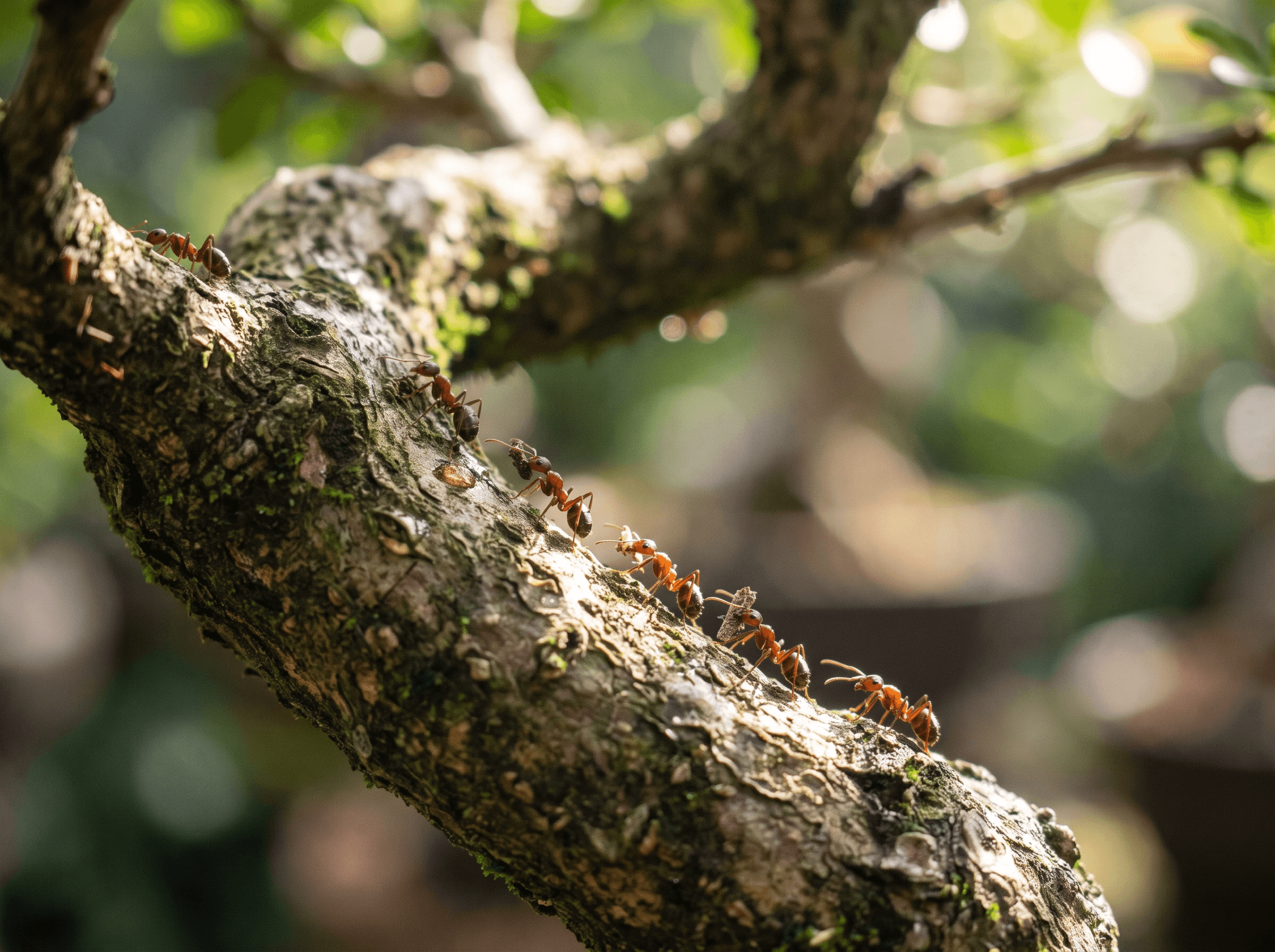
When someone brings me a tree covered in ants, my first question is never about the ants themselves. It's what are they after. Ants don't feed on healthy leaves or bark, so a trail of them marching up a trunk almost always means there's a food source somewhere on that tree, and in nine cases out of ten that food source is honeydew, the sugary waste that aphids, mealybugs and scale insects leave behind as they feed on sap. The ants haven't caused any damage. They've just found a buffet and moved in.
The relationship goes further than simple opportunism. Ants will actively protect the colony of aphids or scale that's feeding them, chasing off ladybirds and lacewing larvae that would otherwise keep the pest population down on their own. I've watched ants carry aphids to a fresh new shoot when the old growth got picked clean, which is the sort of thing that makes an infestation last far longer than it should. So while the ants aren't chewing your foliage, ignoring them means ignoring the guard detail for whatever actually is.
You're most likely to notice this in the warmer months, from late spring through summer, when both ants and sap-feeding pests are at their most active outdoors. It shows up more on trees kept on a bench near other plants, or on any bonsai that's picked up aphids or scale from a nursery batch. The other situation I see regularly, especially in a hot dry spell, is ants deciding the loose, well-drained substrate in a bonsai pot makes an excellent place to dig a nest, which is a separate problem with its own risks to the roots.
Likely causes
Ants farming aphids, mealybugs or scale
How to tell: A steady trail of ants moving up and down the trunk, often leading to a sap-sucking pest hiding in a branch fork or leaf joint. Follow the trail rather than the ants themselves and you'll usually find small green or brown insects clustered where a branch meets the trunk, or cottony white fluff tucked into a leaf axil. The ants are there for the honeydew, a sticky residue you may also notice on leaves below the infested spot.
The fix: Search carefully for the actual pest and treat that, whether it's aphids, mealybugs or scale, since each responds to slightly different handling. The ants will move on once their food source is gone, but only if you clear the pest thoroughly rather than knocking back one generation and calling it done. Expect to check the same spots again a week or two later, because a partial treatment just brings the ants right back.
Ants nesting in the pot
How to tell: No visible pest anywhere on the foliage, but ants are living in the soil itself, sometimes moving soil particles around or leaving small mounded piles near the drainage holes. You might notice the substrate looks slightly disturbed or unusually dry in patches even after watering. This is common with free-draining bonsai mixes, which ants find far more comfortable to tunnel through than dense garden soil.
The fix: Soak the pot thoroughly in a basin of water for ten to fifteen minutes, which floods the tunnels and forces the colony out; most ants will abandon a nest that keeps getting drowned. If that doesn't clear them, use an ant bait placed near the pot rather than directly in the soil, since the slower-acting bait gets carried back to the nest and takes out the queen, not just the workers you can see. Tunnelling on its own rarely harms a healthy root system directly, but persistent digging can disturb fine feeder roots near the surface and dry the mix out faster than you'd expect.
Ants relocating during weather changes
How to tell: A sudden burst of ant activity across several pots at once, not just one tree, usually right after heavy rain or during a stretch of unusually hot weather. There's no pest to find on close inspection, and the ants seem to be passing through rather than settling in for the long term.
The fix: This is often temporary and needs no treatment at all beyond patience; colonies relocate for their own reasons and a bonsai bench full of dry, sheltered pots is attractive real estate during a wet spell. If the activity doesn't settle down after a week or so, or if you start seeing soil disturbance in a specific pot, treat it as nesting rather than passing traffic and follow the soak-and-bait approach.
How to prevent it
Ants are one of the more useful early warning signs you'll get on a bonsai, so I treat any trail of them as a prompt to inspect the tree properly rather than a nuisance to spray away. Check every leaf axil, branch fork and the underside of low branches whenever you spot ants, since aphids, mealybugs and scale are often small enough to miss until you're specifically looking. Keep the area around your benches clear of fallen fruit, spilled sugary fertiliser or other food sources that draw ants in the first place, and avoid letting pots sit directly against each other, since that gives ants an easy bridge from an infested tree to a clean one. If you already know a particular corner of the garden has an established ant nest nearby, raising pots slightly on pot feet makes it a little harder for them to set up house in your substrate.
Common questions
Should I spray the ants directly?
Spraying the ants themselves rarely solves anything, since you're only killing the workers you can see while the nest and queen carry on undisturbed. You're better off finding what they're farming and treating that pest, or dealing with the nest itself if they've moved into the pot.
Do ants damage bonsai roots?
Not directly in most cases. Ants nesting in a pot are after shelter and dry ground, not root tissue, but persistent tunnelling near the surface can disturb fine feeder roots and speed up how quickly the mix dries out, which is worth watching on a tree that's already stressed.
Why do I only see ants on one tree in my collection?
That's usually a strong clue that only that tree has the pest problem the ants are exploiting. Give it a close inspection before assuming the rest of your collection is at risk, though it's still worth a quick check of neighbouring trees since aphids and scale do spread.
Can ants damage the bark or trunk?
On a healthy tree, no. Ants use the trunk as a highway between their nest and a food source, and their movement across the bark doesn't cause injury on its own. Any bark damage you find alongside ant activity is almost always from something else, most often the sap-feeding pest they're tending.
How do I tell ant nesting apart from root rot in the pot?
Ant nesting tends to show as dry, loosely disturbed soil with visible tunnels or small mounds near the drainage holes, and the tree itself usually still looks fine. Root rot shows the opposite pattern: soggy or foul-smelling substrate, dark mushy roots if you check, and a tree that's declining regardless of what's living in the pot. If you're unsure, gently check the roots directly rather than guessing from the soil surface alone.
Will ant bait harm my bonsai?
A bait placed near the pot rather than mixed into the soil is generally safe for the tree, since it's designed to be carried off by the ants rather than absorbed by roots. I still keep bait away from the trunk and foliage itself and avoid granular insecticides scattered directly across the substrate, which is more likely to affect the tree than the ants.
You might also like
General guidance based on 20+ years of practice. Every tree is different — when in doubt, ask us.