
Bonsai soil smells bad, sour or rotten, from the pot
Healthy bonsai soil shouldn't smell like much at all, so when bonsai soil smells bad, sour, swampy or rotten, treat it as a strong warning sign of anaerobic, waterlogged conditions and investigate right away rather than assuming root rot is already confirmed.
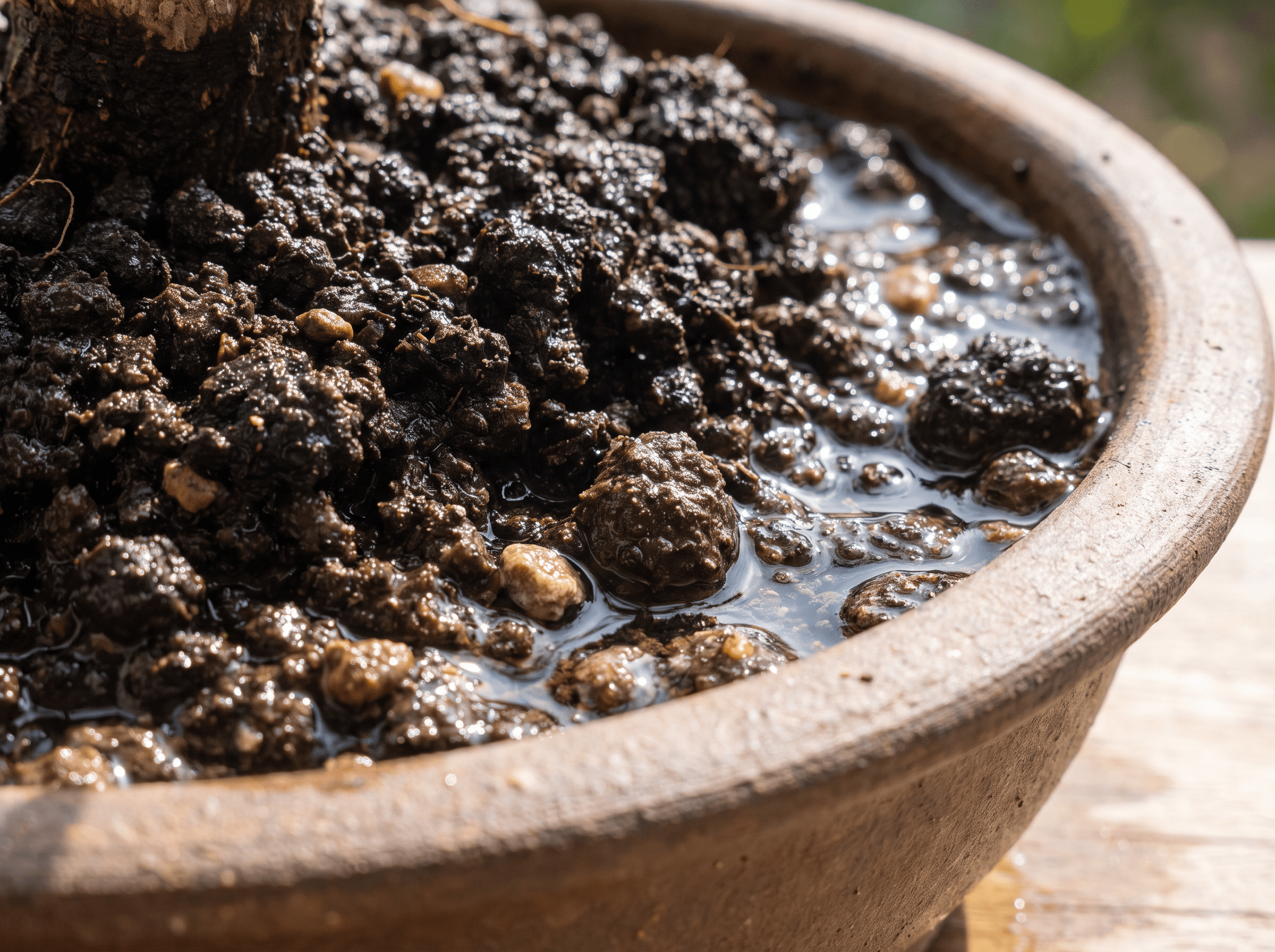
Healthy bonsai soil barely smells like anything, maybe a faint mineral note right after watering and nothing more than that. If you bend down to check on a tree and catch a sour, swampy or outright rotten smell coming off the substrate, don't file it away as something to deal with later. That smell is your nose picking up on a process already happening below the soil line, often well before obvious foliage symptoms show up. In my experience it's one of the most reliable early warnings a bonsai gives you, and also one of the most ignored, because nothing above the soil line looks wrong yet.
The smell comes from the same conditions that eventually produce root rot: soil that's staying wet for too long, with no air movement through the root zone. I won't repeat everything I cover on root rot itself here, but it's worth being clear about how the two relate. The rot is what happens to the roots after this state sets in. The smell is a strong warning sign that those conditions have already taken hold, sometimes appearing before a single root has actually turned soft, so it's worth investigating rather than assuming the worst outright. Catch it at the smell stage and you're usually dealing with a much smaller job than catching it once foliage starts yellowing or dropping.
I check soil smell the same way I check for pests, as part of a regular routine rather than only when a tree already looks off. Push a finger a few centimetres into the substrate after watering and take a smell. On a tree that's draining properly you'll get almost nothing. On one that's been sitting wet, especially through a stretch of cool or overcast weather when evaporation slows right down, you'll know within a couple of seconds. It's not a subtle smell once you've learned to notice it, and it won't go away on its own or with a fresh top dressing of soil.
Likely causes
Anaerobic, waterlogged soil
How to tell: The smell is strongest right after watering, or the moment you disturb the top layer with a finger or a chopstick. Underneath the surface the substrate feels consistently soggy rather than just damp, often with a grey or blackish tinge instead of its normal colour. Water may also sit visibly on top of the soil for longer than it should, or drain very slowly through the pot's holes when you tip it.
The fix: Lift the tree out of the pot and look at the roots directly instead of guessing from the outside. If the smell was strong, treat it as a strong warning sign and check carefully, even if the roots look mostly fine at a glance. Trim away anything dark, soft or mushy back to firm white or pale tissue, then repot into fresh, coarse soil that drains freely. Water thoroughly once straight after repotting to settle the substrate around the roots, then hold off until the soil begins to dry before watering again, and let the tree recover somewhere with decent airflow rather than a still, humid corner.
Decaying organic matter in the mix
How to tell: The mix itself is heavy on organic components like bark, peat or compost, material meant to break down over time but doing so faster than the tree can use it. Instead of drying out between waterings the way a mineral substrate would, it stays damp and starts to ferment, giving off a musty, faintly alcoholic smell that's different from the sharper odour of dying roots. You'll usually find it worst in the lower half of the pot, where organic particles have compacted and lost their structure.
The fix: There's no quick fix for a mix that's already breaking down mid-season, short of easing off watering frequency and improving airflow around the pot until you can repot properly. At the next repotting, timed to suit the species rather than rushed, shift the ratio toward mineral, inorganic components like akadama, pumice or lava rock, which hold their structure for years instead of months. A mix that's mostly mineral simply has far less material in it for bacteria to feed on in the first place.
Bacteria working without oxygen
How to tell: Once soil stays saturated long enough, the oxygen trapped in the small air pockets between particles gets used up faster than it's replaced, and a different set of bacteria takes over, the kind that survive without it. These bacteria break down dead root tissue and organic matter in a way that gives off sulphur-based gases, which is where the classic rotten-egg or swamp note comes from. It's the same basic process behind a stagnant pond or a waterlogged puddle smelling the way it does, just happening in miniature inside your pot.
The fix: The fix is the same as for any waterlogged soil: get oxygen back into the root zone, since that's what shuts these bacteria down and lets the normal, non-smelling soil organisms take over again. Improve drainage at the next repot, raise the pot slightly off any saucer or tray so water isn't trapped underneath, and adjust your watering schedule to the season rather than a fixed routine. A mix that takes five days to dry out in spring might easily take twelve in a wet autumn.
How to prevent it
Use a fast-draining, mostly mineral substrate from the start and you'll rarely deal with this problem at all, since there's neither the moisture retention nor the organic content for anaerobic bacteria to get going. Water thoroughly when you water, but check about 1-2cm down before the next round and only water again once that layer is slightly dry, never bone dry, rather than keeping the pot constantly damp. Exactly how long that takes varies by species and climate, and it's easy to overwater out of habit through cooler months when evaporation slows. If you use saucers or trays under your pots, empty any standing water after each watering instead of letting the pot sit in it, and check every so often that drainage holes aren't blocked by roots or compacted old soil.
Common questions
Why does bonsai soil smell bad, and does that always mean root rot?
Not always, and not necessarily to the point that rot is already extensive. It usually means the anaerobic, waterlogged conditions that lead to rot are present, though sometimes the odour comes from organic matter breaking down in the mix before the roots themselves are affected. Think of the smell as a strong warning sign rather than confirmation of damage already done, and check the roots to know for sure. Act on it quickly and you can often intervene before the roots themselves are badly affected.
What is actually causing the smell?
It's bacteria that thrive without oxygen breaking down dead root tissue and organic matter in the mix, giving off sulphur-based gases as a byproduct. That's the same basic chemistry behind a stagnant pond smelling the way it does. Healthy soil holds enough air that a different, non-smelling set of organisms handles the breakdown instead.
How urgent is this? Do I need to repot today?
Not necessarily today, but don't leave it more than a few days. Ease off watering immediately and improve airflow around the pot while you plan a proper root inspection. If the smell is strong or the substrate feels waterlogged rather than just damp, treat it as a same-week job rather than folding it into your next scheduled repotting.
Can I check what's going on without fully repotting the tree?
Yes, to a point. Gently ease the tree out of the pot without disturbing the root ball too much and look at the roots visible around the outside, checking their colour and firmness. If they look and feel healthy and it's really just the mix itself that smells musty, you may be able to hold off on a full repot and correct your watering and drainage instead.
Is the smell, or any mould that comes with it, dangerous to be around?
Usually not dangerous during normal handling, but avoid inhaling dusty or mouldy soil directly, and take extra care if you're sensitive to mould or have young kids or pets who might handle it. For the tree it's a different story, since the same conditions producing the smell keep damaging the roots for as long as they continue.
Are some soil types just naturally more prone to smelling than others?
Yes. Mixes heavy on organic material like bark, peat or garden compost break down faster and hold moisture longer, which makes them far more likely to turn anaerobic than a mostly mineral mix of akadama, pumice, lava rock and similar components. If a particular tree keeps developing this smell despite reasonable watering, the mix itself is usually the thing to change.
You might also like
General guidance based on 20+ years of practice. Every tree is different — when in doubt, ask us.