
Bonsai Leaves Curling Suddenly
Leaves that curl or cup inward, especially if it happened quickly, usually point to a stress event rather than a slow-developing problem.
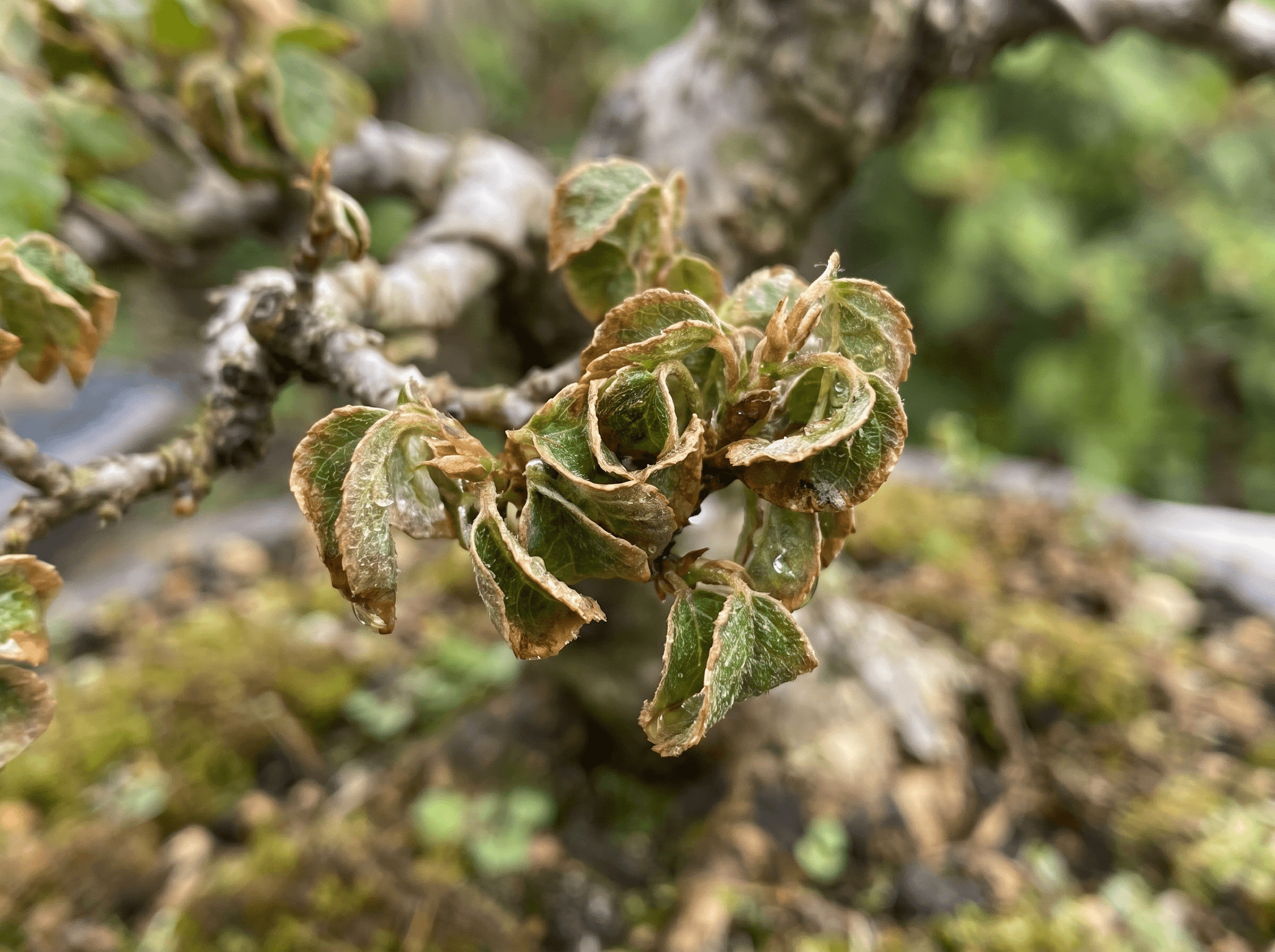
Curling is one of the fastest reactions a tree can make. A leaf rolling inward reduces the surface area exposed to sun and moving air, which cuts down how much water the tree loses through the stomata, found mainly on the underside of the leaf in many broadleaf species. It's a defensive move, not damage in itself, and in my experience it's usually the tree's way of buying time while a root system that can't keep up catches up, or while a stretch of harsh weather passes.
Because it's a fast response, timing tells you almost as much as the shape of the curl. If a tree looked fine two days ago and every leaf on it is curled today, you're looking at something acute: a heatwave, a pot that dried out completely, a cold night that caught you off guard. Slow, gradual curling that develops over a couple of weeks and comes with yellowing or spotting is a different conversation entirely, closer to a nutrient or disease issue, and that's not what this page covers.
To narrow it down, start with what changed in the last few days rather than staring at the leaf itself. Check the soil first: bone dry all the way through points to underwatering, damp and cool points elsewhere. Look at whether the curling is tree-wide or limited to a few shoots, since a localised pattern usually means pests rather than a whole-tree stress like heat, cold or drought. And think back over the weather, because a hot afternoon, an unexpected cold snap, or a day you forgot to water are the three most common triggers I see, roughly in that order.
Likely causes
Heat or sun stress
How to tell: Curling that appeared during or right after a hot, sunny stretch, often with some crisping or browning starting at the leaf edges. It tends to hit the side of the tree facing the sun hardest, and leaves that were fine in the morning can be visibly cupped by mid-afternoon on a bad day. Trees that were recently moved into more direct light without a chance to acclimate are especially prone to it.
The fix: Move the tree to partial shade during the hottest hours, roughly late morning through mid-afternoon, and make sure watering is keeping pace with the heat rather than running on the same schedule you'd use in mild weather. On a genuinely hot day I check the soil moisture twice, not once, because a pot that was fine at 8am can be nearly dry by 2pm. If the tree needs to sit in strong sun long term, reintroduce it gradually over a week or two rather than all at once.
Underwatering
How to tell: The soil is dry through the full depth of the pot, not just at the surface, and the curling shows up across the whole tree rather than on a few isolated shoots. Leaves often feel slightly softer or less turgid than usual before you even notice the curl, and in more advanced cases the tips will start to brown as well.
The fix: Water thoroughly, enough that it runs freely out of the drainage holes, and give the tree a second pass ten minutes later since bone-dry substrate can repel water on the first watering and let it channel straight through without rehydrating properly. Going forward, check the soil by feel or with a moisture probe rather than on a fixed calendar, since watering needs shift with temperature, wind and how root-bound the tree is. If this keeps happening, it's often worth checking whether the pot has actually become root-bound, which makes it far harder to hold water between waterings.
Pest damage
How to tell: Curling that's localised to certain shoots or one section of the canopy rather than spread evenly across the tree, sometimes with a sticky residue on the leaves or the branch below them. Unroll one of the curled leaves and look closely at the inside surface, since aphids, and occasionally other sap-sucking insects, will often be sitting right there, sheltered from view and from most sprays.
The fix: Unroll a few curled leaves and inspect them directly rather than guessing from the outside, because the pest itself is usually the clearest sign. If you find aphids, a strong jet of water followed by insecticidal soap or neem oil, applied to the undersides of leaves, generally clears a light infestation. Always follow the label directions on whatever product you're using, test it on a small area first if the species is sensitive or unfamiliar to you, and avoid spraying in direct sun or high heat since oils and soaps can scorch foliage under those conditions. Repeat according to the product label rather than on a fixed schedule. Isolate the affected tree from the rest of your collection while you're treating it, since aphids move between trees easily, especially when branches are close together.
Wet, poorly-draining soil or root damage
How to tell: The soil feels damp, or even wet, when you check it, yet the leaves are curling as though the tree were dry. This is more likely if the substrate has gone dense or claggy over time, the tree hasn't been repotted in several years, or a look at the roots turns up some that are dark and mushy rather than firm and pale.
The fix: Don't reach for more water just because the leaves look drought-stressed. Wet, compacted or root-compromised soil can stop a tree taking up water at all, which mimics the curling you'd see from underwatering even though the pot is damp. Check the roots, and if drainage is poor or you find rot, repot into fresh, coarse, free-draining substrate, trim away the affected roots, and water more sparingly afterward until you see new growth.
Cold stress
How to tell: Curling that follows an unexpected cold night or a sharp overnight temperature drop, particularly on tropical or subtropical species that aren't built to handle it. The curl is often accompanied by leaves that look slightly duller or darker than usual, and on more sensitive species you may see some leaf drop follow a day or two later if the exposure was severe.
The fix: Move the tree somewhere more sheltered as soon as you notice it, whether that's indoors, into a greenhouse, or simply closer to a wall that holds heat overnight. Don't rush to fertilise or prune a cold-stressed tree; give it time to recover on its own first. If cold snaps are a recurring issue where you are, it's worth tracking overnight lows for the species you're growing so you can move vulnerable trees in ahead of the drop rather than reacting after the damage is already done.
How to prevent it
Most sudden curling comes down to the tree being caught off guard by a change you could have seen coming, so the real prevention is paying attention to the days ahead rather than just the tree in front of you. Keep watering consistent through hot weather, checking more often rather than sticking to a fixed schedule once temperatures climb, and give the tree some relief from the most intense afternoon sun if it's already shown heat stress once. Acclimate any tree gradually before moving it into stronger light or a more exposed spot outdoors, since a sudden jump is what triggers most heat-curl I see. Keep an eye on the forecast for cold snaps if you're growing anything remotely tender, and check leaf axils and new growth for pests on a regular basis rather than only after you've already noticed curling, since a small aphid colony is far easier to deal with than one that's had a few weeks to establish.
Common questions
Will curled leaves uncurl once I fix the cause?
Often, yes, particularly if the trigger was heat or a single missed watering and you catch it quickly. Leaves that have only just started curling can relax back out within a day or two once conditions improve. Leaves that curled hard enough to also brown or crisp at the edges usually stay that way permanently, but the new growth that follows should come in normal as long as the underlying issue is resolved.
Does curling look different on a ficus compared to a maple or other deciduous species?
The mechanism is the same, reducing surface area to cut water loss, but the visual pattern differs by leaf structure. Broad, thin-leaved deciduous species like maple tend to cup or fold along the central vein and show stress fairly dramatically, while thicker-leaved tropical species like ficus often curl more subtly and can also drop leaves outright as an alternative stress response, sometimes instead of curling rather than alongside it.
Does leaf curling always mean something is wrong?
Not necessarily. A very small amount of curling on the hottest part of a summer afternoon, that relaxes back out by evening, is often just the tree regulating water loss in real time rather than a sign of a deeper problem. What matters is whether it persists once conditions cool down or whether it keeps recurring day after day, which points to an underlying watering or exposure issue that needs addressing rather than a normal daily fluctuation.
How quickly should I expect to see improvement after fixing the cause?
For heat or underwatering, you can often see leaves start to relax within 24 to 48 hours once the tree has been watered properly and moved somewhere less punishing. Pest-related curling takes longer, generally a week or two of consistent treatment before you see the shoots recover, since you're also waiting on new, undamaged growth to replace what's already curled. Cold stress recovery is the slowest of the three and can take a couple of weeks depending on how severe the exposure was.
Can cold nights cause curling the same way heat does?
Yes, cold is a genuine trigger alongside heat, drought and pests, and it's easy to overlook because people tend to associate curling with hot weather. An unexpected temperature drop, especially on a tropical or subtropical species that isn't hardened for it, can also leave leaves curled, wilted, darkened, or dropping.
Should I mist the tree if the leaves are curling from heat?
A light misting can offer some short-term relief by raising humidity around the foliage, but it doesn't address the actual cause, which is usually a watering or sun exposure gap. I'd treat misting as a minor supplement at most, not a fix, and put the real effort into checking the soil and giving the tree shade during the hottest part of the day.
You might also like
General guidance based on 20+ years of practice. Every tree is different — when in doubt, ask us.