
Older leaves dropping from your broadleaf evergreen bonsai
A scattering of older leaves falling from a ficus, olive, or ligustrum while the tree keeps pushing new growth normally is usually nothing more than ordinary leaf turnover, not a sign of trouble.
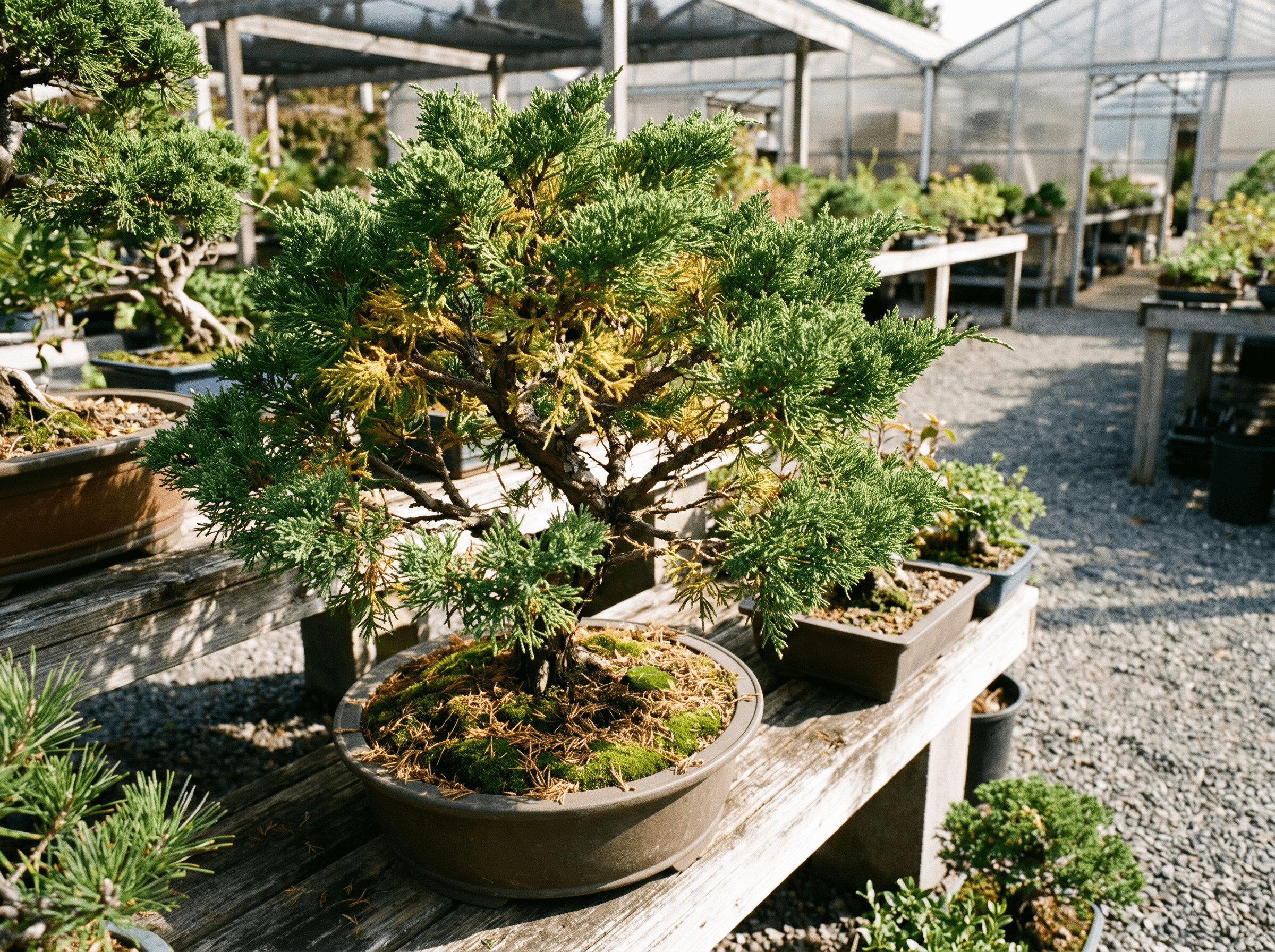
People hear the word evergreen and assume it means a leaf, once grown, stays on the tree forever. That's not what it means. Evergreen just means the tree is never fully bare, there's always foliage on it through every season, but individual leaves still have a lifespan. On a ficus, olive, ligustrum, or similar broadleaf evergreen, a leaf might last a year or two before the tree sheds it and replaces it with newer growth. That shedding is happening quietly on a healthy tree all the time, you just don't usually notice it because it's gradual.
The pattern that tells you it's normal turnover rather than a problem is fairly consistent. It's always the older leaves, generally the ones lower down or further back on the branch, that go first, never the newest growth at the tips. The drop is scattered through the canopy rather than happening all in one place. And critically, new growth keeps coming along at the same time, so the tree isn't actually thinning out overall, it's just cycling leaves the way it's meant to. Compare that to shock-triggered leaf drop, where a tree that's just been moved, repotted, or exposed to a sudden change can lose a large number of leaves all at once, often with no new growth following to replace them, at least not right away.
This is also worth separating from what happens with conifers, where needle drop follows its own pattern tied to needle age and species-specific timing, and from the kind of sudden, shock-driven leaf loss that has its own page on this site. Broadleaf evergreens have a genuinely different rhythm, more continuous, less dramatic, and it's one of the things that trips up newer growers the most, because on paper any leaf falling off looks alarming.
Likely causes
Normal leaf turnover on a broadleaf evergreen
How to tell: It's consistently the older leaves that drop, scattered through the canopy rather than concentrated in one area or falling all at once. New growth continues to appear on the tree at the same time as the drop, so the overall canopy density stays roughly the same. The pace is gradual and continuous, a few leaves here and there over weeks, rather than a sudden wave.
The fix: There's nothing to do here, this is the tree's normal leaf lifecycle playing out and not a problem to solve. I'd actually be more concerned about a broadleaf evergreen that never dropped a single old leaf, since that's not how the growth cycle works. Keep up your normal watering, feeding, and light routine and let the tree get on with it.
A bigger seasonal turnover around a light or temperature change
How to tell: A noticeably larger than usual drop happens around a specific seasonal transition, most commonly moving the tree outdoors for summer after it's spent winter indoors, or bringing it back in as temperatures drop in autumn. It's still older leaves going, and new growth still follows normally, but the volume of leaves dropping over a short window is higher than what you'd see on an average week.
The fix: Keep your care steady through the transition rather than reacting with extra feeding or a change in watering, since a heavier seasonal shed like this is still within the range of normal as long as new growth keeps coming. The tree is essentially replacing indoor-grown leaves with ones better suited to the change in light and humidity, or vice versa. Give it a few weeks on the other side of the move before judging how the canopy has settled.
Mild environmental stress adding to the normal turnover rate
How to tell: Turnover is somewhat heavier than you're used to on this particular tree, without a clear seasonal move triggering it, often coinciding with a stretch of lower light, a change in watering routine, or a period of unusually dry indoor air. New growth is still present but perhaps a touch slower than normal alongside the drop.
The fix: Look at whether light levels, watering consistency, or humidity have shifted recently and correct anything that's clearly off, more consistent light being the most common fix for an indoor tree shedding more than usual. This is a mild version of stress rather than shock, so the response is to steady the conditions rather than to treat it as an emergency. If new growth keeps appearing at a normal pace, the tree is coping fine and just needs a bit of environmental tidying up.
How to prevent it
There isn't really anything to prevent with normal turnover, since it's a healthy process rather than a fault, but you can keep yourself from misreading it as a problem by paying attention to the pattern rather than just the leaf count. Get to know what a typical week of shedding looks like on each of your broadleaf evergreens during the growing season, so a genuine increase stands out against that baseline instead of triggering alarm at the first yellow leaf on the floor. Keep care steady through seasonal transitions, indoors to outdoors and back, rather than making several changes at once, since a calmer transition tends to produce a calmer, more spread-out leaf turnover rather than one dramatic drop. And always check whether new growth is still coming, that single detail is the clearest way to separate ordinary turnover from something that actually needs attention.
Common questions
How many leaves dropping at once is too many?
There's no fixed number, it depends on the size of the tree and the season, but the real test isn't the count, it's the pattern. A handful to a moderate scatter of older leaves over a week or two with new growth continuing is normal. A tree that suddenly drops a large portion of its canopy at once, especially with no new growth following, points toward shock rather than turnover.
How is this different from the shock-related leaf drop covered elsewhere on this site?
Shock-triggered drop follows a specific event, a repot, a move, a sudden change in conditions, and tends to happen as a sudden wave that can include newer leaves too, often without much new growth following right away. Normal turnover has no single trigger, only affects older leaves, is spread out over time, and happens alongside continuing new growth.
Which species show this kind of turnover most noticeably?
Ficus is probably the one growers notice most, since it can shed and replace leaves fairly actively, but olive and ligustrum both do it too, along with most other broadleaf evergreens kept as bonsai. It's simply part of how these species maintain their canopy.
Does fertiliser affect how much turnover happens?
A well-fed, vigorous tree generally cycles leaves at a steady, unremarkable pace and replaces them promptly. An under-fed tree can show heavier turnover with slower replacement, which starts to look more like decline than normal cycling, so keeping feeding consistent through the growing season helps keep the process looking healthy.
Should I be worried if turnover seems heavier this year than last year?
Not automatically, weather, light conditions, and how long the tree has been in the same pot can all shift the rate year to year. Worry if new growth isn't keeping pace with what's dropping, or if the drop starts including younger leaves rather than staying limited to the oldest ones.
Can I do anything to slow down normal turnover?
Not really, and I wouldn't try. It's a natural process the tree needs to maintain healthy foliage, and interfering with it, by overfeeding to try to hold onto old leaves for instance, tends to cause more problems than it solves.
You might also like
General guidance based on 20+ years of practice. Every tree is different — when in doubt, ask us.