
Moving Tropical Bonsai Back Indoors for Autumn
A tropical bonsai that summered outdoors doesn't just need to come in before the cold, it needs the move handled gradually or the shock does more damage than the temperature ever would.
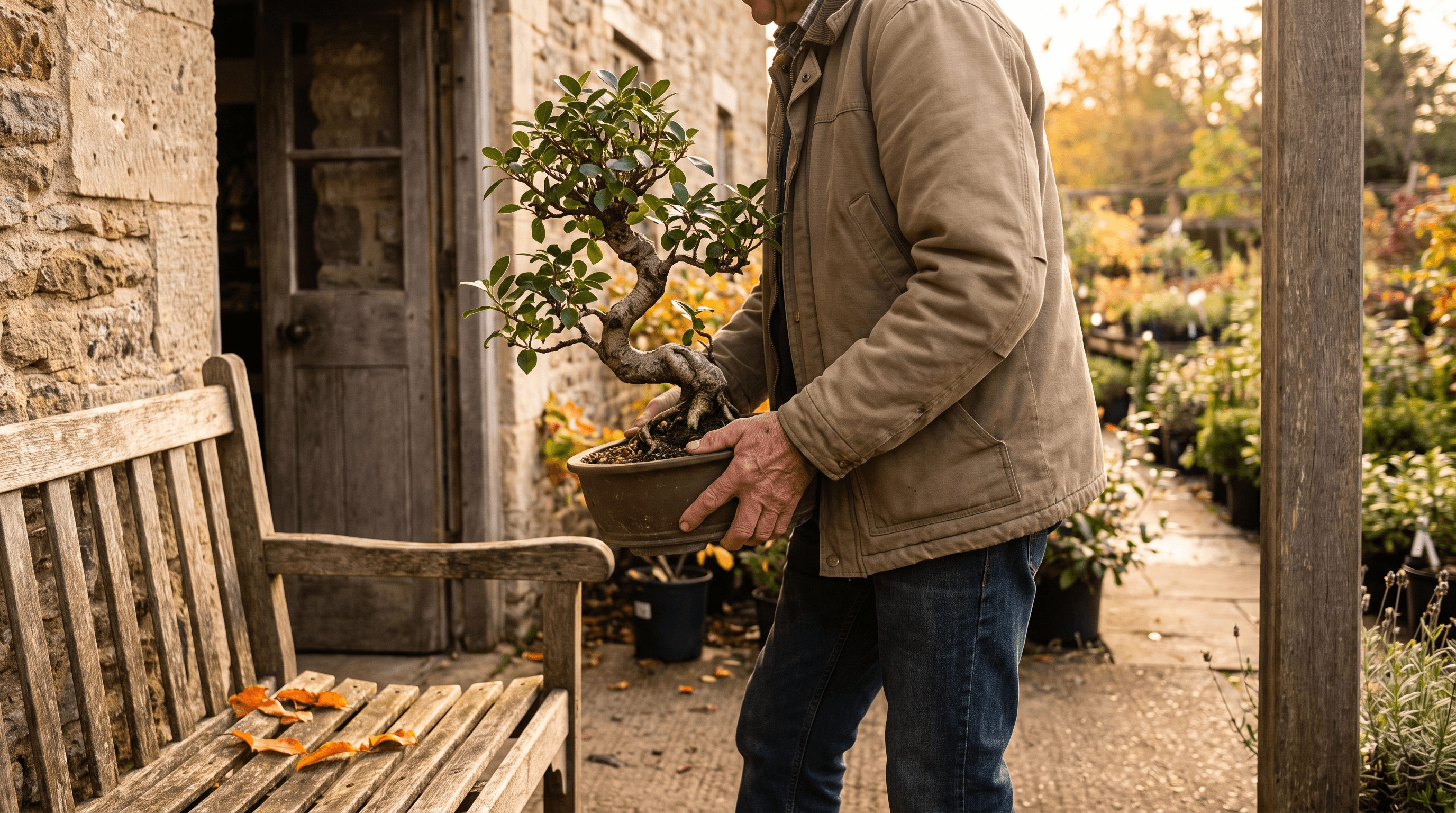
Ficus, most Portulacaria, jade, and the other tropical and subtropical species I keep outdoors all summer have to come back inside every year, and every year I get the same question about timing: how cold is too cold. It's a fair question, but the temperature threshold is only half the issue. The other half, the one people underestimate, is how abrupt the transition is.
A tree that's spent the summer in full outdoor light, real humidity swings, and air movement gets used to that environment. Bring it inside in one move, straight from bright outdoor light to a dim corner near a window, from humid air to dry heated air, and the tree reacts. Leaf drop, some dieback on the softer growth, and a general sulk that can last weeks are all common responses to a transition done too fast, even when the actual temperature never got dangerously low.
So I plan this as a sequence, not a single day. It starts well before the nights actually get cold and finishes once the tree is fully settled into its winter spot, and I'd rather start the process too early than get caught moving a tree indoors in a rush during a sudden cold snap.
Watch nighttime lows, not daytime highs
A warm, sunny autumn afternoon doesn't tell you much. What matters is what happens after dark. Thresholds vary by species: ficus generally wants to come in once nights are dropping toward 10 to 15 degrees Celsius, and dwarf jade and most other subtropicals are similar, while true jade, Crassula ovata, tolerates a bit more cool before it's bothered. None of these species should see anything close to frost. I start tracking overnight lows in early autumn and begin the transition once they're regularly brushing the relevant threshold for that tree, rather than waiting for a single cold night to force my hand.
Bring the tree in gradually, not in one move
Where I have the time for it, bringing a tree in for the night and back outside during mild days for a week or two before committing it to its indoor winter spot full time seems to ease the shock, though it's a practice I've settled on myself rather than a fixed rule. If that's not practical, I at least try to place it somewhere with moderate light for the first few days rather than its final position, especially if that final spot is dimmer than the tree is used to. Sudden light changes are honestly a bigger shock than sudden temperature changes for a lot of these species, and leaf drop is the tree's normal response to not getting enough light where it's been placed.
Humidity drops indoors more than most people expect
Heated indoor air in autumn and winter is drastically drier than the air these trees were sitting in outdoors all summer, even in a dry Mediterranean climate. I group trees together near a humidity tray or a small humidifier for the first few weeks as a supporting measure, though light is usually the bigger issue for indoor tropicals overall. Low humidity can still show up as crisping leaf edges that people sometimes assume is a temperature problem when it's actually a moisture one, so it's worth checking alongside making sure the tree has enough light.
Find the brightest spot you actually have, and expect some adjustment leaf drop
Even a good south-facing window is dimmer than an overcast day outdoors, so some leaf drop after the move is normal and not a sign you did something wrong. I don't panic over the first wave of yellowing or dropped leaves in the first couple of weeks. What I do watch for is whether new growth eventually resumes at the new light level, which tells me the tree has adjusted rather than declined.
Hold off on heavy feeding and repotting during the transition
This usually isn't the moment to push growth hard or disturb roots. The tree is already dealing with a change in light, humidity, and often temperature, and adding root stress or a full feeding push on top of that can compound it. I scale feeding back and let a tree settle into its winter spot for several weeks, watching for stable or resumed growth, before returning to a fuller feeding schedule indoors, though a tree that's still clearly active under decent light can keep getting light feeding through the transition rather than none at all.
Common questions
What temperature should trigger moving my tropical bonsai indoors?
I go by nighttime lows rather than a single fixed number, since it varies by species. Ficus and dwarf jade generally want to come in once nights are regularly dropping toward 10 to 15 degrees Celsius, true jade tolerates a bit more cool, and none of these species should see frost. I start the transition once overnight temperatures are regularly brushing the relevant threshold rather than waiting for a hard frost warning.
Is it better to move the tree all at once or gradually?
Gradually, whenever you can manage it. A few nights indoors and days back outside, or at least a staged move through progressively dimmer spots, reduces the shock compared to a single move straight from full outdoor sun to a dim indoor corner.
My tree is dropping leaves after coming indoors, did I do something wrong?
Some leaf drop in the first couple of weeks is a normal adjustment to lower indoor light, not necessarily a mistake. Watch whether new growth resumes after that initial adjustment period. If the tree stalls completely or the drop continues indefinitely, that's when I'd look more closely at light or humidity.
Do I need a grow light for these species over winter?
Many households don't have a window bright enough to fully replace outdoor summer light, and a supplemental grow light genuinely helps reduce stress and leaf drop. It's not strictly mandatory for every species, but I'd consider it if your brightest indoor spot still looks noticeably dim to your own eye.
Should I mist the tree once it's indoors?
Misting gives a brief humidity bump but doesn't last long. A humidity tray or grouping trees together near a small humidifier does more for sustained air moisture, which matters more than an occasional spray for preventing crisped leaf edges.
How do I know when it's safe to move the tree back outside in spring?
Reverse the same gradual process once nighttime lows are reliably back above the threshold that worried you in autumn, easing the tree back into stronger light rather than moving it straight from an indoor window into full spring sun.
Can I keep feeding my tropical bonsai through the indoor winter months?
I scale back significantly rather than stopping outright, since indoor light and growth rate both drop over winter. A tree pushed with regular outdoor-season feeding indoors tends to produce weak, leggy growth reaching for light it isn't getting.
You might also like
General guidance based on 20+ years of practice. Every tree, climate, and year is different — when in doubt, ask us.