
NPK Ratios Explained for Bonsai
The three numbers on a fertilizer bag stand for nitrogen, phosphorus, and potassium, and understanding what each one actually does for a tree matters far more than memorizing a specific ratio.
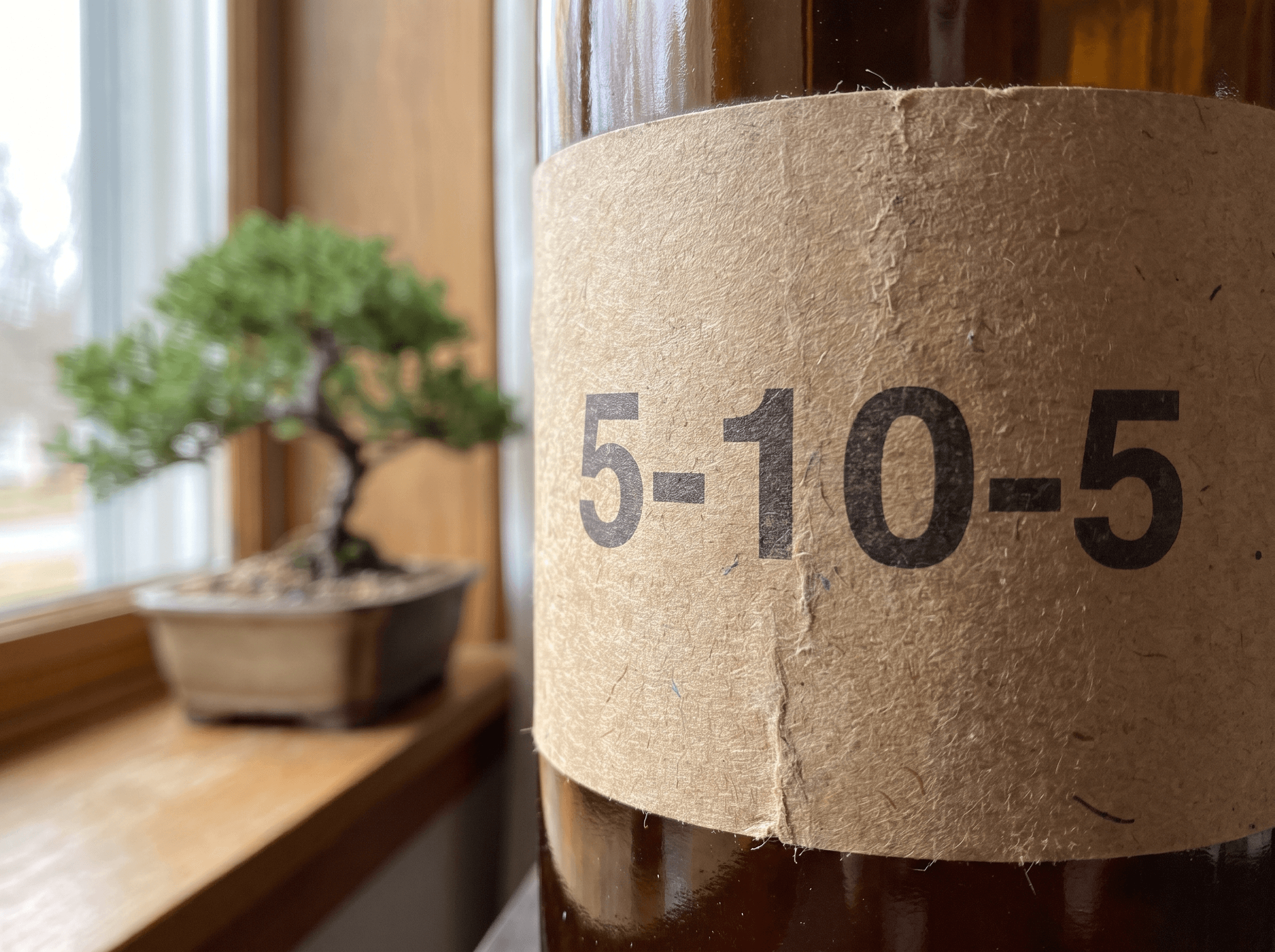
Those three numbers, something like ten-ten-ten or five-ten-five printed on the front of every fertilizer bottle, confuse more beginners than almost anything else in this hobby. People assume higher numbers mean better fertilizer, or that there's one correct ratio for bonsai and everything else is wrong. Neither is true.
N, P, and K stand for nitrogen, phosphorus, and potassium, always in that order, and the number represents the percentage of each by weight in the product. What actually matters is knowing what each of the three does inside the tree, because that lets you reason about what your specific tree needs at a specific point in the season, rather than hunting for a magic number on a label.
This is also one of the few places where bonsai practice genuinely diverges from general gardening advice, because we're not trying to maximize growth the way a vegetable grower is. We're trying to shape a tree that stays compact and refined, and that goal changes how you think about nitrogen in particular.
Nitrogen (N): drives leaf and shoot growth
Nitrogen fuels foliage and shoot extension more than anything else in the mix. It's what gives a tree that lush, vigorous, deep green look during the growing season. Many growers lean toward higher nitrogen in spring, especially on trees that are still being developed, then shift to a more balanced feed through summer as growth steadies out. But nitrogen is also the one to be careful with in bonsai specifically, more on that below, because too much of it works directly against the miniaturization we're trying to achieve on a tree that's already refined.
Phosphorus (P): roots, flowers, and fruit
Phosphorus supports root development and plays a central role in flowering and fruiting. If you're growing a flowering or fruiting species, an azalea, a crabapple, a pomegranate, a slightly higher phosphorus ratio can support a better flower or fruit display. Some growers also reach for a slightly higher-phosphorus feed once feeding resumes after repotting, reasoning that phosphorus supports root development generally, though this is more a logical extension of what phosphorus does than a strict rule, and a balanced feed at that stage works fine too.
Potassium (K): vigor and hardiness
Potassium supports overall plant vigor, disease resistance, and hardiness, including the tree's ability to handle cold and stress. Growers often lean toward potassium, alongside reduced nitrogen, in late summer and early autumn as trees prepare for dormancy, since it helps the tree face autumn and winter stress without pushing new soft growth the way nitrogen would at that time of year.
A balanced ratio works fine for general growth
For most of the growing season, on most species, a roughly balanced fertilizer, similar amounts of N, P, and K, does the job without needing to fuss over the exact numbers. This is where I'd tell a beginner to start and stay for their first year or two, rather than trying to fine-tune ratios by season and species before they've built a feel for how their own trees respond to feeding in the first place.
Why more nitrogen isn't better for a bonsai
This is the part that surprises people coming from general gardening, where more nitrogen usually just means more growth, which usually reads as better. In bonsai, a tree kept deliberately compact through pruning and restricted roots doesn't benefit from being pushed toward vigorous, leggy growth, because that growth fights directly against the small leaves and tight internodes we're trying to develop and maintain. Heavy nitrogen feeding on a refined, established tree tends to undo months of careful pruning discipline in a few weeks of unchecked extension. This caution is really about refined, established trees, though. A young tree still being developed and thickened up is a different case, since vigorous growth is actually useful at that stage rather than something to guard against. Some growers deliberately reduce nitrogen in late summer specifically to slow extension down before winter, favouring phosphorus and potassium instead.
Common questions
What NPK ratio is best for bonsai?
There's no single correct ratio; a balanced feed works well for general growth through most of the season, while some growers shift toward less nitrogen and more phosphorus and potassium in late summer to prepare trees for dormancy.
Should flowering bonsai get a different NPK ratio than others?
Often yes. A slightly higher phosphorus feed in the weeks leading up to bud set can support better flowering or fruiting on species like azalea, crabapple, or pomegranate, though the balanced feed used the rest of the year is still fine outside that window.
Why do some growers avoid high nitrogen fertilizer on mature bonsai?
Because nitrogen drives leaf and shoot growth, and a mature, refined bonsai is being deliberately kept compact. Heavy nitrogen feeding pushes vigorous, leggy new growth that works against the small leaves and tight branching the tree has been trained to hold.
Do young bonsai need a different NPK ratio than mature ones?
Young trees still being developed and thickened up can generally tolerate, and even benefit from, somewhat more nitrogen than a refined, mature specimen, since vigorous growth is actually useful at that developmental stage rather than counterproductive.
What does a fertilizer labelled ten-ten-ten mean?
It means the product contains ten percent nitrogen, ten percent phosphorus, and ten percent potassium by weight, in that order, making it a balanced, general-purpose fertilizer suitable for most bonsai through the general growing season.
Is potassium important for bonsai in winter?
Potassium supports hardiness and stress tolerance, which is exactly what a tree needs heading into cold weather, which is why some growers favour it, alongside reduced nitrogen, in the lead-up to dormancy rather than through winter itself when feeding largely stops.
Can too much phosphorus cause problems for bonsai?
Excess phosphorus is less immediately damaging than excess nitrogen tends to be, but consistently over-applying it isn't harmless either. Sticking to label rates rather than assuming more is always better still applies, regardless of which nutrient you're adjusting.
You might also like
General guidance based on 20+ years of practice. Every tree and every climate is different — when in doubt, ask us.