
Anthracnose on your bonsai
Irregular brown or tan blotches that follow the leaf veins rather than sitting as neat, isolated circles are the calling card of bonsai anthracnose, a fungal disease that flares up after a cool, wet spring.
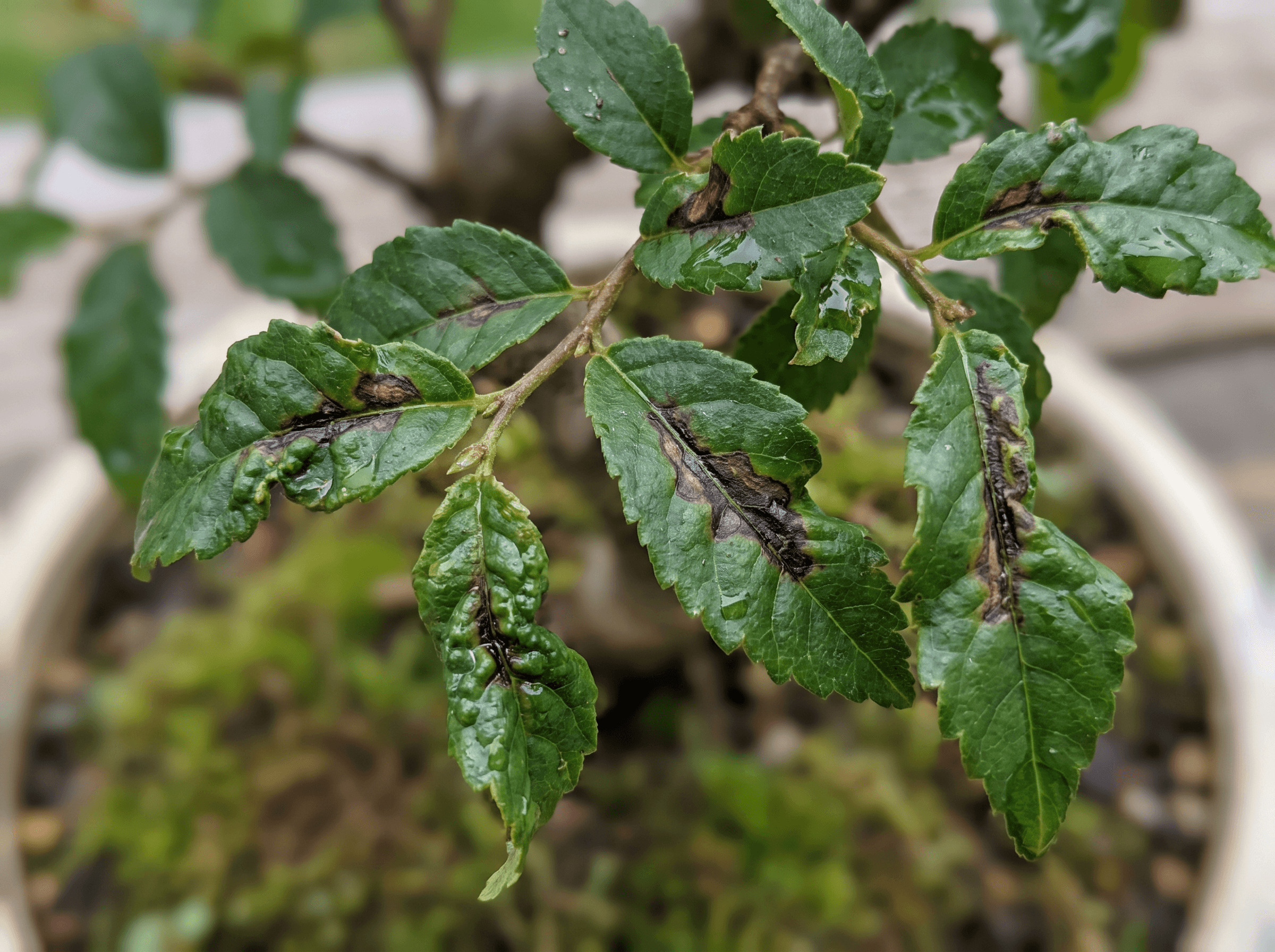
I see anthracnose most on maples, and it almost always follows the same pattern: a run of cool, damp weeks right as the new leaves are unfolding. Spring in Southern Italy can swing between a warm dry stretch and a cold rainy one within the same fortnight, and it's that second kind of spring that sets anthracnose off. The fungus needs moisture sitting on the leaf surface to infect, so a season of light, lingering rain does more damage than one heavy downpour followed by sun.
What separates anthracnose from ordinary leaf spot is the shape of the damage. Fungal leaf spot tends to produce round, distinct spots scattered across a leaf, each one its own small lesion. Anthracnose doesn't respect that kind of boundary. It travels along the veins, so the brown or tan blotches follow the vein pattern and often merge into larger dead patches rather than staying as tidy circles. Anthracnose may also cause the leaf to curl or pucker where the infection has distorted the tissue, especially on young growth, though distortion alone isn't a reliable way to tell it apart from every other leaf problem.
In a mild year, anthracnose is mostly cosmetic, a rough-looking canopy that recovers once drier weather sets in. In a bad year, on a tree already under stress, it can trigger noticeable early leaf drop and even kill back young shoots. I've had maples lose the better part of a spring flush to a particularly wet season and still come back fine by summer, so don't panic at the first blotchy leaf, but don't ignore a tree that keeps declining either.
Likely causes
Anthracnose infection favoured by cool, wet spring weather
How to tell: Irregular brown or tan blotches that track along the leaf veins instead of forming round, isolated spots, sometimes merging into larger dead patches. Affected leaves may curl or pucker at the damaged areas, and the pattern is usually worse on the lower, shadier parts of the canopy where leaves stay damp longest. It shows up hardest in years with a cool, wet run of weeks right as new growth is expanding.
The fix: Pick off and destroy affected leaves as soon as you spot them rather than leaving them on the tree, since each one is a source of new spores. Improve airflow around the tree by giving it more space from neighbouring plants and thinning any crowded interior growth. Water at the soil rather than over the foliage, and if you're watering by hand, try to do it early enough in the day that any leaves that do get wet can dry before evening. In a genuinely bad year, a copper-based fungicide applied at bud break, and again at label intervals if wet weather continues, can head off the worst of it, but it works as prevention far better than as a cure once blotches are already established. Use only a product labelled for anthracnose on your species, and follow the label's directions and timing exactly rather than guessing at concentration or frequency.
Repeated infection from the previous year's fallen leaves
How to tell: The same tree comes down with anthracnose again the following spring, often in roughly the same spots on the canopy, even after a season that otherwise looked healthy. Recurrence usually means the fungus survived somewhere nearby, whether in fallen leaf litter, in infected twigs or buds on the tree itself, or on a neighbouring host tree, though a repeat pattern in the same part of the canopy can also just reflect a shadier or damper spot that stays wet longer than the rest of the tree.
The fix: Rake up and destroy every fallen leaf from an affected tree in autumn rather than letting the debris sit at the base of the pot or nearby, because the fungus overwinters in that leaf litter and can also survive in infected twigs and buds, reinfecting the tree as soon as spring humidity returns. Don't compost the leaves from an infected tree in a pile that sits anywhere near your other bonsai. Thorough autumn sanitation reduces how much of the fungus carries over, but it isn't a guarantee on its own, a wet spring or inoculum from a nearby host tree can still bring the infection back even after a clean autumn, so keep watching the first flush closely rather than assuming one good cleanup has settled the matter for good.
Dense canopy or crowded placement keeping leaves damp too long
How to tell: The infection is consistently worse in the most sheltered, still-air parts of the tree, like the interior of a thick canopy or a spot on the bench wedged between other pots, while more open, breezy trees nearby stay relatively clean.
The fix: Thin out crowded interior growth during the growing season so air can move through the canopy and dry the leaves after rain or watering. Give the tree a bit more breathing room from its neighbours on the bench, particularly through the wettest weeks of spring. This alone won't stop anthracnose in a genuinely bad year, but it consistently reduces how severe an infection gets, and it's one of the few controls that costs nothing.
How to prevent it
Anthracnose is a weather-driven disease more than anything else, so you can't fully prevent it in a year that turns out cool and wet, but you can stack the odds in your favour. Rake and destroy fallen leaves from any previously affected tree every autumn without fail, since that debris is where the fungus spends the winter alongside any infected twigs and buds. Keep an eye on trees during the first flush of spring growth, especially maples, and act on the first blotchy leaves rather than waiting to see if it gets worse. Good airflow, sensible spacing on the bench, and watering the soil instead of the foliage all reduce how long leaves stay wet, which is the one variable actually within your control. A tree that goes into spring vigorous and well fed also tends to shrug off a mild infection far better than one that's already stressed.
Common questions
Which species get anthracnose most often?
Maples are the classic case, particularly Japanese and trident maple, but I've also seen it on oak, elm, and other broadleaf species during a wet spring. If your maples are affected, it's worth checking any nearby broadleaf trees too.
Will anthracnose kill my bonsai?
On its own, rarely. Most trees shed the damaged leaves, push a second flush once the weather dries out, and recover fully by summer. It becomes more serious on a tree that's already weak or repeatedly hit year after year, where shoot dieback can accumulate. If a tree loses most of its canopy for several years running, it's worth getting an in-person diagnosis rather than assuming it's still a simple case of anthracnose.
How is this different from the ordinary fungal leaf spot I read about elsewhere?
Leaf spot produces round, separate spots scattered across the leaf. Anthracnose follows the veins, producing irregular blotches that often merge, and it's more tied to a specific stretch of cool, wet spring weather rather than showing up steadily through the season.
Could this be leaf scorch, frost damage, or something else instead?
It's worth ruling out before you treat for anthracnose. Leaf scorch and frost damage tend to show as browning concentrated at the leaf margins or tips rather than following the veins, and they show up right after a specific weather event rather than developing gradually over a wet spell. Tar spot leaves distinct raised black spots rather than vein-following blotches, and Verticillium wilt tends to show as wilting or dieback on one side of the tree rather than leaf blotching. If the pattern doesn't match irregular, vein-following blotches after cool, wet weather, it's worth considering one of these instead.
Does a bad anthracnose year mean it'll come back every year after?
Not necessarily. It comes back if the fungus survives in fallen leaf debris or infected twigs near the tree and the following spring is wet again. Clear the debris properly in autumn and a dry spring the next year can mean no recurrence at all.
Should I remove all the damaged leaves right away?
Remove the ones with clear blotches as you notice them through the season, since that limits new spores spreading. There's no need to strip the whole tree bare at the first sign of trouble, most of the canopy usually stays fine, and stripping a tree that's already stressed can do more harm than the disease itself.
Is copper fungicide necessary every spring?
No. I only reach for it on a tree with a history of bad infections, applied right as new growth emerges and only with a product labelled for anthracnose on that species. On a tree that's only had a mild case once, better airflow and autumn leaf cleanup are usually enough on their own.
You might also like
General guidance based on 20+ years of practice. Every tree is different — when in doubt, ask us.