
Green algae on the soil surface
Algae on bonsai soil shows up as a green, slimy or crusty film across the top of the pot, not mould or mineral buildup, and it points straight at how you've been watering.
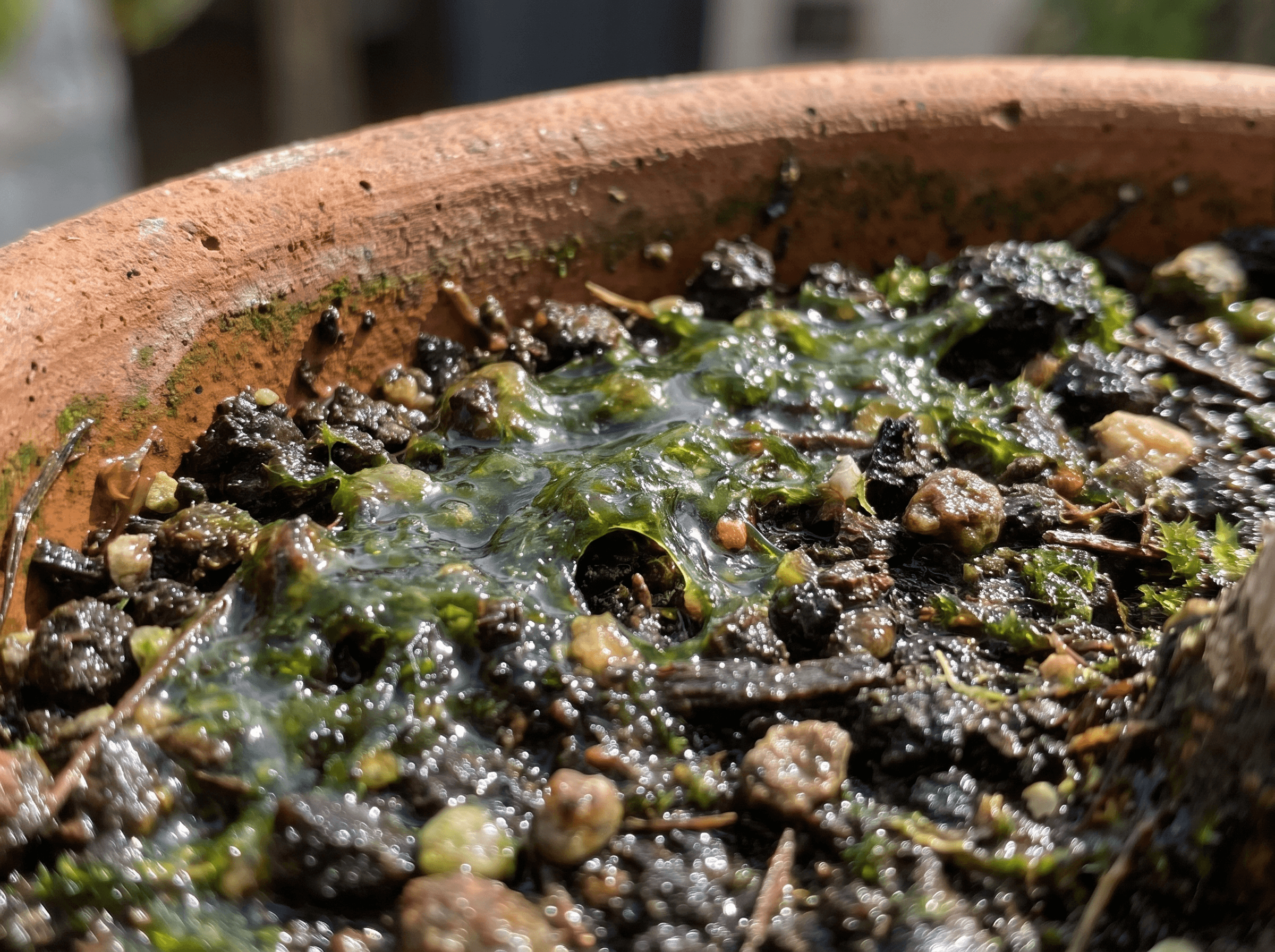
Algae is one of those things that looks worse than it usually is, and it gets mixed up with a couple of other soil surface issues I cover separately on this site, so let me draw the line clearly first. If what you're seeing is white and crusty or powdery, that's mineral salt buildup from water or fertiliser, a completely different page and a completely different fix. If it's fuzzy and grey or white and appearing on leaves rather than soil, that's powdery mildew. Algae specifically is green, forms on the soil surface itself, and usually has a slick or slimy feel when it's fresh, hardening into a green crust as it dries.
The reason algae shows up where it does comes down to two things happening together: constant moisture and light reaching the soil surface. Algae is a simple organism that needs both to establish, and a bonsai pot with its wide, exposed soil surface and a bright position is honestly a decent habitat for it if the top of the soil never gets the chance to dry out between waterings. I see it most on trees that get frequent light waterings rather than a thorough soak followed by a proper drying period, and on trees where the soil surface stays damp for other reasons too, a dense or fine substrate that holds moisture near the top, a bench spot with poor airflow, or a shadier, more humid corner of the collection.
None of that makes algae dangerous to the tree directly, and I want to say that plainly before going further, because it tends to alarm people more than it should. What it does do is tell you something useful about your watering pattern and your substrate, and left unaddressed for a long time it can start to seal the soil surface enough to reduce how well water and air move through the top layer, which is the indirect way it eventually becomes a real problem rather than just a cosmetic one.
Likely causes
Soil surface staying constantly wet with direct light reaching it
How to tell: A green film, sometimes slimy and sometimes drying into a thin green crust, sitting across the top of the soil, usually worse in a sunny spot on the bench or on a tree watered lightly and frequently rather than deeply and less often, which keeps the surface damp without ever really drying out between waterings.
The fix: Let the soil surface dry out more between waterings, checking with a finger or a moisture probe rather than watering on a fixed schedule regardless of condition. Scrape off the worst of the existing algae with a chopstick or a similar tool so it isn't shading and holding moisture over the soil underneath it. A thin layer of coarse, inorganic grit as a top dressing can help too, since it shades the surface and breaks up standing moisture, but keep it thin, don't let it seal the surface, and still check the moisture underneath it with a finger rather than judging by how the grit looks on top.
A fine or organic-heavy substrate holding surface moisture
How to tell: Algae keeps coming back within days or a couple of weeks even after you've scraped it off and adjusted watering, and the substrate itself looks dense and fine rather than open and chunky, more like potting compost than a proper bonsai mix with visible particle size and gaps between grains.
The fix: A fine or organic-rich mix simply holds more water at the surface for longer than an open, mineral bonsai substrate does, so the algae has a head start regardless of how carefully you water. Adding a coarser top dressing helps in the short term, but the real fix is moving to a more open, mineral-heavy mix at the tree's next scheduled repot, which dries at the surface faster and gives algae a lot less to work with.
How to prevent it
The habit that prevents algae almost entirely is watering thoroughly and then leaving the surface alone until the top centimetre or so is dry to the touch, rather than giving a tree a splash every day because it feels attentive, this is about the surface drying, not the whole rootball, so it doesn't mean pushing the tree toward drought. Check that top layer with a finger before watering again, and if you're growing in full sun, a thin, inorganic grit top dressing is worth doing as a matter of course rather than only after algae has already shown up, just keep it light enough that you can still judge moisture underneath it by feel. If you've had algae on a tree before, it's worth a quick look at the substrate itself next time you repot, since a mix that's too fine will keep bringing the problem back no matter how carefully you time your waterings afterward.
Common questions
Is algae actually harmful to my bonsai?
Not directly, and not in the short term. It's mainly a sign of surface conditions rather than a threat itself. Left for a long time it can reduce how well water and air penetrate the top of the soil, but a scrape and a watering adjustment resolves it well before it gets that far.
Does algae always mean I'm overwatering?
It means the surface specifically is staying wet too long, which is often tied to overwatering but not always. Frequent light waterings that never let the surface dry, poor drainage, or a fine substrate that holds moisture near the top can all produce the same result even if the overall watering amount isn't excessive.
How is algae different from mould on the soil?
Algae is green and needs light to grow, so it forms specifically on the exposed, lit surface of the soil. Mould is usually white, grey, or sometimes darker, doesn't need light, and can show up anywhere in the pot including shaded corners or under a top dressing. Liverwort and cyanobacteria can also form greenish mats on damp soil and look similar at a glance, so if scraping and adjusting watering doesn't clear it up in a reasonable time, you may be dealing with one of those instead of plain algae. If you're not sure which you've got, check whether it's confined to lit areas as a starting point.
Should I treat algae with a fungicide?
No, algae isn't a fungus, so a fungicide won't do much against it and isn't the right tool here. Scraping off the existing growth and adjusting watering and light exposure at the surface handles it directly and doesn't add an unnecessary chemical treatment to the pot.
Can I just leave the algae alone if it doesn't seem to be hurting the tree?
For a light film, that's a reasonable call in the short term, but it's worth still addressing the underlying watering pattern, since the same conditions that let algae establish are often ones worth correcting anyway for the tree's own root health. A heavier, established crust is worth scraping off regardless, so water can move through the surface properly again.
Will a moss layer help prevent algae?
In my experience, a well-established, healthy moss layer tends to crowd out algae simply by covering the same surface space it would otherwise colonise, and it looks a lot better doing it, but moss itself needs consistent moisture too, so it's not a way to avoid managing watering, just a different aesthetic approach to the same surface. If you're growing moss deliberately, keep an eye out for algae creeping in at its edges where coverage is thinner.
You might also like
General guidance based on 20+ years of practice. Every tree is different — when in doubt, ask us.