
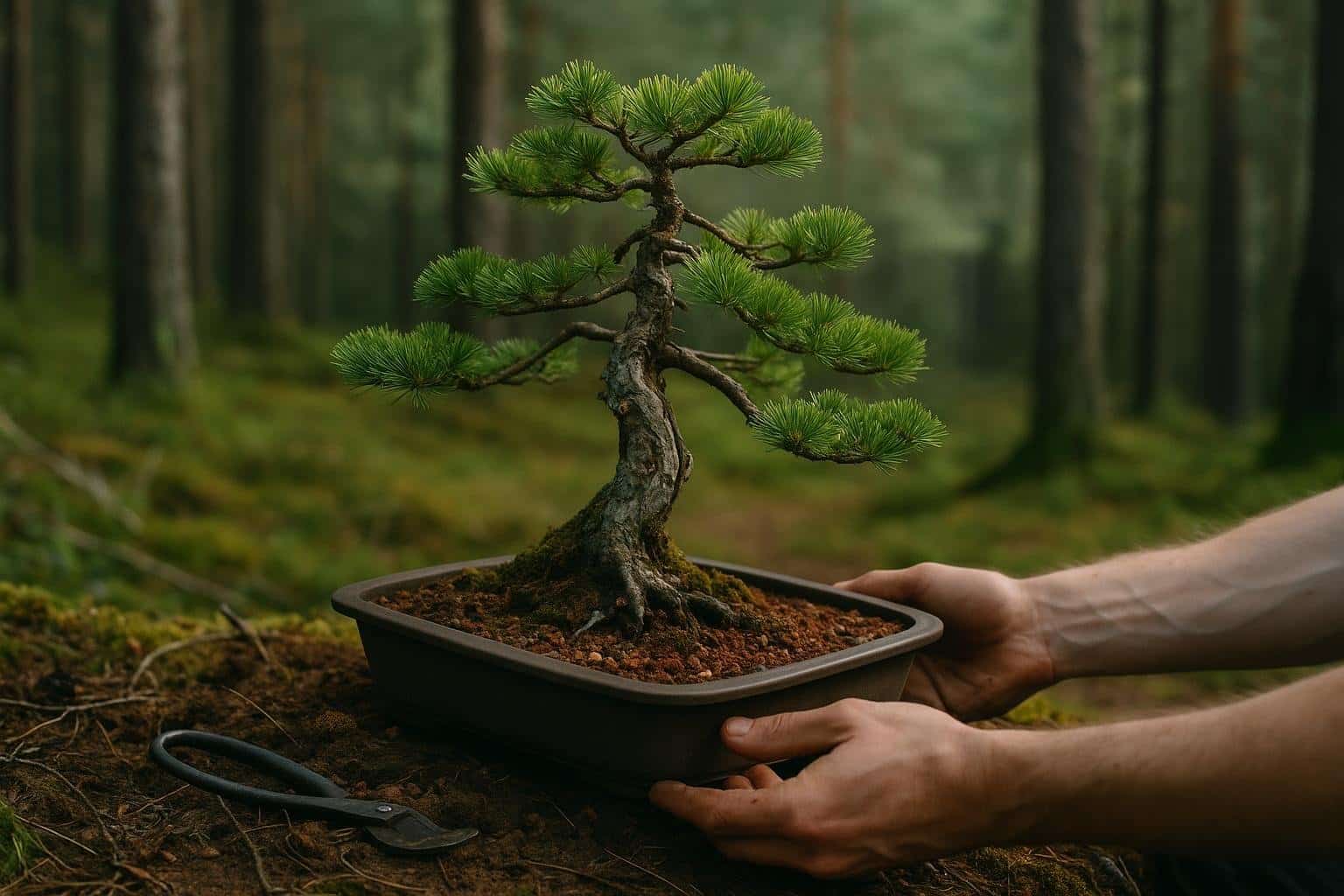
A yamadori is a bonsai collected from nature. A tree that grew freely for years in harsh conditions, on a cliff, in poor soil, under wind. When that tree is transformed into a bonsai, it brings a story no nursery can match.
In Southern Italy we are particularly lucky. Old olive groves, calcareous cliffs, rocky terrains of Puglia and Calabria produce yamadori naturally. I have spent much of my twenty years collecting and caring for trees taken from nature.
This article covers how to collect a yamadori, when, and most importantly how to care for it in the crucial first years.
What is a yamadori bonsai
The term yamadori comes from Japanese and literally means collected from the mountain. It refers to a tree taken from nature to be cultivated as bonsai.
Yamadori trees have characteristics that cultivated plants rarely achieve: short twisted trunks, mature fissured bark, natural deadwood, broad bases sculpted by time.
Not every tree in nature is a yamadori candidate. The tree needs sculptural features, health compatible with collection, and a site where collection is legally permitted.
When to collect a yamadori
The best window is late winter, when the tree is still dormant but roots are ready to resume activity. In Southern Italy, February-March for deciduous and March-April for conifers.
Collecting in full vegetation almost always fails. The plant is busy supporting the canopy and cannot manage the root shock.
Autumn is a second option for olives and junipers.
How to do the collection
Preparation matters. I go to the site with appropriate boxes, prepared substrate, sharp tools, and cloth to wrap the roots for transport.
I dig around the tree at reasonable distance, keeping most of the fine roots. Large trees can take an hour or more of careful work.
I cut the main roots with a clean sharp saw. Healthy fine roots must be preserved intact.
Once extracted, I wrap the root mass in damp cloth and transport it home as quickly as possible.
First placement after collection
I plant immediately in a wooden box or large pot with very draining substrate. 70-80% pumice and lava, very little akadama.
I place in semi-shade, protected from wind. The plant has lost much of its root mass.
I water thoroughly right after planting. Daily misting of the bark helps in early months. For Mediterranean care details, see olive bonsai care.
The first two years
A yamadori is not touched for at least one full season. No pruning, no fertilizing, no repotting. The tree must focus on making new roots.
In the second year, if the tree shows vigor, light fertilizing can begin. Structural work waits until year three or four.
Signs the yamadori has taken are vegetative vigor the following season and stability when gently lifted.
Common yamadori mistakes
The first mistake is collecting a tree too large for one’s experience.
The second mistake is early repotting. A freshly collected tree should not be touched for years.
The third mistake is immediate pruning. Even if the canopy looks oversized, never react with drastic cuts.
Finally, never collect without permission. Wild trees are protected in many contexts.
Frequently asked questions
What are yamadori success rates?
With correct technique and timing, 70-80%. Without experience, often below 30%.
How long for a yamadori to become a real bonsai?
Generally 5-10 years from collection to first exhibition.
Can I collect yamadori anywhere?
No. Permits are often required.
Which species work best as Mediterranean yamadori?
Wild olive, juniper, hawthorn, pomegranate, holm oak.
Can I work a yamadori the first year?
No. Only watering and misting.

Roberto Liccardo is a bonsai artist and nurseryman based in Calabria, Italy, with over 20 years of hands-on experience in bonsai cultivation, styling, and sourcing. He travels to Japan to select trees directly from specialist growers and runs WeBonsai, an online nursery shipping handpicked bonsai across Europe. Passionate about both the living art of bonsai and the technology that brings it to a wider audience, Roberto combines traditional Japanese techniques with a modern approach to e-commerce, packaging, and customer care.
He is also a member of Bonsai Calabria, where he actively contributes to the association’s digital presence by managing its websites and online communication.