
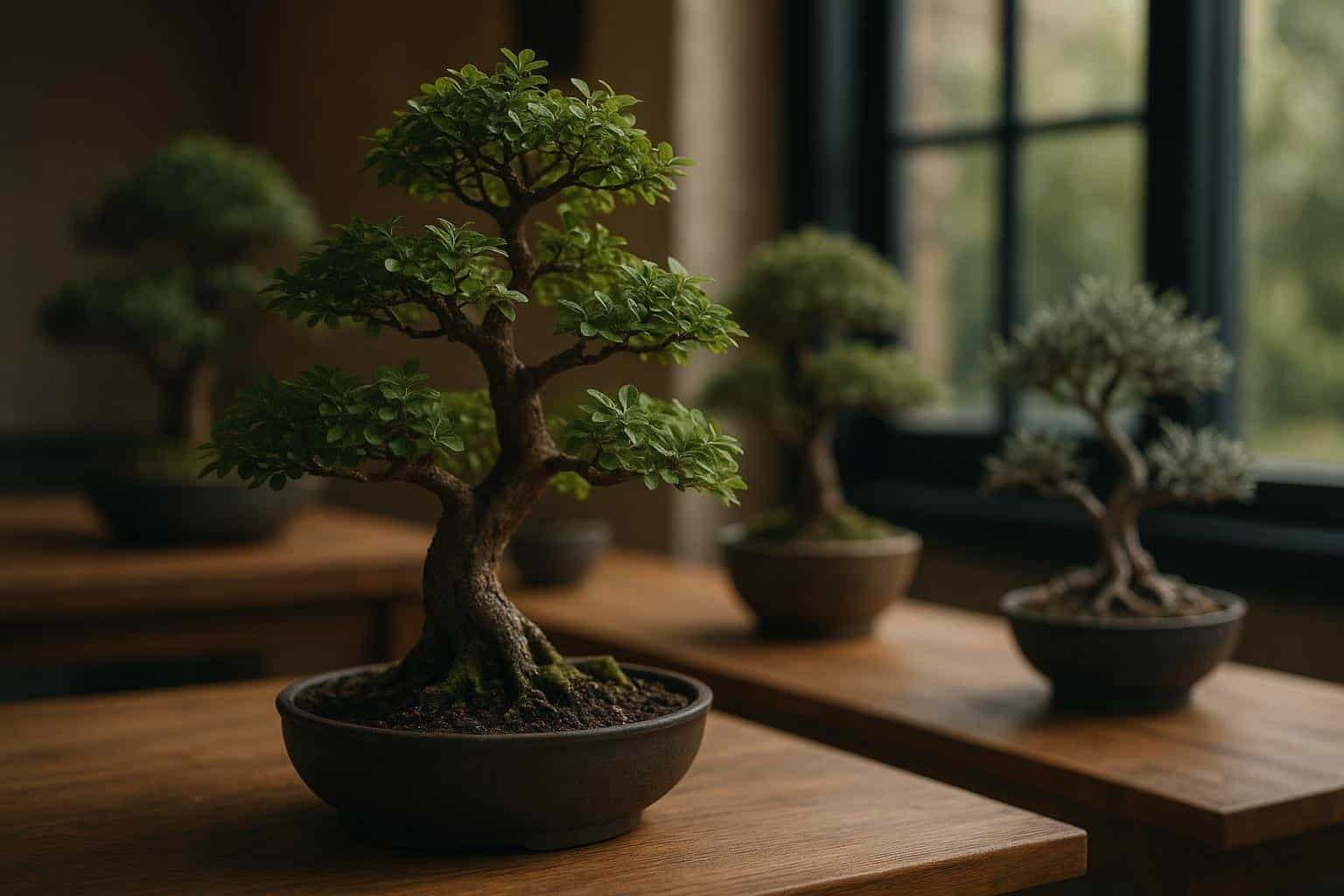
Choosing the first bonsai species is one of the decisive moments for beginners. Species that are too difficult discourage in months. Species that are too plain take away the pleasure of seeing real progress. After more than twenty years growing bonsai in Southern Italy, I have a list of five species I always recommend to beginners.
Good beginner species have three traits: they tolerate mistakes, give visible results in reasonable time, and adapt well to Mediterranean climate. The wrong species can die on the first mistake.
This article covers my five recommended beginner species and what to expect from each.
Chinese elm: the classic starter
The Chinese elm (Ulmus parvifolia) is the species I always recommend first. It tolerates wide variations in exposure, handles irregular watering, and responds well to pruning and reshaping.
Growth is rapid enough to give visible satisfaction in one or two seasons. Small leaves make even a young plant look like a real bonsai.
The Chinese elm handles Mediterranean climate well. It tolerates summer sun, mild Southern winters, and accepts a wide range of substrates.
Ficus retusa: the indoor bonsai for beginners
The ficus retusa is the best species for those who want an indoor or terrace bonsai. It tolerates interior light, handles temperature shifts, and develops spectacular aerial roots that give a mature look quickly.
The ficus is also one of the most robust species. It tolerates drastic pruning, forgotten watering, and repeated moves.
The only attention needed is protection from cold. Below 10 degrees it suffers.
Olive: the Mediterranean bonsai par excellence
The wild olive is the bonsai of Southern Italy. It tolerates intense sun, dry wind, water scarcity, and poor soils. For hot, dry climates it is nearly indestructible.
Rough bark, small leaves, and an ancient look develop in relatively short time. A young olive looks old to the visitor’s eye within two or three years of careful cultivation.
For details on olive care, see olive bonsai care.
Carmona: the small flowering shrub
Carmona (Carmona retusa) is a small tropical shrub that produces delicate white flowers and small red berries. Visually it is one of the most fascinating bonsai for beginners.
It needs full sun or very bright light, regular watering without stagnation, and temperatures never below 10 degrees.
The carmona is less indestructible than the elm or ficus but gives greater aesthetic rewards.
Cotoneaster: the broadleaf that gives quick results
The cotoneaster is a hardy shrub that lends itself well to bonsai. Small leaves, white spring flowers, red autumn-winter berries. A species that puts on a show year-round.
It tolerates Mediterranean heat well and survives minor neglect. Growth is rapid and pruning responses are visible.
The cotoneaster is also economical and easy to find at nurseries.
Common mistakes when choosing the first bonsai
The first mistake is choosing species that are too difficult. Japanese black pines, delicate Japanese maples, beeches are often picked for their beauty but require experience.
The second mistake is buying from supermarkets. Plants in big chains are often weakened.
The third mistake is starting with plants too small. A shohin or mame dries out in hours during summer and demands constant attention.
Frequently asked questions
What is the absolute easiest bonsai?
For Southern Italy, wild olive. For colder zones or indoor, ficus retusa.
Can I keep a bonsai indoors?
Only some species. Ficus, carmona, schefflera yes. Elm, olive, cotoneaster no.
How much does a beginner bonsai cost?
A good quality plant from a specialized nursery starts at 50-80 euros.
How long to learn the basics?
One complete season gives the practical basics.
Can I leave a bonsai for a week of vacation?
Depends on species and season. In spring often yes. In peak summer it is risky.

Roberto Liccardo is a bonsai artist and nurseryman based in Calabria, Italy, with over 20 years of hands-on experience in bonsai cultivation, styling, and sourcing. He travels to Japan to select trees directly from specialist growers and runs WeBonsai, an online nursery shipping handpicked bonsai across Europe. Passionate about both the living art of bonsai and the technology that brings it to a wider audience, Roberto combines traditional Japanese techniques with a modern approach to e-commerce, packaging, and customer care.
He is also a member of Bonsai Calabria, where he actively contributes to the association’s digital presence by managing its websites and online communication.