
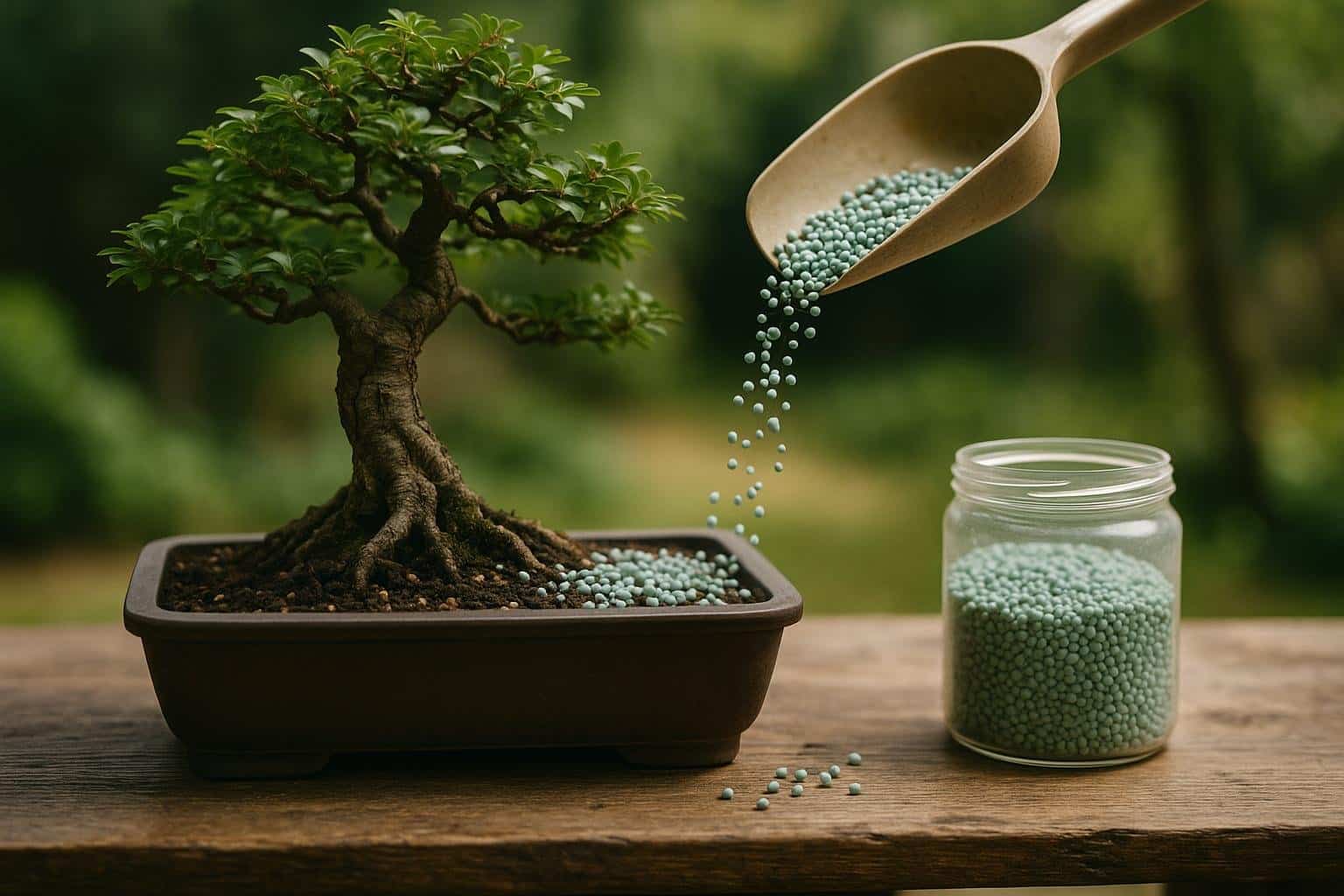
Bonsai fertilization is one of those practices that, done well, transforms a tree. Done wrong, it ruins it. After more than twenty years growing bonsai in Southern Italy, I have learned that fertilization is not about quantity but about timing and reading the tree.
A bonsai lives in very little substrate. Nutrient reserves run out fast and without regular input the tree cannot sustain proper growth. Without fertilization even the best bonsai weakens within seasons.
This article covers how I fertilize my bonsai, what I use, and the most common mistakes I see.
Why bonsai fertilization is essential
The bonsai does not have the water and nutrient reserves of a tree in the ground. The pot is small, the substrate limited, and every watering carries away dissolved nutrients.
Pale or yellowish leaves, slow growth, long internodes are all signs of deficiency. Good fertilization keeps the tree green, vigorous and compact.
Fertilization also supports cultural interventions. A tree about to be pruned or defoliated needs reserves.
When to fertilize a bonsai
The main season runs spring to autumn, with two peaks: March-May and September-October. The tree has maximum nutrient uptake then.
In summer, especially in the hot South, I reduce or suspend fertilization. Heat slows uptake and fertilizing during the peak risks burning roots.
In winter, evergreens like olive and juniper accept light slow-release organic fertilizer.
What fertilizer to use for bonsai
I mostly use slow-release organic fertilizer in pellets. They sit on the substrate surface and release nutrients gradually with each watering.
For trees in rapid growth, I add balanced liquid fertilizer (NPK 6-6-6 or similar) every two weeks in spring and summer.
For trees in refinement phase, I prefer low-nitrogen fertilizer. Too much nitrogen lengthens internodes and produces large leaves, the opposite of what mature bonsai need.
How much fertilizer to give
My rule: little and often beats much all at once. Excessive doses burn roots and create mineral imbalances.
Medium-pot bonsai get two or three organic pellets per month in spring-summer. Large trees up to six pellets.
For liquid fertilizer, I always halve the manufacturer’s recommended dose. For details on Mediterranean care, see olive bonsai care.
Common fertilization mistakes
The first mistake is fertilizing on dry substrate. Dehydrated roots cannot absorb nutrients and salts burn tissue.
The second mistake is fertilizing stressed trees. A recently repotted, sick, or struggling tree cannot use fertilizer well.
The third mistake is overdosing. Many beginners think more fertilizer means more growth. Instead it usually means burned roots and deformed leaves.
I also see unbalanced fertilization. Only nitrogen without phosphorus and potassium produces trees with big weak leaves.
Frequently asked questions
Can I use regular plant fertilizer on bonsai?
Yes, but at halved doses. Commercial fertilizers are dosed for plants in the ground.
Should I fertilize during flowering?
Yes, but with low-nitrogen, higher-phosphorus formulations.
How often should I fertilize a ficus?
Ficus accept regular fertilization every two weeks in spring-summer.
Can I fertilize a freshly bought bonsai?
No. Wait at least a month.
How do I know if I have over-fertilized?
Brown leaf margins, leaf drop without obvious cause, salt buildup on the substrate surface.

Roberto Liccardo is a bonsai artist and nurseryman based in Calabria, Italy, with over 20 years of hands-on experience in bonsai cultivation, styling, and sourcing. He travels to Japan to select trees directly from specialist growers and runs WeBonsai, an online nursery shipping handpicked bonsai across Europe. Passionate about both the living art of bonsai and the technology that brings it to a wider audience, Roberto combines traditional Japanese techniques with a modern approach to e-commerce, packaging, and customer care.
He is also a member of Bonsai Calabria, where he actively contributes to the association’s digital presence by managing its websites and online communication.