
Seigen Maple Bonsai
Acer palmatum 'Seigen'
Seigen is grown for one thing above everything else: the intensity of its spring flush, when new leaves emerge in a pink-red so strong it stops people walking past the nursery. The intensity and duration of that spring colour are influenced by light, temperature and growing conditions, while the tender flush also needs protection from scorch in the weeks around budbreak.
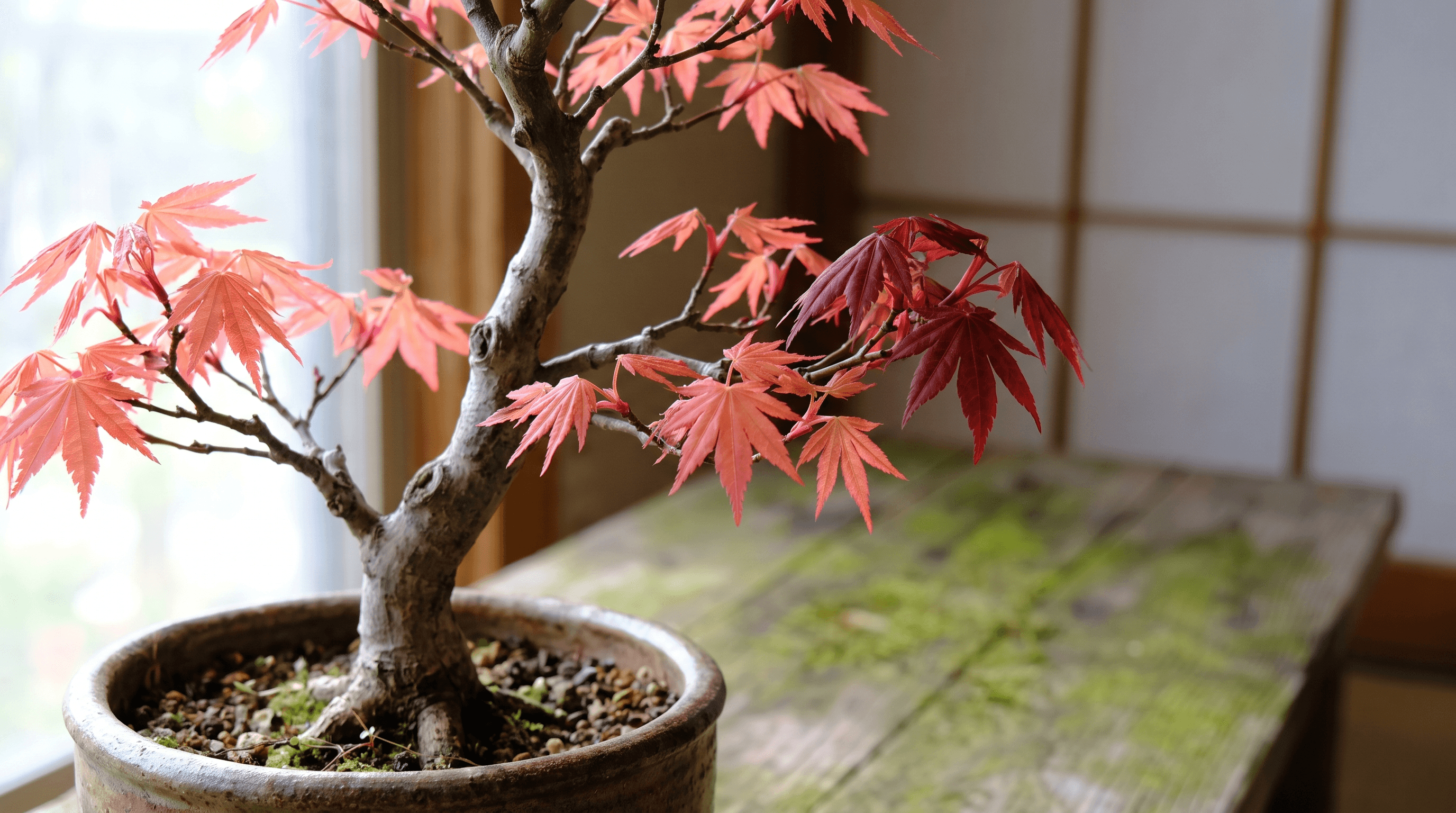
'Seigen' is a Japanese maple cultivar selected for its spring colour, and in my experience it's one of the most striking of the red-spring cultivars I grow, the new foliage opening in a vivid pink-red before settling toward green as the leaves mature and harden through late spring and summer. The leaves themselves run smaller than on a generic seedling-grown Japanese maple, which is a pleasant secondary trait rather than the main reason people choose it, and it gives the tree a slightly finer texture once the canopy fills in. Underneath the seasonal colour show, though, this is still Acer palmatum, and almost everything that applies to Japanese maple in general applies here too.
That means the same outdoor, deciduous habit, the same need for a proper winter dormancy, and the same sensitivity in the bark and fine roots that makes maple less forgiving than pine or olive of mistakes in watering or sun placement. What changes with Seigen is mainly about light management at one specific point in the year. The spring flush needs decent light to colour up properly, but the same tender new growth that's giving you that colour is also more exposed to scorch than hardened summer foliage, so the placement decision in early spring is a genuine balancing act rather than a simple more-sun-is-better rule.
Care
Light
Give Seigen moderate, dappled light rather than harsh direct sun as the spring flush emerges. RHS recommends partial shade for the best leaf colour on cultivars like this, with full sun tolerated if moisture is kept consistent, but excessive direct exposure risks scorch rather than reliably deepening colour. A tree kept in deep, dense shade can still come out duller and greener, so some light through the flush matters, just not necessarily strong direct sun. The newly emerged leaves are also soft and thin, more so than hardened summer foliage, so avoid exposing a fresh flush to harsh, direct midday or afternoon sun straight away, particularly if there's any risk of a late cold snap stressing the tree at the same time. Morning sun with protection through the most intense part of the day, leaning toward partial shade if in doubt, is a sensible default through spring, easing toward the same afternoon-shade approach you'd use for any Japanese maple once summer heat properly sets in and the leaves have hardened off.
Watering
Water like a Japanese maple generally: keep the soil evenly and consistently moist through the growing season without letting it sit waterlogged. Seigen doesn't have any special drought tolerance that the species lacks, and the smaller leaf size doesn't meaningfully change moisture needs, so treat a dry spell the same way you would with any maple, as something to correct quickly rather than ride out. In a small pot during hot weather I check it at least once a day, more if the tree is in full sun during its spring flush.
Temperature & hardiness
Seigen needs the same genuine outdoor winter dormancy as any Japanese maple and shouldn't be moved indoors to dodge cold weather. Protect the pot from severe, prolonged hard freezes since container roots are more exposed than roots in open ground, but the tree itself is reasonably cold-hardy through an ordinary winter. The more relevant risk with this cultivar is a late frost catching the spring flush just as it's colouring up; that tender new growth can blacken and die back from cold the same as on any maple, and losing a flush you were specifically hoping to enjoy for its colour is more disappointing than losing an ordinary green one, so it's worth watching the forecast closely through early spring.
Soil & potting
A free-draining but moisture-retentive mix suits Seigen the same way it suits Japanese maple generally, since the fine root system doesn't tolerate the soil drying out completely any better than on the species type. Akadama-based mixes, often blended with some pumice for extra drainage, are a popular and reliable choice here for the same reasons they work well on maple more broadly. Nothing about this cultivar's smaller leaf size changes the soil requirements.
Fertilizing
Feed through the growing season once the spring leaves have fully hardened off, tapering as autumn approaches, following the same general pattern as Japanese maple. Some growers hold off on feeding right through the spring flush itself, waiting until the new leaves have hardened and settled toward their summer colour before starting a feeding programme, on the reasoning that pushing growth too hard too early can dilute the intensity of the flush, though I'd treat that more as grower practice than something I can state with certainty. Light, regular feeding through the rest of the season suits the fine root system better than infrequent heavy doses, same as with any maple.
Pruning & wiring
Building ramification on an established, already-refined Seigen follows the same pinch-and-trim approach as any Japanese maple, cutting back to a leaf pair as new shoots extend through the growing season to encourage denser branching. Younger or weaker trees are better left to extend and harden before cutting back, since pinching too early or too often can weaken them instead of refining them. Because the tree is grown partly for its spring display, some growers time their heavier structural pruning to happen after the flush has passed and hardened rather than right before it, simply so a hard prune doesn't strip away the display you were growing the tree for that year. As with maple generally, avoid heavy cutting during the high-sap-flow period around bud swell in late winter into early spring; beyond that window, growers vary between summer or early autumn work and pruning later in dormancy. Wiring works well on young, flexible growth, but check it often, since maple bark marks and scars easily and wire left on too long will bite in.
Repotting
Repot on the same schedule as Japanese maple generally: young, vigorous trees often need attention roughly every one to two years, established trees usually less often, judged by root density and drainage rather than a fixed schedule, timed for early spring just before buds break. The fine, fibrous root system responds the same way it would on any maple, and gentle, careful root work is the safer default unless you know the individual tree well. After repotting, keep it out of strong wind and harsh sun for a couple of weeks while new roots establish, being a little more cautious than usual if the repot lands close to when the spring flush would otherwise be colouring up.
Common problems
Dull, muted spring colour rather than the vivid pink-red the cultivar is known for is the issue I get asked about most. Insufficient light can be part of it, but so can temperature, the exact stage of leaf development, feeding too heavily too early and pushing soft growth that doesn't colour as intensely, and the individual tree; it's rarely down to light alone. Scorched or crispy patches on leaf edges point to the opposite problem, too much harsh direct sun on tender new growth before it has hardened, which is a real risk with this cultivar specifically because the appeal is in showing off that soft young foliage rather than keeping it shaded away. A sudden blackening immediately after a frost strongly suggests cold damage, the same risk Japanese maple faces generally, and a healthy tree often recovers and may produce a replacement flush later in the season, though that flush usually won't carry the same colour intensity as the first. Blackening that progresses without a frost event, or that comes with lesions or continuing shoot dieback, can also point to a bacterial disease such as Pseudomonas, which is documented on Japanese maple, so it's worth ruling that out rather than assuming frost by default. Aphids target soft new spring shoots on this cultivar readily, so check the flush closely in the weeks it's colouring up. General leaf drop, wilting, or dieback should be diagnosed the same way as on any Japanese maple, by checking soil moisture and airflow before assuming something more serious.
Styling
Seigen suits the same refined, twiggy deciduous styling that Japanese maple is known for generally, informal upright and broom styles in particular, since the finer leaf size actually helps the canopy read as more delicate at bonsai scale than a generic seedling-grown maple would. Because the whole point of the cultivar is the spring display, though, I'd weight styling decisions slightly more toward how the tree presents during that few-week window each year, keeping the canopy open enough that light reaches into the structure and the colour shows well rather than building density so thick that the flush is mostly hidden inside the crown. It also makes a strong single specimen for a formal display stand during spring, when the colour alone is doing most of the visual work.
Common questions
Why isn't my Seigen maple's spring colour as vivid as I expected?
Insufficient light can mute the display, but spring temperature, vigor and the exact stage of leaf development also affect colour, so it's rarely down to light alone. A tree kept in deep, dense shade tends to leaf out duller and greener, but strong direct sun can scorch the flush rather than improve its colour. Heavy early feeding pushing soft growth can mute the effect too.
How is Seigen different from a regular Japanese maple?
Botanically it's still Acer palmatum, and almost all the day-to-day care is identical. The difference is the spring flush, which opens in a strong pink-red rather than the more muted reddish-green typical of seedling-grown trees, along with a somewhat smaller leaf size that suits bonsai scale nicely.
Does Seigen need more sun protection than other Japanese maples?
During the spring flush specifically, yes, a bit more care is warranted, since the tender young growth that's showing off the colour is also more exposed to scorch than hardened summer foliage. Once the leaves have hardened off, treat it the same as any Japanese maple, with morning sun and afternoon shade in hot weather.
Will Seigen's leaves stay red all season?
No, and that's normal for this type of cultivar. The vivid pink-red is a spring phenomenon tied to the new flush; as the leaves mature through late spring and summer they settle toward green, sometimes with some colour returning in autumn. The spring show is the main event.
Is Seigen a good choice for a beginner?
I'd put it at the same moderate difficulty as Japanese maple generally, maybe a shade trickier, since getting the spring light balance right takes a season or two of watching how your particular tree responds. It's a rewarding second or third tree once you're comfortable with maple care in general.
Why did my Seigen's new growth turn black in spring?
A sudden blackening right after a frost strongly suggests cold damage, the same risk any Japanese maple faces when a cold snap follows budbreak, and healthy trees often push a replacement flush, even if it doesn't match the first for intensity. If the blackening progresses without a frost event, or comes with lesions or ongoing shoot dieback, it's worth considering a bacterial disease such as Pseudomonas rather than assuming frost by default.
General guidance based on 20+ years of practice. Every tree and every climate is different — when in doubt, ask us.