
Katsura Maple Bonsai
Acer palmatum 'Katsura'
Katsura is a Japanese maple cultivar grown for spring foliage that opens orange to yellow rather than the red most people picture when they think of a colour-cultivar maple. That warm, glowing spring flush is genuinely distinctive against the more common red-spring cultivars in the same species, and it settles toward green through summer before the tree colours again in autumn, giving Katsura two separate colour displays a year rather than one.
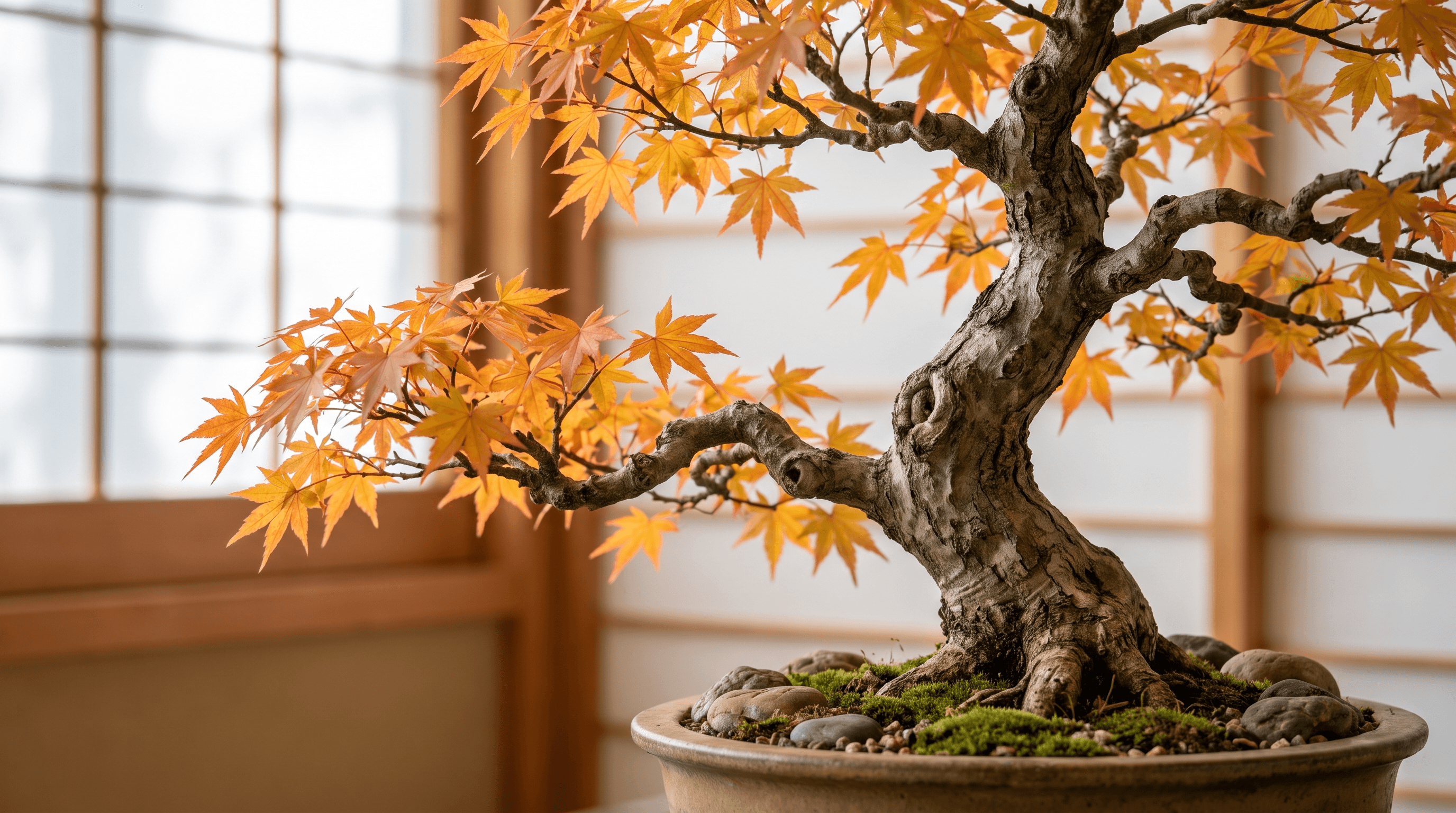
Acer palmatum 'Katsura' is a selected Japanese maple cultivar chosen for the colour of its new spring growth, which opens yellow to yellow-orange, often with warmer orange or pink margins, before gradually shifting toward yellow-green and green as it matures, rather than the red tones that cultivars like Deshojo or Seigen are known for. Underneath that trait, it's the same species with the same fundamental needs as any Japanese maple: outdoor winter dormancy, careful sun placement, and consistent soil moisture. Most of what applies to Japanese maple generally applies directly to Katsura, and the differences that matter are mostly about how you think about light through the spring flush and, honestly, about setting the right expectations for what the colour display will look like.
The spring colour is genuinely striking but it's also brief and it changes character as it develops, more so in some ways than the red cultivars do. Leaves emerge yellow to yellow-orange, often with warmer orange or pink margins, then gradually shift toward yellow-green and finally green as they mature, typically over the first couple of weeks, before settling into summer green the way any Japanese maple's flush eventually does. Exactly how far that colour shifts and how long it holds varies a fair amount tree to tree and season to season, depending on light, temperature, and the individual tree's vigor, so I'd treat any specific description of the display as a general guide rather than a guarantee for a particular tree in a particular year.
Care
Light
Light influences Katsura's spring colour, but it isn't the main lever to reach for: RHS notes that leaf colour on Japanese maple cultivars like this is generally best in partial shade, with excessive direct sun risking scorch on the tender new growth rather than reliably deepening colour. Very deep, dense shade can mute the display, so some direct or dappled light through the flush is worth providing, but treat it as one factor among several, alongside temperature, leaf stage and the individual tree, rather than a strong-light requirement. The new leaves are soft and tender while they're colouring up, and harsh, unfiltered midday or afternoon sun can scorch or bleach them before they've hardened, which is the same trade-off any red-spring cultivar faces, just applied to a different colour outcome. Morning and early sun with protection through the harshest part of the day through spring, leaning toward partial shade if in doubt, shifting to the standard Japanese maple afternoon-shade routine once summer heat sets in, is the practical approach most growers use.
Watering
Water needs are standard Japanese maple: keep the soil evenly moist through the growing season without letting it dry out fully, since the fine root system is sensitive to drought stress the same as any maple's. Good drainage still matters alongside that consistent moisture. Check daily through the growing season and expect more frequent watering in a small pot during hot weather, the same routine you'd use for any Japanese maple in your collection.
Temperature & hardiness
Katsura needs the same genuine outdoor winter dormancy as Japanese maple generally, and shouldn't be brought indoors to sit out the cold season. It's reasonably cold-hardy as a tree, though the pot deserves protection from severe, prolonged hard freezes given how exposed roots are in a shallow container. Late frost after the spring flush has emerged is the bigger practical risk, and it applies to Katsura's yellow-orange growth just as much as it does to a red cultivar's, since tender new leaves are frost-sensitive regardless of what colour they happen to be. Katsura is also commonly one of the earlier Japanese maple cultivars to break bud in spring, so that frost window can open earlier in the season than you might expect from Japanese maple generally, worth watching closely once the days start warming.
Soil & potting
A free-draining but moisture-retentive mix, the akadama-based approach that suits Japanese maple generally, works well for Katsura too. There's nothing about the colour trait that changes soil requirements; this is standard Japanese maple territory, and the same mix that suits a plain green-leaf tree or a red-spring cultivar suits Katsura.
Fertilizing
Feed through the growing season on the same schedule as Japanese maple generally, once spring leaves have hardened off, tapering as autumn approaches. As with other colour cultivars, I'd lean toward not overdoing nitrogen early in spring, since very vigorous, heavily pushed growth sometimes comes in larger and, in grower experience if not settled fact, slightly less distinctly coloured than a more moderately fed flush. General health and consistent vigor still matter more overall than any fine-tuning around the spring display, since a stressed or weak tree won't colour well no matter how the feeding schedule is adjusted.
Pruning & wiring
Ramification building on an established, already-refined Katsura follows the standard Japanese maple method: pinch and trim new shoots back to a leaf pair repeatedly through the growing season to build dense, fine branching over time. Younger or weaker trees do better left to extend and harden before cutting back, since pinching too early or too often can weaken them rather than help. Later flushes triggered by pruning may show some of the characteristic new-growth colour, although usually less dramatically than the main spring flush, so I wouldn't prune specifically to chase a second colour display, treat it as a pleasant side effect of structural work rather than a reason to prune. Heavier structural cuts are best kept away from the high-sap-flow period around bud swell in late winter into early spring; beyond that, growers vary between summer or early autumn work and pruning later in dormancy. Wire young, flexible growth as usual and check it often, since Katsura's bark marks and scars as easily as any Japanese maple's does.
Repotting
Repot on the same cycle as Japanese maple generally: young trees often need attention every one to two years, established trees usually less often, judged by root density and drainage rather than a fixed schedule, always in early spring just before buds break. Handle the fine, fibrous root system gently, combing rather than raking hard until you know how a given tree responds to more assertive root work, and keep a freshly repotted tree sheltered from strong sun and wind for a couple of weeks afterward, since it's more vulnerable to scorch right when good spring light would otherwise be wanted for colour development.
Common problems
The most common complaint I hear with Katsura is a spring display that seems weaker or more washed-out than expected, and light is one factor, though rarely the whole story: heavy, dense shade can dull the display, harsh midday sun can bleach or scorch tender new leaves before the colour develops, and temperature, leaf stage and the individual tree all play a part too. Partial shade rather than strong direct sun is generally the safer target for good colour. Beyond that, Katsura runs into the same issues as Japanese maple generally: aphids clustering on new spring shoots, leaf drop or wilting from either underwatering or waterlogged roots in summer heat, blackened new growth after a late spring frost, and fungal leaf spot in damp, poorly ventilated conditions. None of these are specific to the cultivar; the colour trait doesn't make the tree any more or less disease-prone than Japanese maple generally.
Styling
Katsura suits the same refined deciduous styles as Japanese maple generally, informal upright and broom form especially, where the goal is a dense, even network of fine branches that reads well once the leaves drop for winter. What sets a colour cultivar like Katsura apart in terms of display planning is timing: since the yellow-orange flush is a spring event that fades through summer, growers wanting to show the tree at its most distinctive plan around that window specifically, the same way growers of red-spring cultivars do, just with a different colour in mind. Compared to red-spring cultivars like Deshojo or Seigen, Katsura's appeal is really about offering something different in the same general category, a warmer, more golden spring display rather than a competing shade of red, which makes it a useful choice for a collection that already has a red-spring maple and wants variety rather than duplication.
Common questions
What colour is Katsura maple's spring growth exactly?
It typically opens yellow to yellow-orange, often with warmer orange or pink margins, then gradually shifts toward yellow-green and finally green as the leaves mature over the first couple of weeks, distinct from the red tones of cultivars like Deshojo or Seigen. Exactly how the colour progresses and how long it holds varies by tree and by season, so treat any specific description as a general guide.
Why did my Katsura maple's spring colour come in pale or washed out?
Light plays a role, but spring colour also varies with temperature, leaf stage and the individual tree. Very deep, dense shade can mute the display, while too much direct sun can scorch the tender new foliage rather than deepen its colour, so partial shade is usually a safer target than strong direct sun.
Does Katsura maple turn green in summer?
Yes, that's normal. The yellow-orange colour belongs to young, newly emerged growth and fades toward green as the leaves mature and harden through late spring and summer, with colour returning again in autumn.
How is Katsura different from red-spring cultivars like Deshojo?
The main difference is the spring colour itself, warm yellow to orange on Katsura versus red on cultivars like Deshojo or Seigen. Basic care is essentially identical between them; the choice comes down to which colour display you want, and Katsura is a good way to add variety alongside a red-spring cultivar rather than duplicating one.
Does Katsura maple need different watering or soil than a regular Japanese maple?
No. The spring colour trait doesn't change root behaviour or moisture needs. Keep the soil evenly moist through the growing season in a free-draining but water-retentive mix, the same as Japanese maple generally.
Can I get a second flush of colour on Katsura later in the season?
Sometimes, at least to some degree. Later flushes triggered by pruning can show some of the characteristic new-growth colour, though usually less dramatically than the main spring flush. I wouldn't prune specifically to chase it, it's more a pleasant side effect of structural work than something to plan around.
General guidance based on 20+ years of practice. Every tree and every climate is different — when in doubt, ask us.