
Arakawa Maple Bonsai
Acer palmatum 'Arakawa'
Arakawa is the Japanese maple cultivar grown for its bark rather than its foliage. Given time, the trunk and older branches develop a rough, corky, almost bark-plated texture that's genuinely unusual for a maple, most of which stay smooth-barked their whole lives, and that texture is treated as a legitimate styling feature in its own right, separate from whatever the leaves or autumn colour happen to be doing.
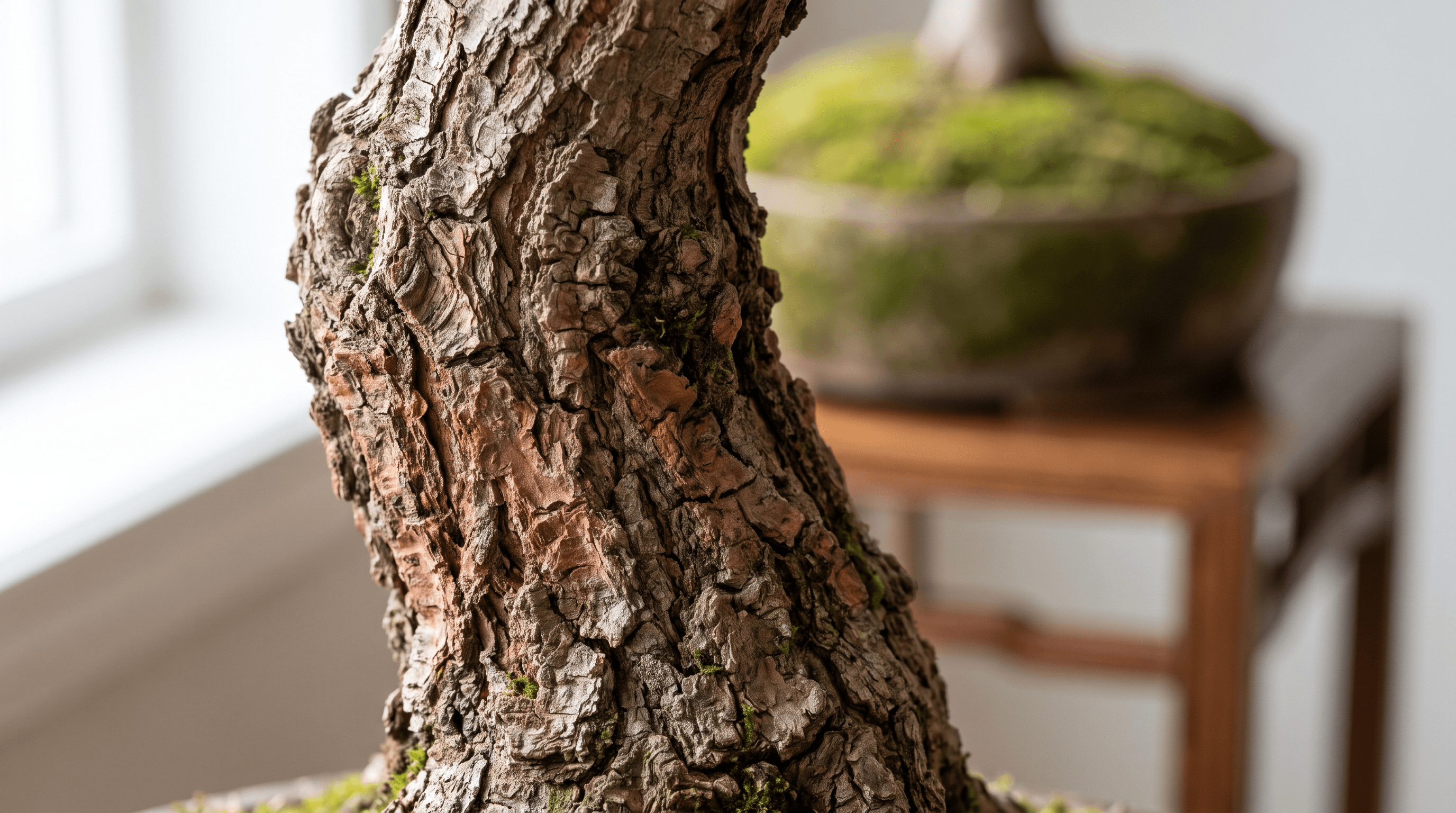
Acer palmatum 'Arakawa', sometimes sold as the rough-bark maple, is grown first and foremost for bark character rather than for spring colour or leaf size. The name itself refers to the rough texture, and it's one of relatively few Japanese maple cultivars where the main ornamental trait develops on wood rather than on foliage. It's also a vigorous, upright grower in its own right, and some specialist descriptions note comparatively long internodes and coarser growth while it's developing, so bark isn't the only structural difference from an ordinary seedling Japanese maple. Basic care needs are the same as Japanese maple generally: real outdoor dormancy, consistent moisture, protection from harsh afternoon sun. What's different about growing Arakawa well isn't the day-to-day care routine so much as the patience and slightly different pruning priorities the bark trait asks for.
The rough, corky texture doesn't show up on young growth. It develops gradually as the tree ages and as branches and trunk thicken, the same way many trees only reveal their mature bark character on older wood, so a young Arakawa in a small pot often looks like an unremarkable, fairly smooth-barked Japanese maple for the first several years, commonly the first three to five, sometimes longer. That's normal and expected, not a sign the tree is the wrong cultivar or isn't developing properly; the texture is a function of wood maturity and age more than of any particular technique, though how the tree is grown along the way does have some bearing on how thick and well-positioned the eventual bark is.
Care
Light
Light requirements track standard Japanese maple: morning sun with protection from harsh, direct afternoon sun once summer heat sets in, since Arakawa's leaves are ordinary Japanese maple foliage and scorch under strong afternoon light the same as any other cultivar's would. There's no particular light requirement tied to bark development the way there is with a colour cultivar needing strong light for foliage; bark texture develops with age and wood maturity rather than in response to sun exposure specifically, so light placement decisions here can be made purely around what's healthiest for the tree.
Watering
Keep the soil evenly moist through the growing season, the same consistent-moisture approach that Japanese maple needs generally, since the roots don't tolerate the soil drying out fully any better in Arakawa than in any other cultivar. Nothing about the bark trait changes water needs; treat it as a standard Japanese maple for watering purposes and check it at least daily through the growing season, more often in a small pot during hot weather.
Temperature & hardiness
Arakawa needs the same genuine outdoor winter dormancy as Japanese maple generally, and is reasonably cold-hardy as a tree while still benefiting from pot protection during severe, extended hard freezes given how exposed roots are in a shallow container. Late frost after the spring flush is the same risk here as with any Japanese maple, since new growth is tender regardless of what the bark eventually looks like on the older wood.
Soil & potting
A free-draining but moisture-retentive mix, the standard akadama-based approach for Japanese maple, suits Arakawa equally well. Soil needs aren't affected by the bark trait; this is ordinary Japanese maple territory, and the same mix that works for a green-leaf maple or a colour cultivar works here.
Fertilizing
Feed through the growing season on the same schedule as Japanese maple generally, tapering off as autumn approaches. Steady, consistent vigor over the years matters for Arakawa in a slightly different way than it does for most cultivars. Bark formation is genetically programmed and tied to wood maturity rather than to feeding, but healthy growth helps the trunk and branches reach the diameter and age at which that characteristic bark becomes evident; a chronically stressed or underfed tree tends to take longer to show the corky texture simply because its wood thickens more slowly. That said, this is a long-term pattern rather than something you can push along quickly with heavier feeding, and overfeeding brings the same risks it would with any maple.
Pruning & wiring
This is where Arakawa asks for a genuinely different approach than most Japanese maple cultivars. Because the rough bark develops on older, thicker wood, and because the target isn't the same dense, fine ramification that drives pruning decisions on a colour or foliage cultivar, many growers who are specifically after strong bark character take a less aggressive approach to early branch pruning, allowing selected branches and the trunk to thicken more before cutting back hard, rather than pinching back hard the way you might on an already-refined tree grown purely for fine ramification, since pinching is really only appropriate once a tree is established; younger or weaker material benefits from being allowed to extend and harden regardless of cultivar. That's a deliberate trade-off: heavier early pruning that builds fine branching sooner will also keep wood thinner for longer and can delay bark development on those branches. It's a development strategy to speed up wood thickening, though, not a biological requirement, the cultivar will still form its characteristic bark eventually regardless of pruning approach, just on whatever timeline the wood reaches sufficient maturity. You can still build reasonable ramification on an Arakawa, it's not mutually exclusive, but if bark is the priority for a particular branch or the trunk, it's worth being patient rather than reducing hard on the usual maple schedule. Whatever pruning you do, avoid heavy structural cuts during the high-sap-flow period around bud swell in late winter into early spring; growers vary between working in summer or early autumn and pruning later in dormancy, and wiring on young growth still needs frequent checking since Arakawa's young bark scars the same as any Japanese maple's.
Repotting
Repot on the same cycle as Japanese maple generally: young trees often need attention every one to two years, established trees usually less often, judged by root density and drainage rather than a fixed schedule, in early spring just before buds break. Root work follows the usual gentle approach for the species, combing rather than raking hard on a tree you don't yet know well. Nothing about the bark trait changes repotting mechanics; keep a freshly repotted tree sheltered from strong sun and wind for a couple of weeks afterward, the same as any Japanese maple.
Common problems
Most of what comes up with Arakawa is standard Japanese maple troubleshooting: scorched leaf edges from too much direct afternoon sun, leaf drop or wilting tied to either drought stress or waterlogged roots, aphids on new spring growth, blackened new shoots from late frost after budbreak, and fungal leaf spot in damp, poorly ventilated conditions. The cultivar-specific frustration I hear most is disappointment that the bark isn't developing, usually from someone who's expecting corky texture on a young tree still in early training; that's not a problem to fix so much as a matter of time, since the texture is tied to wood age and maturity and doesn't appear early regardless of how well the tree is grown. If a tree is genuinely mature and thick-wooded and still shows no bark character at all, it's worth double-checking the cultivar identification, since ordinary Japanese maple stays smooth-barked and the two can be hard to tell apart before the trait shows up. It's also worth knowing that on a grafted tree, only the Arakawa scion develops the characteristic bark; the rootstock below the graft is often ordinary Acer palmatum and stays smoother, which can create a visible mismatch at the trunk base as the tree matures.
Styling
Arakawa is chosen specifically for trunk and bark character, so styling decisions here weigh differently than they would for a foliage or colour cultivar. Formal and informal upright styles that expose a good length of trunk tend to suit it well, since the whole point is showing off bark texture that a densely branched, low canopy would hide. Growers after strong bark character often prioritize letting the trunk and key branches thicken over years before committing to a final, reduced structure, which is a slower, more patient approach than the ramification-first mindset that drives styling on most other maple cultivars. It's also worth treating Arakawa as a long-term project rather than judging it against a young tree's current look; a Japanese maple valued for fine ramification can look impressive relatively early, while an Arakawa's signature trait is one that simply isn't visible yet on young material, no matter how well it's grown.
Common questions
When will my Arakawa maple's bark start looking rough and corky?
Specialist sources commonly place the first noticeable roughening around three to five years, strengthening substantially with age from there, though it's a matter of wood maturity rather than a fixed calendar. A tree still in early training typically looks like an ordinary smooth-barked Japanese maple, and that's expected, not a problem.
Should I prune my Arakawa maple less than a regular Japanese maple?
If bark development on a specific branch or the trunk is your priority, many growers do hold off on hard reduction cuts there and let the wood thicken more before cutting back, since aggressive early pruning that builds fine ramification also tends to keep wood thinner for longer. It's a genuine trade-off between fine branching and bark development, not a strict rule.
Is Arakawa maple's basic care different from a regular Japanese maple?
No, light, water, soil, hardiness, and repotting are all standard Japanese maple care. What's different is pruning philosophy if bark is the priority, and patience around when the ornamental trait actually appears.
Does Arakawa maple still have good autumn colour?
It colours in autumn the way Japanese maple generally does, but it isn't selected or marketed for autumn colour specifically the way some other cultivars are; the bark is the defining trait here, with foliage colour being a secondary bonus rather than the main draw.
My Arakawa maple is several years old with no rough bark yet. Is something wrong?
Not necessarily; first roughening is commonly reported around three to five years and strengthens with age after that, but it's tied to wood thickness and maturity rather than a fixed calendar, so several years in a small training pot may simply not be enough time yet. If the tree is otherwise healthy and vigorous, it's more likely a matter of patience than a problem, though it's worth confirming the cultivar identification if you're several years in with a fully mature, thick trunk and still no texture at all.
Can I combine strong ramification and good bark texture on one Arakawa tree?
To some degree, yes, but they pull in slightly different directions. Branches you reduce hard and keep fine will develop bark more slowly than a trunk or branch left to thicken longer before cutting back, so most growers end up prioritizing one over the other on any given part of the tree rather than maximizing both everywhere at once.
General guidance based on 20+ years of practice. Every tree and every climate is different — when in doubt, ask us.