
Winter Bonsai Care Checklist
Winter bonsai care is mostly about doing less, and the growers who struggle this season are almost always the ones who can't resist doing more.
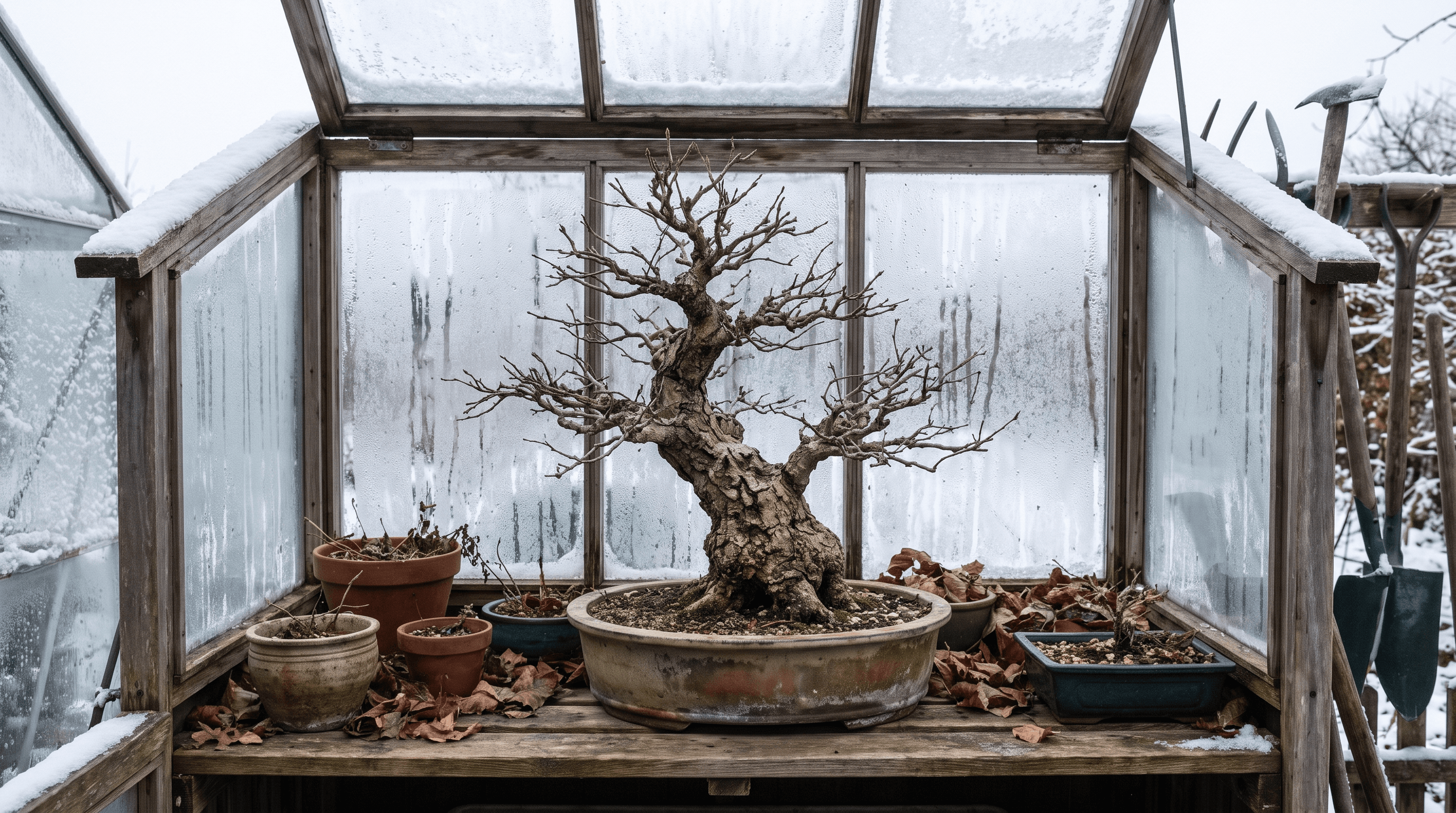
Winter is the one season where I actively have to hold myself back. After a busy spring and summer, it's tempting to keep intervening the same way, checking trees daily, watering on the old schedule, looking for something to do. But a dormant tree doesn't want that kind of attention, and over-intervening in winter causes more problems than it solves.
The shift I make every year around late November is from active management to periodic monitoring. Instead of a daily routine, I'm doing a proper check every week or two, looking for specific things rather than fussing over the tree generally. It's a different rhythm, and it takes some discipline to stick to it, especially early in the season when the habit of daily care is still fresh.
This checklist isn't a long one on purpose. Winter bonsai care genuinely is simpler than the rest of the year, and most of what matters is protection from the extremes and restraint everywhere else.
Water sparingly, and check before you water
A dormant tree uses very little water, so the biggest watering mistake in winter is sticking to a growing-season frequency out of habit. I check the soil before watering rather than following a fixed schedule, and for trees in unheated storage or outdoors, that check might only happen once every week or two, since soil dries so much slower in cold, low-light conditions. Overwatering a dormant tree in winter is a much more common problem than underwatering it.
Stop feeding, or scale back to almost nothing
Most of my trees get no feeding at all once they're properly dormant. A few species that stay semi-active through a mild winter might get an occasional very light feed, but this is the exception, not the rule. Feeding a fully dormant tree doesn't help it and just leaves unused fertilizer sitting in the soil.
Protect against hard freezes, not against normal cold
Hardy species need real cold exposure as part of a normal dormancy cycle, so I don't shelter everything just because temperatures have dropped. What I do watch for is genuinely hard, extended freezes, or wind exposure that can dry out foliage and bark faster than the tree can handle. That's when trees move into a cold frame, an unheated garage, or a more sheltered spot, rather than as a blanket response to every cold night.
Check periodically rather than daily
I walk the benches every one to two weeks through winter rather than every day. Each check is a real look though, not just a glance: soil moisture, any sign of pests or mold I might have missed in the autumn inspection, and general condition against what I noted going into the season. This periodic rhythm is enough to catch problems early without falling into the trap of fiddling with trees that don't need fiddling with.
Resist the urge to intervene
This is the hardest part for a lot of growers, myself included in my early years. A dormant tree that looks a bit sparse or dull is usually just doing exactly what it should. The instinct to prune, wire, repot, or otherwise do something to a tree because it's been sitting untouched for weeks is worth resisting through the core of winter. Most structural work has better windows in autumn or spring, and disturbing a tree unnecessarily during dormancy adds stress without a real benefit.
Common questions
How often should I water my bonsai in winter?
Check the soil rather than watering on a fixed schedule, since dormant trees use very little water and dry out much more slowly in cold conditions. Depending on your storage and climate, that check might only need to happen every one to two weeks.
Should I feed my bonsai at all during winter?
Most fully dormant trees don't need any feeding through winter. A few species that stay semi-active in a mild climate might tolerate an occasional very light feed, but this is the exception rather than a general rule.
How do I know if my tree needs winter protection or can stay outside?
This depends on the specific species' actual hardiness for your climate. Genuinely hardy species generally tolerate normal winter cold outdoors and benefit from it as part of dormancy. Protection matters most against extreme or extended hard freezes and wind exposure, not against ordinary winter cold.
Is it normal for my bonsai to look dull or lifeless in winter?
Yes, for most temperate and hardy species this is completely normal dormancy, not a sign of decline. Deciduous trees are bare, and even evergreens often look less vivid than their active-season color.
How often should I check on my trees during winter?
I do a real check every one to two weeks rather than daily monitoring, looking at soil moisture, pests, and general condition. Daily attention isn't necessary and can lead to unnecessary intervention on a tree that's simply dormant.
Can I still prune or wire my bonsai in the middle of winter?
It's possible on some species, but I generally prefer autumn or spring windows for most structural work. Deep winter is better spent letting the tree rest, with intervention reserved for genuine problems rather than routine maintenance.
What's the biggest winter care mistake you see people make?
Overwatering out of habit, continuing something close to a growing-season schedule instead of checking the soil and adjusting for how much slower it dries in winter. The second most common is simply not being able to leave a dormant tree alone.
You might also like
General guidance based on 20+ years of practice. Every tree, climate, and year is different — when in doubt, ask us.